 Wingspan Tech



How Much Water Does Power Washing Use
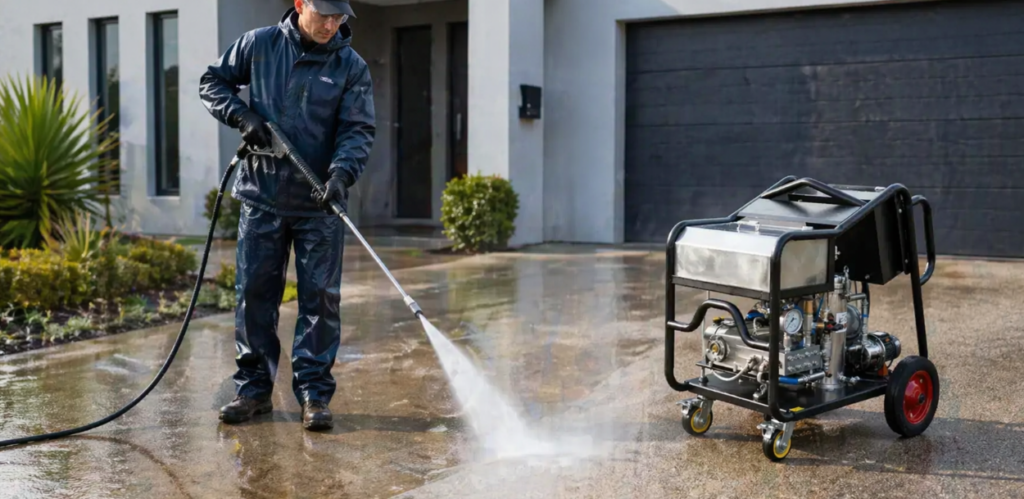
A standard home pressure washer typically uses between 2 and 4 gallons per minute of water. This means that an hour-long cleaning project will consume approximately 120 to 240 gallons of water. Compare this and you’ll understand that while pressure washing may seem like a powerful force, it actually saves a lot of water than a regular garden hose ——which can produce up to 5 to 10 gallons of water per minute and doesn’t have much cleaning power. Take a common dual-lane cleaning project, for example, and expect to consume around 150 to 300 gallons of water. At the average price of municipal water in the United States, this will add at most $1 to $3 to your bill next month. Pressure washing actually uses far less water than most landlords think, as a high PSI can get you working many times faster.
Understanding GPM Metrics
To figure out how much water is being used, you have to stare at that GPM parameter on the machine. This is how fast water pumps out. Most of the home models I’ve worked with are between 2 and 4 GPM.
Low-flow models: These are small, usually plug-in machines that are fine for small tasks like washing patio tables and chairs.
Standard home model: This is for washing exterior walls and patios “gold configuration”, with the best balance between efficiency and water consumption.
Professional-grade model: This is what we use for big projects.
Don’t look at the 4 GPM machine that produces more water per minute, but because it cleans so hard and rinses so quickly, the total water consumption in the end tends to be lower than those dawdling little machines because you take less time to boil water.
Efficiency Competition
Many budget-conscious landlords have a cognitive misconception that running water “gentle” on a garden hose will definitely save water. Garden hoses rely on low pressure, high flow, and typically produce 5 to 10 gallons of water per minute. If you take a hose and flush the driveway there, you could easily use up 600 gallons of water in an hour of fiddling. In contrast, pressure washers use a concentrated stream of water ejected by a high PSI to strip dirt, using only a fraction of the water used in a hose. This is essentially trading “high pressure” for “low flow”, and it’s an absolute steal on your water bill.
O-Series High Pressure Washer 220V
The durable ceramic pump and powerful four-stage motor provide high-performance cleaning power, with adjustable pressure, support for customized voltage and power.
380V 1500Bar Water Blaster
1450 RPM ultra-high pressure water jet pump, high cost performance, suitable for 50Hz voltage. It’s a great tool for removing rust and deburring in factories.
Diesel Power High Pressure Cleaner
The pump unit is the core component of a cleaning machine or water treatment system. Composed of a high-pressure plunger pump and an electric motor
Foam Cannon for car washing
Foam Cannon S V3.0 (Thicker Snow Foam Technology) with 1/4 Inch Quick Connector for Pressure Washer, 34 oz Bottle (V3.0 (1/4″ Quick Connector) + SOAP Sample)
Estimated Water Consumption Dismantling Of Different Projects
Using 2 to 4 GPM as a benchmark, let’s calculate how much water we use for a few common tasks around the house:
Dual Lanes: Usually use 150 to 300 gallons. The premise is that you act deflator and choose the right nozzle.
House Exterior: A medium-sized house with an estimated water consumption of between 360 and 720 gallons.
Small patio or platform: 100 to 150 gallons to the top.
If you compare these few hundred gallons to the average 3,000 gallons an adult consumes in the house each month, you will find that the small fluctuation in water bills caused by the annual outdoor cleaning is basically negligible.
Convert Gallons To US Dollars
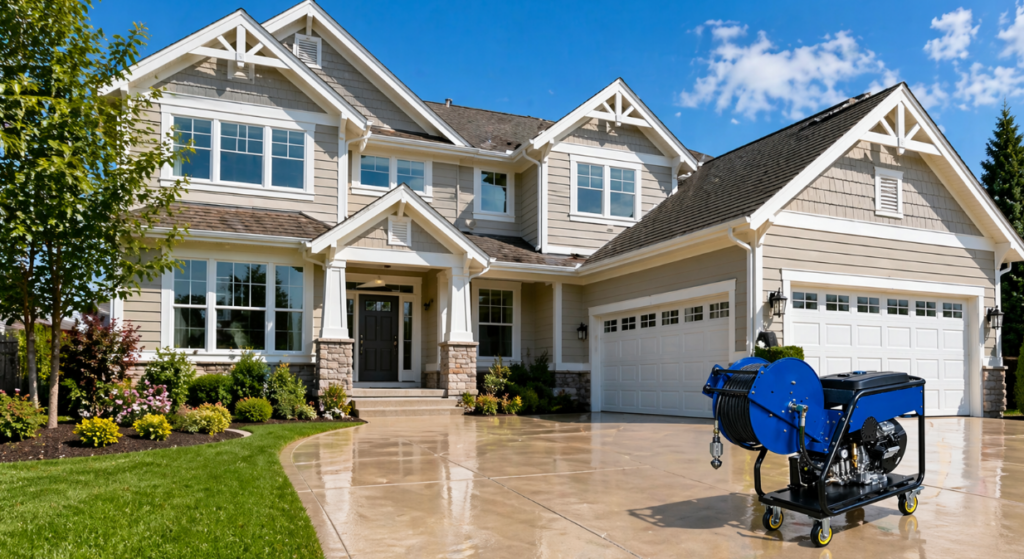
Let’s look at the data directly: According to the EPA and city data, the average water price in the United States is about $2 per 1,000 gallons.
If it takes 300 gallons to wash a driveway, the water bill costs only $0.60.
Even a big project that takes 1,000 gallons will only cost 2 to 3 dollars more.
This reinforces my point: the true cost of pressure washing is never on the water bill, but on depreciation of the equipment, the cleaning agent, or the labor you hire.
Why High PSI Is A Water-saving Weapon
The core of high-pressure cleaning’s efficiency lies in the combination of PSI and time. What we often call “high PSI” allows you to cut off mold, oil stains, and grime in an instant. The faster the work is done, the shorter the total time the machine runs, which is the basis for water saving. That is why we value machines with high PSI and medium GPM more in the industry. This is not only to protect the landlord’s wallet, but also the most environmentally friendly and efficient means of renovating the house at present. There is no need to worry about draining the water tower in the house.
Author: Mike Thompson
I’ve handled thousands of residential and commercial projects. My mission is to demystify the pressure washing process for homeowners, providing honest, data-driven insights into water efficiency and cost management. I believe that maintaining a beautiful home shouldn’t come with the stress of a high water bill, and I’m here to share the industry secrets that help you achieve professional results while conserving resources.