 Wingspan Tech



Does Power Washing Damage Plants
Pressure washing can really hit or even kill your plants, primarily from the physical impact of high-pressure water streams and chemical burns from sodium hypochlorite. But honestly, these risks can be avoided with a professional homework plan. To preserve your landscape plants, you must prioritize “pre-moistened” foliage and soil, allowing the roots to absorb moisture early; also use “soft washing” technology with a 40-degree fan-shaped nozzle to reduce pressure and enforce strict “dilution” standards for all degradable cleaners. Add to that the control of chemical runoff and covering delicate perennials with breathable tarps during construction, and you can easily wash your house looking brand new without damaging every blade of grass or tree in your garden.
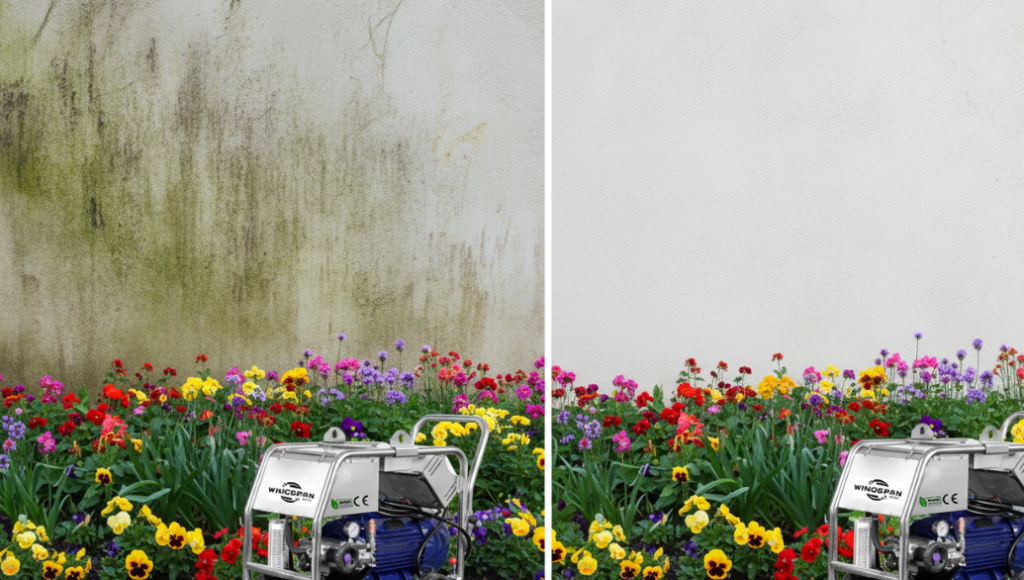
Physical Shock Vs. Chemical Burns
To protect your yard, you need to first understand how pressure washing can hurt people, which usually cannot escape two reasons.
The average washing machine on the market typically has a pressure between 2,000 and 4,000 PSI. At this pressure, the water jet is like a high-speed mechanical knife. If it gets too close to the plant, it can directly peel off the bark, shred the leaves, and even beat the delicate flower buds of the shrub until they are thinly broken. Many people are most likely to use the wrong nozzle ——such as the red 0-degree straight punch, which is devastating for woody plants and instantly kills low-cover plants.
To completely remove mold, most exterior wall lotions contain sodium hypochlorite. This ingredient, although highly descaling, is extremely sensitive to plants. If the potion dries directly on the leaves, or seeps heavily into the soil, it can cause “leaf scorch”, which is equivalent to draining the plant from the inside out. If no one cares about these chemical residues, the plant will have only one dead end.
Preventive Protection Strategies
In fact, whether the work is done well depends entirely on whether it is “plants first”. By following these industry standards, you can essentially reduce the risk to zero.
The most effective move against chemical damage is “Pre-Wet”. Before spraying any detergent, thoroughly water the leaves, stems, and surrounding soil of the plant with clean water. Plants are like sponges. If they have already sucked up clean water, they can no longer absorb the diluted potion or runoff. This is actually an artificial hydraulic barrier created on the surface and roots of the plant.
To avoid damaging the plants, a skilled technician will switch from “high pressure rinse” to “soft wash” mode. This logic is to rely on specialized chemical cleaners to break down dirt, rather than relying on brute force to wash it down. Switch to that white 40 degree nozzle, it makes the water fan wider. even if you accidentally sweep the green plants, this dispersed pressure is not enough to cause actual damage. It is the safest configuration for operations around the garden.
Be sure to choose a biodegradable cleaner specifically for exterior walls. But don’t think that just because it says “environmental protection”, you can mess around. The dilution ratio must be caught. Maintaining a high water-to-water ratio ensures that the cleaning effort is sufficient to clean the exterior walls without damaging the soil’s biological activity or pH.
O-Series High Pressure Washer 220V
The durable ceramic pump and powerful four-stage motor provide high-performance cleaning power, with adjustable pressure, support for customized voltage and power.
380V 1500Bar Water Blaster
1450 RPM ultra-high pressure water jet pump, high cost performance, suitable for 50Hz voltage. It’s a great tool for removing rust and deburring in factories.
Diesel Power High Pressure Cleaner
The pump unit is the core component of a cleaning machine or water treatment system. Composed of a high-pressure plunger pump and an electric motor
Foam Cannon for car washing
Foam Cannon S V3.0 (Thicker Snow Foam Technology) with 1/4 Inch Quick Connector for Pressure Washer, 34 oz Bottle (V3.0 (1/4″ Quick Connector) + SOAP Sample)
Environmental Management
Chemical runoff control: Keep your eyes on where the soapy water is flowing. I would use some drainage techniques to get the sewage to flow into the drain and definitely not let it collect water in the flower bed.
Cover perennials with a breathable cloth: Physical cover is essential when encountering particularly delicate flowers and plants. But remember, never use that heavy plastic film, use a breathable tarp. Plastic sheets will create a “greenhouse effect” when left under the sun for a while, roasting the plants in minutes. Cover before working, and uncover immediately after rinsing to allow the plants to breathe.
Combine pre-moistening, soft washing techniques, and fine runoff control, and you can have a spotless exterior while allowing your landscape plants to continue to serve as the property’s added value “front”.
Author: Mark Sterling
Having spent a decade restoring homes while maintaining my own passion for landscape gardening, I’ve mastered the delicate balance between high-pressure cleaning and plant preservation. I developed these ‘plant-first’ protocols—including specialized soft washing and strategic runoff management—to prove that a pristine home exterior doesn’t have to come at the expense of a flourishing garden. My mission is to help homeowners achieve professional results without risking a single leaf of their valuable greenery.