 Wingspan Tech



The Ultimate Guide to Pressure Washer Tips
Watching years of grime, mold, and stubborn grease disappear in an instant under a powerful stream of water is truly therapeutic and rewarding. A high-quality water pressure cleaner can be considered the most powerful tool in any homeowner’s arsenal. With just an afternoon’s work, it can completely transform the exterior of your home, leaving it looking brand new.
However, this powerful force is a double-edged sword. Without specialized knowledge, operating equipment improperly can easily strip the car’s paint, damage wooden decks, and even result in serious personal injury. If you have ever faced various colored nozzles, complicated PSI parameters, or hesitated between fuel and electric modes, please don’t worry, you are by no means alone. As the 1 home maintenance expert with 10 years of experience, I wrote this guide to help you eliminate these puzzles and equip you with professional skills to handle every cleaning project safely and confidently.
Choose The Water Pressure Cleaner That Best Suits Your Needs
Choosing the best Pressure Cleaner for Best Home starts with knowing your specific cleaning goals. The machine is not the more expensive the better; finding one suitable for your yard and specific purposes is the best. Before making a purchase, checking a detailed electric pressure cleaner review can provide valuable insights into performance and reliability.

Fuel Version vs. Electric Version: Which Is Better?
In my decade-long career, I have often been asked which source of power is better. The answer actually depends on your use environment and cleaning frequency.
Electric Pressure Cleaner (Electric):
Advantages: light weight, low noise, almost no maintenance, no exhaust emissions. Ideal as a small pressure cleaner for tasks such as cleaning patio furniture, bicycles, barbecue grills or car washing.
Disadvantages: Limited by the length of the power cord, and the pressure is usually low (1300-2000 PSI).
Fuel High Pressure Washer (Gas):
Advantages: extremely powerful, with complete freedom of movement. No wire stumbling, gasoline models are the gold standard for professionals involved in mobile pressure cleaning who need to clean large driveways or strip off old paint.
Disadvantages: loud noise, need to change oil/add fuel stabilizer regularly, and exhaust emissions (must be used only outdoors).
Understanding PSI and GPM (about Pressure Cleaner 3000 PSI)
When shopping, you will see two core indicators: PSI (pounds per square inch, for pressure) and GPM (gallons per minute, for water flow).
PSI determines the “strength” of the water flow to strip the dirt. GPM determines the “speed” at which dirt is scoured.
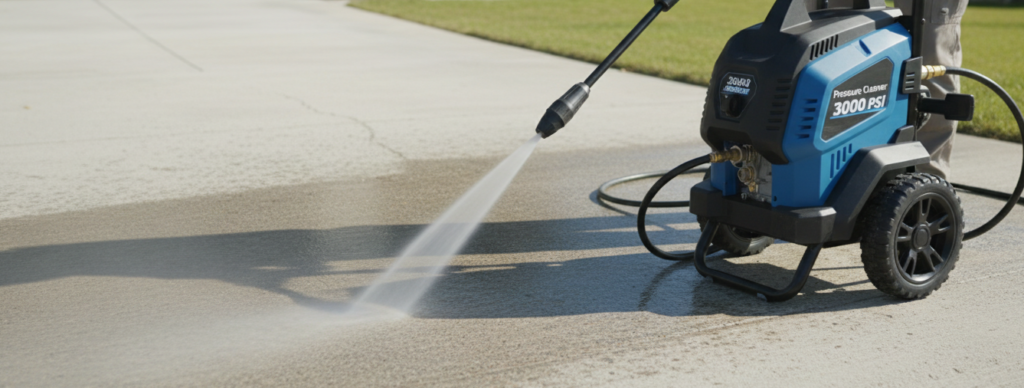
For most home users, a Pressure Cleaner 3000 PSI or a pressure cleaner 3200 psi is the “golden section”. It provides enough strength to deeply clean severely weathered concrete and remove stubborn stains, while being easy to handle for residential use. While a massive 5000 psi pressure cleaner offers incredible power, it is often more than a typical homeowner needs. If the pressure is too low, the cleaning time will double; if it is too high, the surface will be easily damaged.
Expert-Level High-Pressure Cleaning Techniques For Different Surfaces
Make your driveway and terrace look new
Concrete is strong, but it is also porous. To get professional-grade cleaning results on the driveway:
Pretreatment: first use degreasing agent to treat the oil on the ground.
Use Surface Cleaner: do not use only ordinary spray gun, with disc-shaped floor cleaner accessories. It can prevent leaving “zebra pattern”, and the cleaning speed is 4 times faster.
Sweeping action: If you use a spray gun, keep a consistent distance (about 12 inches) and use a long, overlapping sweeping action.
Car cleaning expert: Tips for non-destructive car washing
Finding the 1 best car cleaning pressure washer means you need to find a balance between strong strength and gentle protection.
Safety first: Never use red (0 degrees) or yellow (15 degrees) nozzles on cars. They can instantly damage the varnish layer of the car paint or the rubber trim.
40 degree rule: car wash please be sure to use white (40 degrees) nozzle, or with a special foam pot.
Car wash technique: wash from the roof down. Keep the nozzle at least 15-20 inches away from the car paint, especially near the sealing strip and car stickers, to prevent high-pressure water from penetrating the car or peeling the sticker.
Advanced Features: When To Use Hot Water High Pressure Cleaner
Although the chiller is the standard configuration of the family, in specific scenarios, such as those handled by an industrial pressure cleaner, hot water is a subversion of the rules of the game.
Heavy oil: Just like washing greasy dishes, hot water is much more capable of breaking down oil and grease molecular bonds than cold water.
Sterilization and disinfection: If you are cleaning pet pens and trash storage areas, high temperatures will help kill bacteria and algae upon contact.
Faster drying: Hot water evaporates faster, which is a huge advantage when the surface needs to be sealed or painted as soon as possible after cleaning.
Why Professionals Love Honda Pressure Cleaner
If you’re looking for a durable investment that will last for ten years rather than just one quarter, the Honda Pressure Cleaner is the gold standard in the industry.
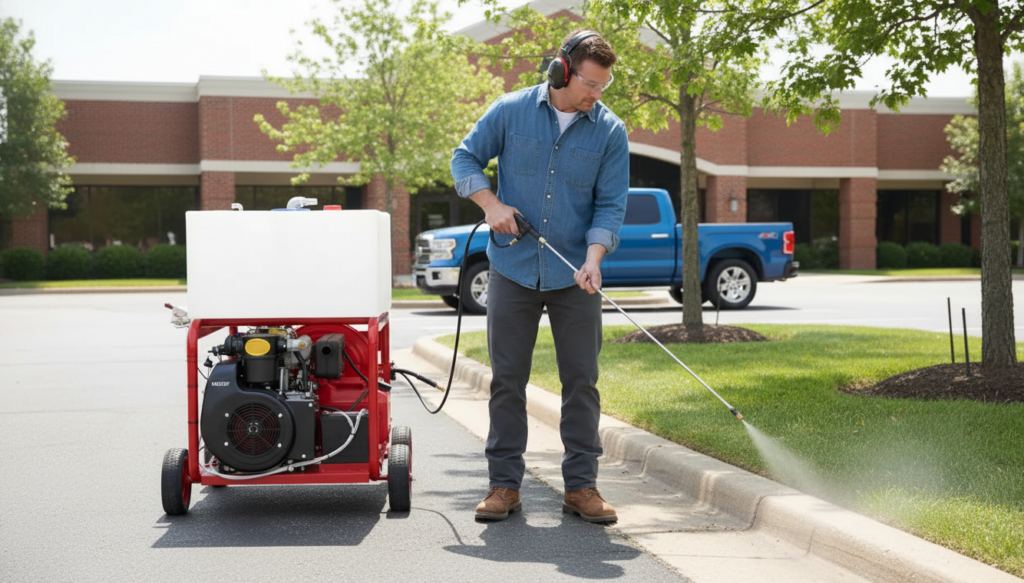
Unparalleled durability: Honda engines (such as the GX series) are known for their “easy start” technology. Even after a winter in the garage, it is usually easy to start with a single pull.
High retention rate: Thanks to their professional reputation for durable leather, these machines have an amazing retention rate in the second-hand market.
Convenient maintenance: Honda engine parts can be purchased in almost every small engine pressure cleaner repair near me shop in the world, ensuring that your equipment can maintain its peak condition for a long time.
Maintenance Tips To Extend Equipment Life
In order to keep your electric pressure cleaner or gas unit fresh, please follow the following professional advice:
Pump protection agent: If the equipment is idle for more than 30 days, please use a pump to protect the lubricant from internal corrosion and dry seals.
Inlet filter: Always check the inlet filter screen. 1 even a tiny grain of sand can destroy the high-pressure pump.
Avoid idling: Never let the engine run for more than 2 minutes without pulling the trigger. The water circulating in the pump will heat up rapidly, which may cause the heat protection valve to trip or damage the seal.
FAQ
Q: Why can’t the machine I just bought start after a winter?
A: This is the most common “cause of death” of fuel high-pressure cleaners-fuel deterioration. Regular gasoline begins to degrade after 30 days, producing gum that clogs the carburetor.
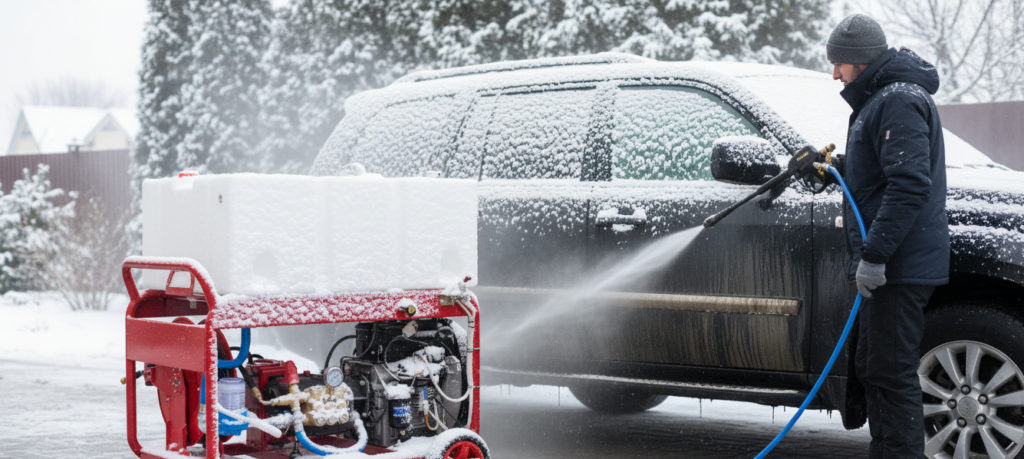
Expert advice: Always use a fuel stabilizer, or drain the tank completely before long-term storage. For the electric version, it is necessary to prevent the residual water in the pump from freezing, and the expansion force is sufficient to break the strongest metal pump head.
Q: I washed the wooden deck “fluffing”. Is there any help?
A: This is a wood fiber break caused by too much pressure or too close to the nozzle.
Remedy: After the wood is completely dry, slightly sand with 60-80 mesh sandpaper.
Prevention skills: when washing wood, the nozzle should move along the direction of the wood grain, and never stay at the same point for more than 1 second. Remember, cleaning wood depends on chemicals (detergents), not pure pressure.
Q: Why do I use detergent but the effect is not obvious?
A: Many people make the mistake of “washing while spraying”.
Professional process: first spray the detergent from bottom to top with a black soap nozzle, let it stay on the surface for 5-10 minutes (never dry out), let the chemical components decompose the dirt, and finally rinse from top to bottom with high pressure.