 Wingspan Tech



Can You Power Wash Paint Off Deck
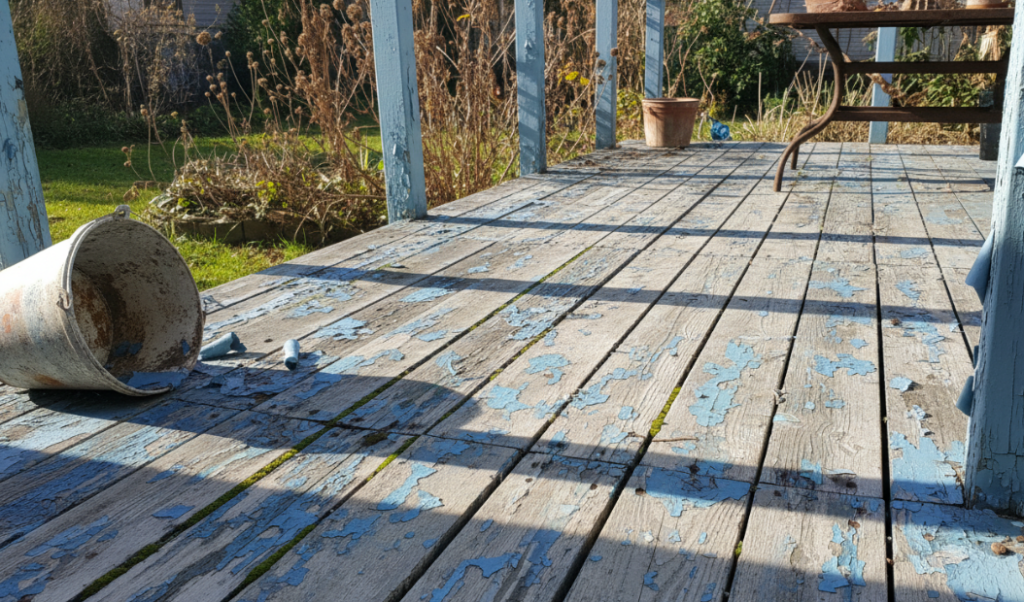
It’s certainly possible to pressure-wash off old patio paint, but it’s definitely not the easy “just wash it off” kind of job. If you don’t want to completely destroy the wood in your home, you must master extremely precise parameter settings. For the vast majority of DIY owners, the safest solution is to first apply a layer of a special chemical stripper to soften the paint surface. Once the patent skin bubbles and loosens, then strictly control the pressure of the pressure washer to between 1,200 and 1,500 PSI and rinse it with a 40-degree or 25-degree nozzle. When operating, the nozzle must sweep long and evenly along the grain of the wood, otherwise the water flow will tear the wood fibers like a carving knife at the slightest pause, causing the wood to prick, form deep pits or turn into that hairy rotten wood. While a high-pressure stream of water can easily wash away old paint that’s peeling and peeling, don’t expect it to completely remove any firmly attached parts; if you insist on staring at that stubborn paint spot and rushing it, the patio will definitely be washed away. The correct approach is to wait at least 48 hours after washing and let it dry for a final finish with a random track sander and professional wood cleaner once the moisture content of the wood has decreased.
Chemical Strippers Are Not Negotiable
Many people think that just enough pressure can solve everything, relying solely on water pressure “hard” old paint is the fastest way to ruin your patio. You should know that the vast majority of patio paints and solid toners on the market are designed to withstand weather and have excellent grip.
The first use of a dedicated chemical stripper has a crucial purpose: it breaks down the bond between the old paint layer and the wood fibers at the molecular level. Typically, the agent is left on the surface for 15 to 30 minutes and the paint becomes soft like plasticine. With this chemical aid, you can flush away the residue with lower, safer water pressure without having to resort to brute force picking, which will only completely shred the wood base.
PSI Setting And Nozzle Selection
Whether the pressure washer is set correctly directly determines whether you end up with a renovated patio or a pile of rotten wood. Wood is inherently porous and soft, and it can’t withstand the high-pressure ravages of concrete floors like it can.
1,200 – 1,500 PSI Law: This is wood restoration “golden interval”. This pressure is sufficient to lift the already loosened patent leather without penetrating deep enough to cause the internal structure of the wood to collapse.
Select the right nozzle:
- 40 Degrees: Suitable for large areas and softer wood, its fan-shaped water mist is the mildest.
- 25 degrees: The main force for flushing loose patent leather, the pressure is more concentrated, but as long as the technique is steady, it is still safe.
WARNING: Never use a 0 degree or 15 degree spray head on wood. They are like laser cutters on wood, leaving deep, irreparable grooves in an instant.
O-Series High Pressure Washer 220V
The durable ceramic pump and powerful four-stage motor provide high-performance cleaning power, with adjustable pressure, support for customized voltage and power.
380V 1500Bar Water Blaster
1450 RPM ultra-high pressure water jet pump, high cost performance, suitable for 50Hz voltage. It’s a great tool for removing rust and deburring in factories.
Diesel Power High Pressure Cleaner
The pump unit is the core component of a cleaning machine or water treatment system. Composed of a high-pressure plunger pump and an electric motor
Foam Cannon for car washing
Foam Cannon S V3.0 (Thicker Snow Foam Technology) with 1/4 Inch Quick Connector for Pressure Washer, 34 oz Bottle (V3.0 (1/4″ Quick Connector) + SOAP Sample)
How To Avoid “Bristling” And Chisel Marks
Even if the pressure is adjusted correctly, if the technique is amateurish, it will still produce “hairing” or “chisel marks”.
To achieve professional-grade visuals, your boom must always maintain a long, continuous reciprocating sweep. My habit is to start the water flow on the outside of the terrace and then carry it into the surface of the wooden board. The action should be smooth and must strictly move along the grain of the wood. This way even the slight wear that occurs is along the grain and easy to handle later. Never stop or suddenly release the trigger in the middle of the board, otherwise the pressure concentration point in that moment will leave an extremely unsightly pit.
Don’t Be Superstitious “100% Flush”
Here I must remind you of common sense: the core task of a pressure washer is to remove any loose, peeling paint. In almost all DIY cases, there will always be a few pieces “diehards” stuck to the wood.
The most common mistake a novice makes is to rush the nozzle closer to the paint or increase the pressure just for these few pieces of paint. Don’t do that! This hard-on-hard approach is 100% likely to cause the wood to crack. You have to accept that high pressure washing will only allow most of the wood “to show the face”, and as for the paint that is still stuck, we have to use other methods.
Drying And Sanding
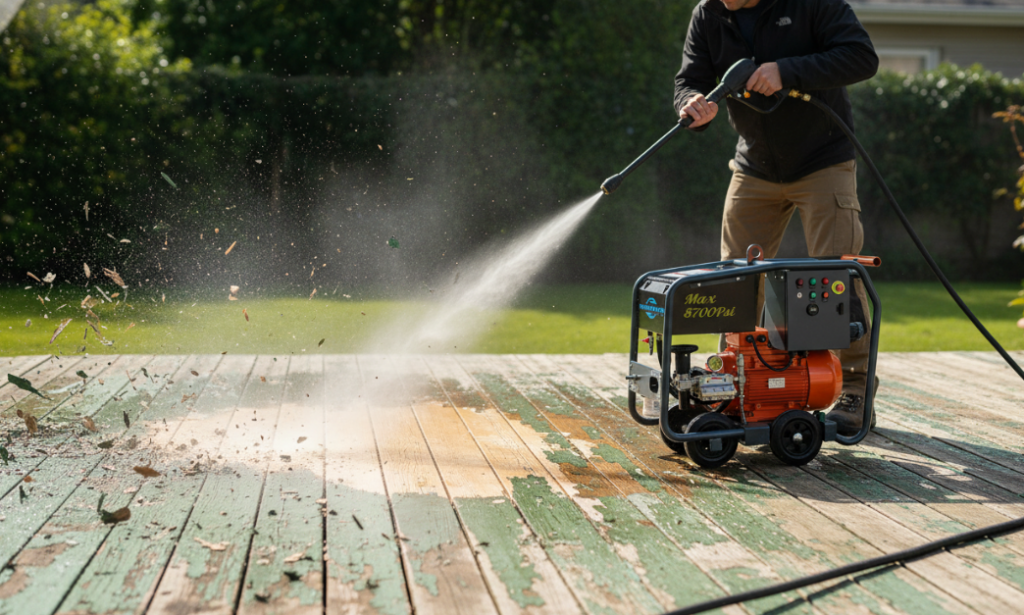
When the pressure cleaning mechanism fell off, the work was actually only half done. Because the high-pressure water stream has soaked the wood, you have to give it at least 48 hours to dry.
After the board dries and the moisture content drops:
- Using a random track sander: Use 60 to 80 purpose sandpaper to remove any stubborn paint spots and smooth out any “wool” or warped wood fibers from the rinse process.
- Professional Wood Cleaner: Finish with another pass with wood brightener or cleaner to neutralize any remaining stripper while opening the wood’s pores.
This combination punch will make your patio surface feel smooth and like new. Then paint or paint it, and the paint will really eat into it and last for many years.
Author: Mark Henderson
Throughout my career, I’ve seen countless DIY projects go wrong, which is why I’m passionate about sharing the technical ‘sweet spots’—like the perfect PSI and nozzle angles—to help homeowners achieve professional results. My goal is to help you restore your outdoor living spaces efficiently without compromising the integrity of the wood.