 Wingspan Tech



Can You Put Dish Soap In Power Washer
Pressure washers can add dish soap, but you have to follow the rules or the internal parts will be completely useless every minute.
The safest thing to do is: you have to dilute the dish soap deeply ——the ideal ratio is 1:10, and make sure it is drawn in through the “downstream injector”. This method allows the soap liquid to enter the water flow after flowing through the water pump, thereby protecting the sealing ring and O-ring in the pump body from being attacked by high-viscosity, high-foaming lotions. While they are excellent at removing oil when cleaning concrete driveways or plastic facades, pouring it directly into the soap dish without dilution can easily lead to cavitation, clogged nozzles, or even void your machine’s warranty. Just follow these career maintenance tips and you’ll save on expensive specialized cleaners while still getting high-quality cleaning results.
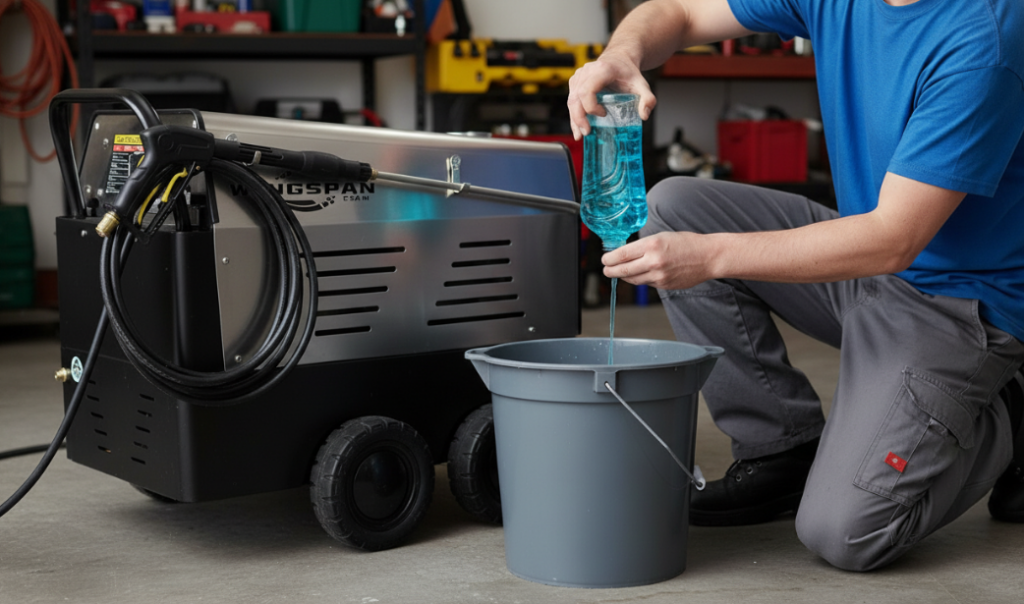
Get It Straight “Downstream Protocol”
When using dish soap, the most important thing is to figure out its path inside the machine. Most high-quality pressure washers on the market come with a “downstream ejector”, a tiny valve located behind the pump body outlet.
The pump head is the heart of the whole machine. If you’re using an “upstream” soap supply system, the high viscosity of household dish soap is a disaster for seals and O-rings. Household lotions are deliberately designed to be very sticky for the convenience of washing dishes. Once this heavy liquid hits the high-speed running parts in the pump body, it will cause “cavitation” phenomenon——. Simply put, it is bubbles that explode under extremely high pressure, and their force is enough to break the metal surface out of the pit and tear the rubber seal. Ensuring that the soap runs down the downstream channel allows it to bypass the pump head directly, preserving the internal core components.
The Science Behind The 1:10 Dilution Ratio
Dishwashing liquids are essentially highly concentrated surfactants. If used directly as stock, its consistency will not pass smoothly through the tiny apertures of the ejector and nozzle.
- Accurate measurement: Prepare 1 part dish soap and add 10 parts water.
- Gentle stirring: Always add soap to the water, not flush it, otherwise you will be happy with the foam that overflows from the bucket before you turn it on.
- Consistency Check: The mixed liquid should flow as smoothly as regular tap water. Only in this way will the suction pipe or nozzle head not be blocked.
O-Series High Pressure Washer 220V
The durable ceramic pump and powerful four-stage motor provide high-performance cleaning power, with adjustable pressure, support for customized voltage and power.
380V 1500Bar Water Blaster
1450 RPM ultra-high pressure water jet pump, high cost performance, suitable for 50Hz voltage. It’s a great tool for removing rust and deburring in factories.
Diesel Power High Pressure Cleaner
The pump unit is the core component of a cleaning machine or water treatment system. Composed of a high-pressure plunger pump and an electric motor
Foam Cannon for car washing
Foam Cannon S V3.0 (Thicker Snow Foam Technology) with 1/4 Inch Quick Connector for Pressure Washer, 34 oz Bottle (V3.0 (1/4″ Quick Connector) + SOAP Sample)
Why Dish Soap Is So Good For Washing Driveways And Facades
Many homeowners cling to dish soap because it truly has a knack for breaking down organic oil stains. When working with concrete driveways or plastic facades, dish soap can quickly sever the molecular connections between dirt and the surface of your home.
But I also have to remind you that although this thing is strong in stain removal, it lacks the mildew and algae-proof additives found in professional pressure cleaners. It’s essentially a “physical cleaner” rather than a “chemical treatment”, you still have to go along with your spray head selection and brush it manually twice if necessary to achieve the most perfect results.
Potential Risks
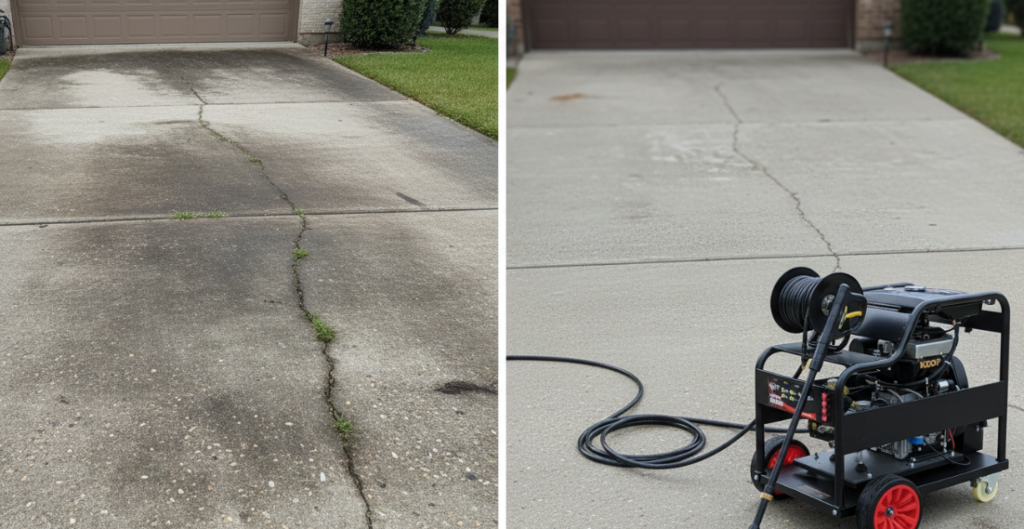
Before you pick up that bottle of dish soap, it’s important to be clear about the long-term consequences of misuse.
- Blocked spray head: Even the slightest bit of dried dish soap residue will crystallize at the nozzle tip, causing a sudden drop in pressure or a crooked water column.
- Warranty hassles: Almost all manufacturers will specify in the manual that they must use “pressure washer-specific” soap. If a technician like me takes apart a broken pump and finds dish soap residue inside that shouldn’t be there, your warranty is essentially voided on the spot.
The Flush-Out Method
You have to do a system rinse after every job. After the cleaning is done, take the soap straw out of your DIY mix and insert it into a bucket of clean water. Turn on “soap mode” and run for 60 seconds. This simple action empties the ejector and O-ring of residual lotion, preventing parts from corroding or clogging during storage.
Author: Mike Miller
I’ve seen thousands of machines come through my shop—many of them ruined by simple DIY mistakes. My mission is to share the ‘insider secrets’ of equipment maintenance, helping homeowners achieve professional cleaning results at home without the hefty repair bills. When I’m not fixing pumps, I’m usually out testing the latest cleaning gear on my own driveway.