 Wingspan Tech



Can You Power Wash A Boat
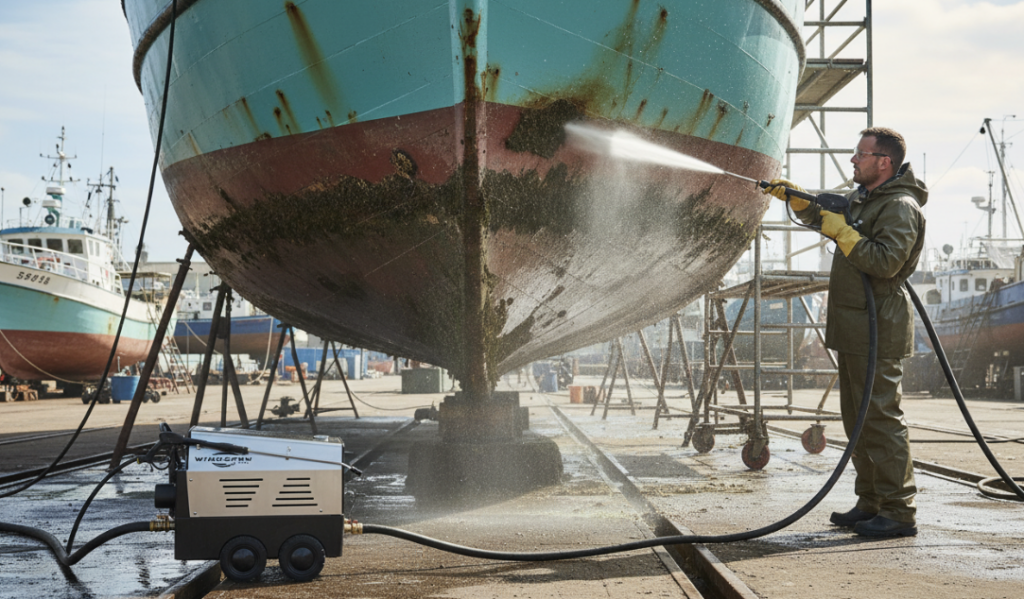
The simple and straightforward answer is: yes, high-pressure cleaning is indeed the most effective way to deal with stubborn algae, accumulated salt and that troublesome circle of waterline dirt, especially for shipowners who are just getting started. The ugly thing is, if you don’t want to wash the boat, you must stick to this safety process: the pressure value is controlled between 1500 and 2000, only 40 degree or 25 degree nozzles are allowed, and the gun head must be kept at least 12 inches from the boat surface. Although high-pressure cleaning is very useful for glass fiber reinforced plastic or aluminum hulls, if your hands are wet with ultra-high pressure, or the damn 0-degree red nozzle, you will have a high probability of “etching” the gel coat layer, tearing the nautical sticker, and even putting water directly into the engine seal or circuit joint.
Understanding The Efficiency
Power washing excels at tackling three primary enemies of your boat’s hull:
- Stubborn Algae: Once algae dries on a hull, it creates a hard crust. The kinetic energy of a pressure washer breaks this bond far faster than a hand brush.
- Salt Buildup: In saltwater environments, salt crystals can get trapped in microscopic pores. A high-pressure spray ensures these crystals are flushed out, preventing long-term corrosion.
- The Scum Line: This unsightly ring is a mix of oil, microorganisms, and minerals. Power washing cuts through this oily residue efficiently, restoring the boat’s aesthetic quickly.
The Strict Safety Protocol
To clean effectively without causing damage, you must calibrate your equipment according to professional standards.
- Optimal PSI: This range provides enough force to lift marine growth but stays below the threshold that would crack the resin in fiberglass or dent soft aluminum.
- Nozzle Choice:
- 40-degree: This is the “safe zone” nozzle. It disperses water in a wide fan, making it ideal for the deck and sensitive areas.
- 25-degree: This provides a narrower, more powerful blast, perfect for the heavy buildup on the boat’s bottom or hull.
- The 0-degree Warning: Never use this nozzle. It focuses the entire pressure into a single pinpoint that acts like a laser, capable of cutting through the boat’s exterior.
- The 12-Inch Rule: Proximity is as important as pressure. Maintaining at least 12 inches of clearance ensures the water pressure dissipates slightly before impact, providing a safety buffer for the surface.
O-Series High Pressure Washer 220V
The durable ceramic pump and powerful four-stage motor provide high-performance cleaning power, with adjustable pressure, support for customized voltage and power.
380V 1500Bar Water Blaster
1450 RPM ultra-high pressure water jet pump, high cost performance, suitable for 50Hz voltage. It’s a great tool for removing rust and deburring in factories.
Diesel Power High Pressure Cleaner
The pump unit is the core component of a cleaning machine or water treatment system. Composed of a high-pressure plunger pump and an electric motor
Foam Cannon for car washing
Foam Cannon S V3.0 (Thicker Snow Foam Technology) with 1/4 Inch Quick Connector for Pressure Washer, 34 oz Bottle (V3.0 (1/4″ Quick Connector) + SOAP Sample)
Material Specifics
The reaction to high pressure varies based on what your boat is made of:
- Fiberglass Hulls: While durable, the outer layer is brittle. Correct pressure washing removes dirt; incorrect pressure creates “pitting.”
- Aluminum Boats: These are rugged but have seams and rivets. High-pressure water should be directed across the surface rather than directly into joints to ensure the structural integrity remains intact.
Preventing Permanent Damage
Failure to follow the protocol can lead to three major types of damage mentioned in our core answer:
- Etching the Gelcoat: If the pressure is too high or the nozzle too narrow, you can “etch” or create permanent grooves in the gelcoat. This not only ruins the finish but also creates a rough surface where algae will grow even faster in the future.
- Stripping Decals: Marine-grade decals and pinstriping are applied with adhesives that can be compromised. A direct, high-pressure blast can lift the edges or completely strip your boat’s branding and registration numbers.
- Compromised Seals and Electronics: Boats are designed for water coming up from below, not high-pressure water forced in from the side. Excessive spray can bypass outboard motor seals or penetrate electrical connections, leading to corrosion or mechanical failure.
The Professional Finish
The cleaning process is only complete when the surface is protected:
- Biodegradable Marine Soap: Always use a specialized marine soap. It breaks down the molecular bond of the grime and is safe for the ecosystem when the runoff enters the water or ground.
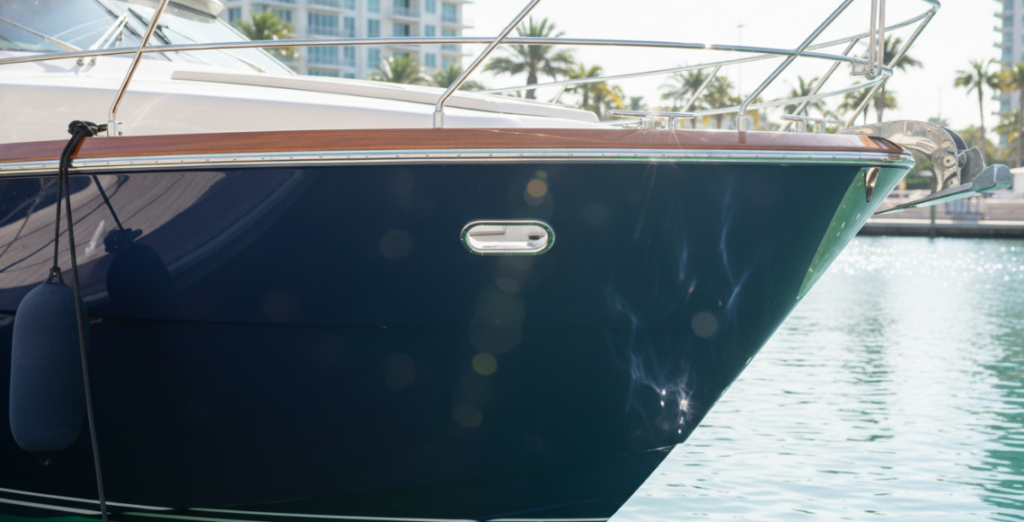
- The Necessity of Re-waxing: It is important to understand that high-pressure water is a “deep clean.” It will inevitably strip away existing protective wax layers. Without these oils, your boat is vulnerable to UV damage and oxidation. Always plan to apply a fresh coat of high-quality marine wax or sealant immediately after the hull has dried.
Author: Mark Evans
I’ve seen countless boat owners accidentally cause thousands of dollars in damage with a single high-pressure blast. I’m passionate about sharing the technical ‘know-how’ and professional safety protocols I use in the docks every day, helping you keep your boat in showroom condition without compromising its structural integrity.