 Wingspan Tech



Why Can’t You Use Bleach In A Power Washer
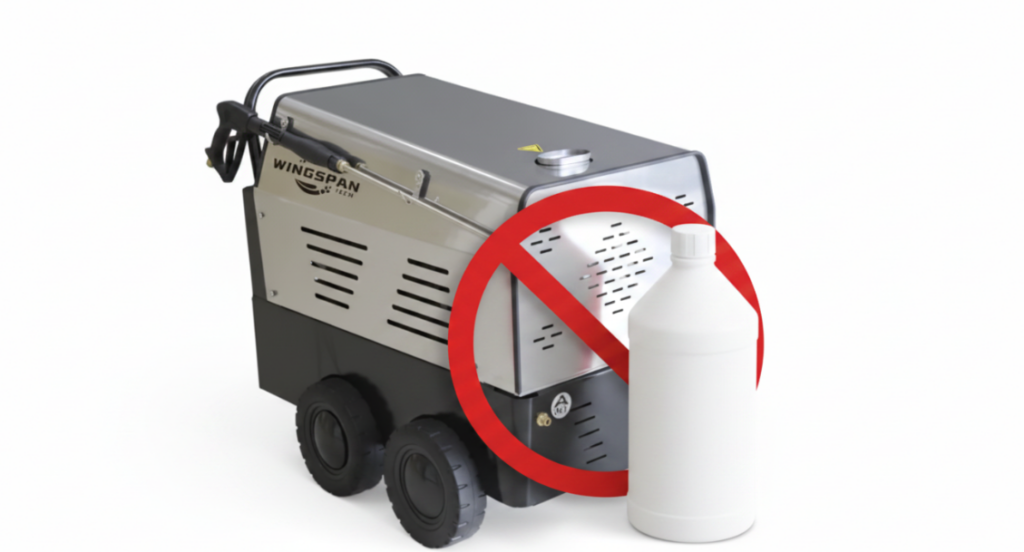
Never pour household bleach powder directly into the water inlet or detergent tank of your pressure washer. This thing is a strong oxidizer, extremely corrosive, and will disintegrate your machine directly from the inside. The average household machine is filled with rubber O-rings, plastic seals and brass pump heads, parts that are not chemically resistant at all. Bleach can quickly make these parts brittle, degrade, then leak, and ultimately render the entire pump completely useless. In addition to mechanical damage, allowing bleach to pass through the high-pressure end will also void the manufacturer’s warranty and kill the vegetation in your yard. To make matters worse, the high-pressure jet will atomize the bleach, allowing you to inhale toxic fumes. If you must deal with mold, either install a “downstream ejector” to bypass the pump completely, or switch to a biodegradable surfactant or oxygen bleach specifically labeled “pressure washer safe”.
Chemical Corrosion
When you pour household bleach into a regular pressure washer, you’re essentially introducing a powerful oxidizer into a sophisticated system designed only for water and mild detergents. The core chemical in bleach ——sodium hypochlorite“ is extremely aggressive towards the ”elastomers inside the pump.
Most consumer pump heads rely on rubber O-rings and plastic seals to maintain high-pressure vacuum. Bleach can quickly draw plasticizers out of these materials, causing them to harden and crack. Once the seal becomes brittle, the machine cannot maintain pressure, and you will find that not only is the machine leaking everywhere, but the PSI will also drop sharply. In addition, the brass pump heads used in many machines are also afraid of this thing. It will produce a kind of local corrosion called “pitting corrosion”, which will form tiny holes in the metal and eventually cause permanent structural damage to the entire pump manifold.
O-Series High Pressure Washer 220V
The durable ceramic pump and powerful four-stage motor provide high-performance cleaning power, with adjustable pressure, support for customized voltage and power.
380V 1500Bar Water Blaster
1450 RPM ultra-high pressure water jet pump, high cost performance, suitable for 50Hz voltage. It’s a great tool for removing rust and deburring in factories.
Diesel Power High Pressure Cleaner
The pump unit is the core component of a cleaning machine or water treatment system. Composed of a high-pressure plunger pump and an electric motor
Foam Cannon for car washing
Foam Cannon S V3.0 (Thicker Snow Foam Technology) with 1/4 Inch Quick Connector for Pressure Washer, 34 oz Bottle (V3.0 (1/4″ Quick Connector) + SOAP Sample)
Health And Environmental Safety Hazards
The dangers of adding bleach to a pressure washer are not limited to the machine itself. When the bleaching liquid is sprayed through a high pressure nozzle, it is “atomized” into an extremely fine mist of water. This means that instead of a flowing liquid, you’re facing a cloud of concentrated bleach particles. This stuff is extremely easy to inhale into your lungs, causing severe respiratory irritation and even burning your eyes and skin.
It is a disaster where such a bleaching liquid after high pressure jetting flows. Unlike those specially designed, biodegradable outdoor cleaners, concentrated bleach can alter the pH of the soil and directly damage the root systems of lawns, flowers, and shrubs. When the water dries, you may end up with permanent patches of dry yellow scorch on your driveway or on the edge of your exterior wall.
Professional Solutions
If you are faced with that stubborn black mold and have to use bleach, then you must use it with “downstream injector”. This small part is attached to the outlet end of the pump, and the potion is sucked in after the water has left the pump. This ensures that that corrosive liquid never hits your O-ring, seal, or brass tip.
The safest bet is to switch out of traditional chlorine bleach. I recommend trying oxygen bleach or those specialty surfactants that are labeled “Pressure Washer Safe”. These products are no less effective than bleach at killing bacteria, but they contain corrosion inhibitors that protect your equipment and are much gentler on your surroundings. Whichever you choose last, remember to rinse the system with clean water for two minutes after work, this is the king of extending the life of the machine.
Author: Dave Miller
I’ve seen firsthand how simple DIY “hacks” like using bleach can turn an expensive machine into scrap metal. The purpose of this article is to bridge the gap between professional-grade engineering and home cleaning, helping you achieve a spotless finish without sacrificing the lifespan of your equipment. When I’m not in the workshop, I’m dedicated to sharing the technical “why” behind proper tool care to save you from costly, avoidable repairs.