 Wingspan Tech



How To Use A Pressure Cleaner
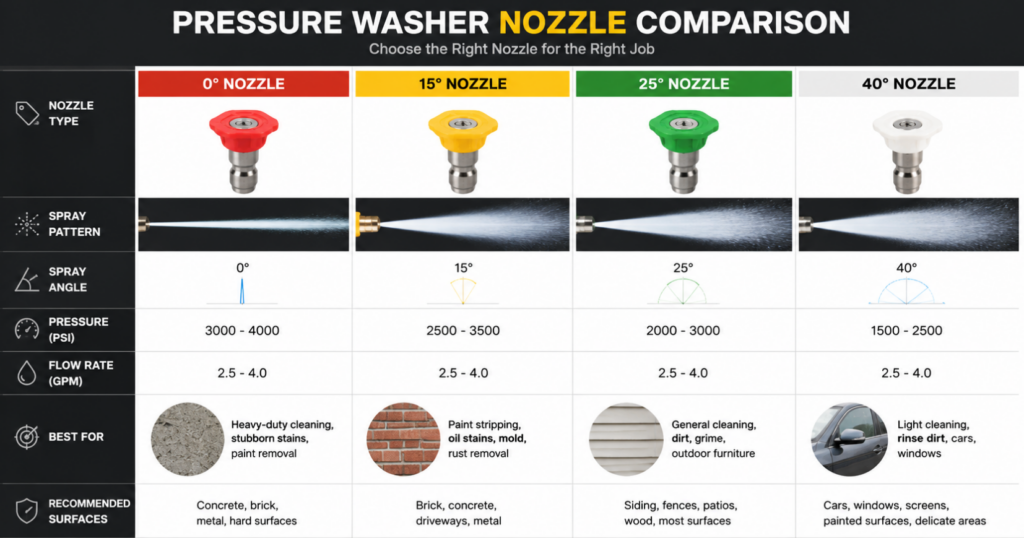
For a professional-grade clean without damaging the surface, choosing a 25-degree or 40-degree nozzle is the safest option when starting. The spray boom is held approximately 12 inches from the target surface, using a uniform sweep speed that overlaps 50% of the area with each move for the most even cleaning. If you hit that stubborn mold on your concrete driveway, switch to a 15-degree nozzle, but remember to fill the pump with water before you start, otherwise the dry-run machine will easily burn out the motor. When working with large flat surfaces, I highly recommend using a flat surface washer, which effectively prevents streaks from remaining and keeps the pressure constant. If you add a suitable cleaning agent, it will be much more effective to let the agent break down the dirt first and then rinse. Finally, a reminder: you must wear goggles and hold the trigger tightly with both hands. After all, the recoil when the high-pressure water just comes out is quite strong.
How To Choose The Nozzle And Control The Distance
Whether the cleaning efficiency is high or not depends entirely on the “fit” of the nozzle and the surface. Choosing a 25 or 40 degree nozzle actually spreads the water flow into a fan, which provides a wider and safer pressure distribution. I’ve been operating the nozzle 12 inches from the object, and this distance allows me to peel off dirt without damaging the substrate. If the dirt is too stubborn, don’t rush to get the nozzle close ——getting too close is amateurish and can easily leave irreversible scars——. Simply replace it with a 15-degree yellow nozzle to deal with those hard surfaces. It will work much better.
The Coherence Of The Action Is The Key
If you don’t do it beautifully, it all depends on whether your movements are stable enough. That professional cleaning feeling is achieved by sweeping at a constant speed. This is crucial to get you to avoid those unsightly “zebra stripes” perfectly. When you have a good rhythm and a steady spray distance, PSI and GPM can exert their maximum power to completely remove dirt instead of pushing mud back and forth on the surface.
Accessories And Cleaners Are Efficiency Enhancers
If you are working on a large area and keep holding the spray boom, your arms can’t stand it. Your hands tend to shake when you are tired, which leads to uneven cleaning. Connecting a flat washer will double your efficiency, after all, it is swept automatically at a constant speed. Add detergent to that, and this thing chemically softens mold and stubborn stains first. You don’t need to turn on too much pressure when rinsing later. Once the water passes, the surface is like new.
Safety And Maintenance, Always First
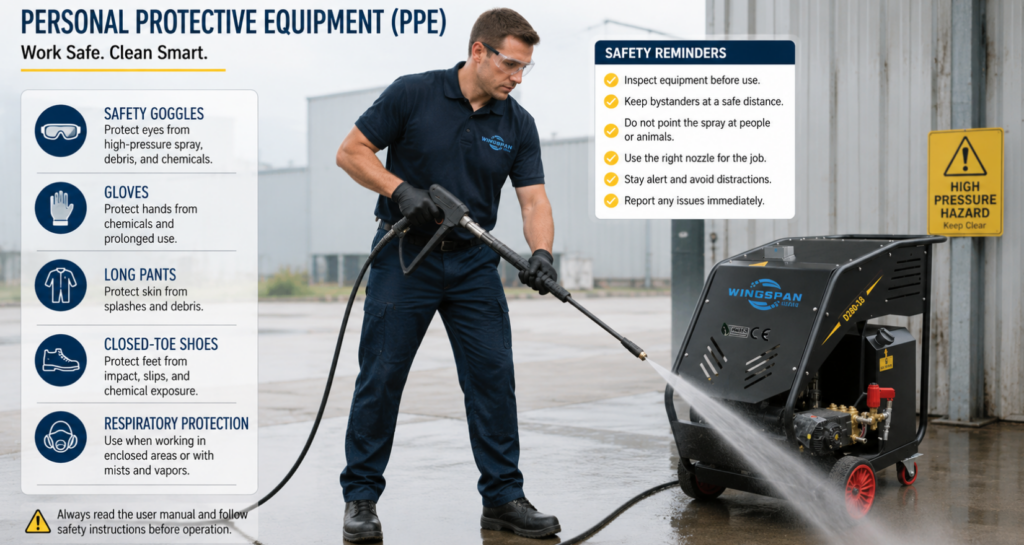
Before the project starts, be sure to drain the air from the pump. Don’t underestimate this step, if you force start the pump when there is no water in it, the internal components will easily be useless. Once the machine is ready, all that remains is to protect yourself. High-pressure water flow is no joke, and goggles must be worn at all times to prevent gravel or splashing chemicals from hurting your eyes. In addition, there will be strong recoil the moment the trigger is pulled. You must hold the spray gun firmly with both hands and take the initiative in your own hands, so that the entire operation process will be both professional and safe.
Author: Alex Rivers
Having managed countless restoration projects ranging from delicate wood decks to heavy-duty concrete driveways, I focuse on teaching homeowners the technical side of professional equipment. My mission is to help DIY enthusiasts achieve commercial-grade results while prioritizing safety and equipment longevity through proper, expert-approved techniques.