 Wingspan Tech



Can You Power Wash A Garage Floor
Pressure washing your garage floor is a real option, but only if you find the right pressure setting and use the right cleaner, as this can damage the concrete. I have seen too many owners who, due to lack of experience, immediately went too high in PSI or chose the wrong nozzle, resulting in marks on the ground, peeling off the surface, and even structural potholes. If you want to safely renovate your garage floor, it is safest to control the pressure between 2,500 and 3,000 PSI, and you must have a disc-type flat washer so that the pressure distribution is even enough. Before you do it, that stubborn oil stain must be treated with a good quality degreaser and let it sit on the stain for 10 to 15 minutes. After cleaning and drying, I highly recommend applying another layer of sealant, otherwise the fine holes on the cement surface will quickly absorb various liquids again. As long as you follow this process, whether it is tire marks or old scale, it can be cleaned cleanly and will never damage the floor.
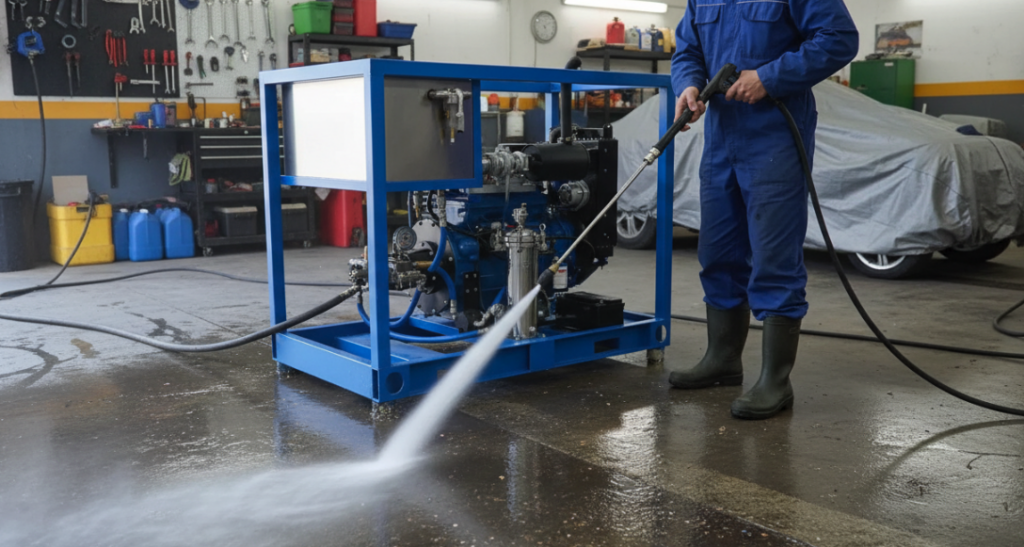
Understanding The Cost Of Indiscriminate Stress Use
Many people think that the cement floor is extremely hard and can be built in any way, but if the pressure is too great, the surface will be destroyed immediately.
If the pressure is too great, or you keep rushing at a point, the concrete surface will be “carved” with those deep marks that can’t be washed off, which is ugly. Worse still, strong scour can cause the surface to peel off and even create pits, which can damage the overall structure of the ground in the long run. So, locking the pressure in the range of 2,500 to 3,000 PSI is to find a balance between removing dirt and protecting the foundation.
How Important Is The Disc Cleaning Head
It’s best to clean the attachments with that specialized flat surface. Don’t use those single-point spray heads. The cleaning marks from those things are particularly ugly and are easily unevenly subjected to forces. The kind with a shell and a rotating nozzle inside can spread the pressure evenly on the ground. Not only does this thing prevent your hands from shaking and washing the ground, but it’s also incredibly efficient, brushing the ground much more efficiently than a single nozzle.
Tips For Tackling Stubborn Oil Stains
There is always oil, grease or chemicals on the garage floor, which have long seeped deep into the cement. If you just flush it with water, it’s a complete waste of time and the effect is almost zero. The step of “pre-treatment” in professional cleaning is impossible to bypass.
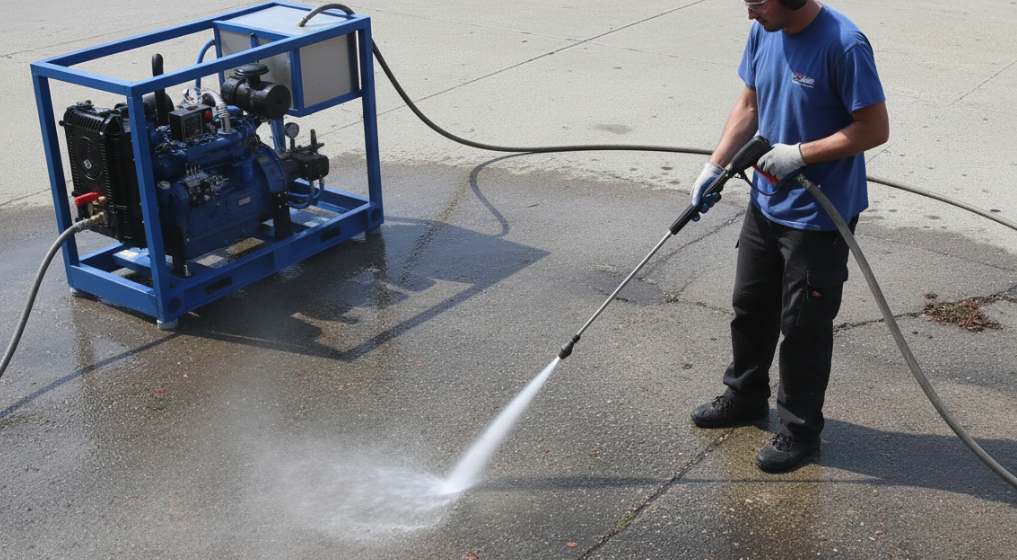
Spray a high-quality degreaser on the stain and wait patiently for 10 to 15 minutes. This step is crucial because the degreaser takes time to break down the molecular bonds of the oil stains and get them out of the pores “top” of the concrete so that they fall off with a punch during subsequent cleaning.
Long-Term Protection
Once the ground is dry, cement is still susceptible to moisture or re-staining due to its porous physical properties. So I highly recommend making sure to do the final step ——apply concrete sealant. This thin film acts as a barrier, preventing liquids, tire marks, or dust from seeping back into the cement. This investment is actually a good deal. Not only will it keep your hard cleaning results longer, but it will also make cleaning up much easier later. Remember, stress, pre-treatment, and finally sealing are the right ways to give your garage floor a fresh look.
Author: Mark Henderson
Throughout his career, he has successfully managed hundreds of residential and commercial floor restoration projects. Mark is passionate about sharing professional, systematic maintenance techniques to help homeowners protect their property investments and achieve long-lasting, high-quality results.