 Wingspan Tech



How To Clean Garage Floor With Pressure Washer
To safely and efficiently pressure wash your garage concrete floor without damaging the floor, you need to follow a standard five-step process: clean up the prep space, pre-treat stubborn oil stains, apply a special concrete degreaser, high-pressure wash the surface, and finally, thoroughly flush out any residue.For the vast majority of domestic concrete floors, an electric or lightweight gas pressure washer with a pressure between 2000 and 3000 PSI and a water flow between 1.5 and 2.5 GPM is ideal. Avoid the high-impact red or yellow nozzles, as they can easily wash or peel the concrete surface directly, you should use a fan-shaped, wider green or white nozzle and keep the nozzle head at least 12 inches from the ground Or you can upgrade directly to a dedicated rotary floor washing tray accessory, which not only washes faster but also leaves less washing streaks. Before rinsing, be sure to clean out any debris, protect the lower walls and electrical outlets with plastic film, and let a high-quality degreaser sit on the ground for 15 to 20 minutes so you can thoroughly clean out any stubborn oil, tire marks, and old dirt while keeping your property safe.
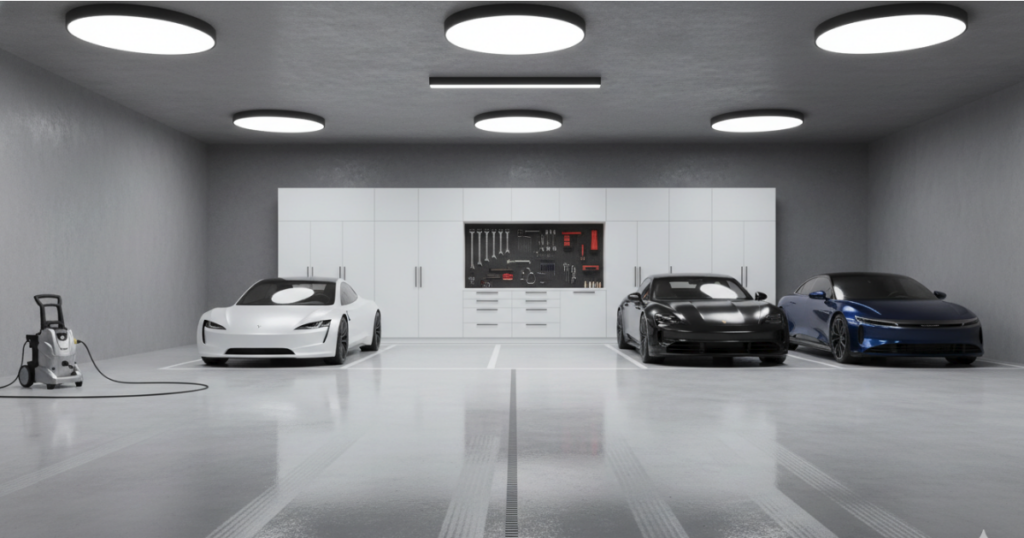
Preparation And Safety Protection
Before you can get the water into the garage, you have to empty all your vehicles, storage boxes, and tools so that the entire concrete floor is completely exposed. To prevent high-pressure water mist from damaging your home’s wall structure, I recommend using heavy-duty plastic wrap and masking paper, taping the bottom of the drywall walls and wood frame about three feet high. Always cover all low-position sockets and switches tightly, as splashing water can easily short out or even cause danger. Wearing personal protective equipment is also a safety prerequisite that cannot be ignored. During the cleaning process, goggles and non-slip safety boots can protect you from flying gravel and chemicals.
Device Selection And Parameter Configuration
Debugging the various parameters of the equipment is the key to avoiding washing out the smooth surface of the concrete floor. For common household garages, I recommend an electric or light-duty gas pressure washer with a pressure between 2000 and 3000 PSI. This pressure range provides enough impact to break up stubborn dirt without overdoing it and chipping away at the floor. Combining this pressure with a water flow rate of 1.5 to 2.5 GPM ensures that you have enough water to push the washed-down sticky dirty water smoothly and continuously out of the garage and directly into the drainage area outside the driveway.
Degreasing, Decontamination And Softening
After the space is cleared and the equipment is debugged, the next stage is the breakthrough stage. Pour a special heavy-duty concrete degreaser directly onto stubborn oil stains and charred tire prints, scrub vigorously with a stiff-bristled brush, and allow the chemical to fully penetrate the tiny pores of the concrete, as oil stains are usually extremely deep. It is important to let the degreaser sit on the ground for 15 to 20 minutes before starting a high-pressure rinse, without letting it dry out. These ten minutes of waiting are the key to determining the cleaning effect. It gives the chemical components enough time to break the bond between the oil scale and the concrete, allowing the subsequent flushing to do more with less effort.
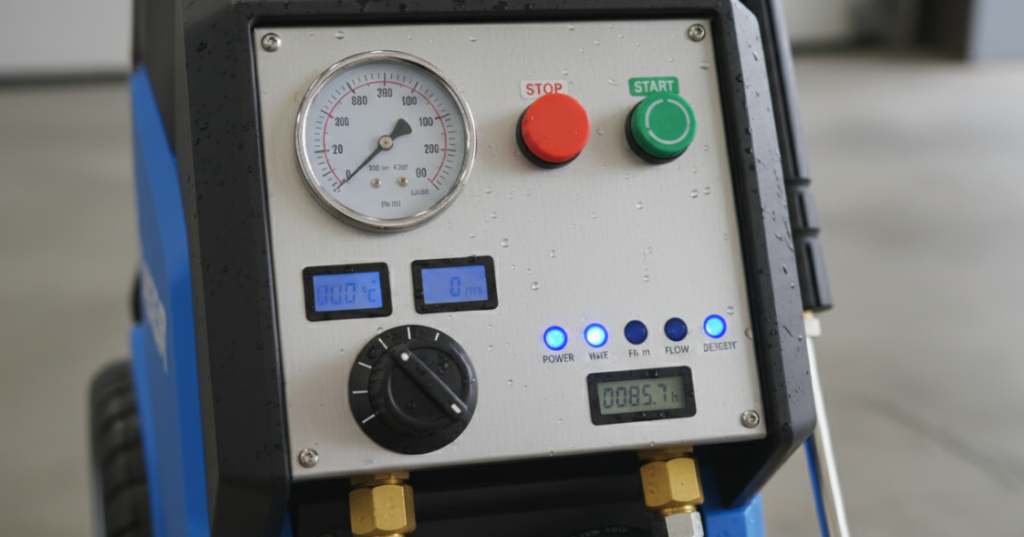
Nozzle Selection And Flushing Method
When preparing to start spraying water for flushing, the choice of nozzle is a matter of life and death for the floor. Never use a red zero or yellow fifteen degree nozzle, the kind that is highly condensed “water jet” and can easily flush your cement floor out of the honeycomb or peel it off. You should switch to a wider green twenty-five or white forty-degree nozzle and keep the nozzle at least twelve inches from the ground while strafing laterally. If the garage is large, I personally highly recommend that you upgrade directly to the rotary floor scrubber attachment. Not only does it maintain a constant, safe distance between the nozzle and the ground, it also increases cleaning speed exponentially, and most importantly, it never leaves streaked prints of varying depths that are easy to wash with traditional spray guns.
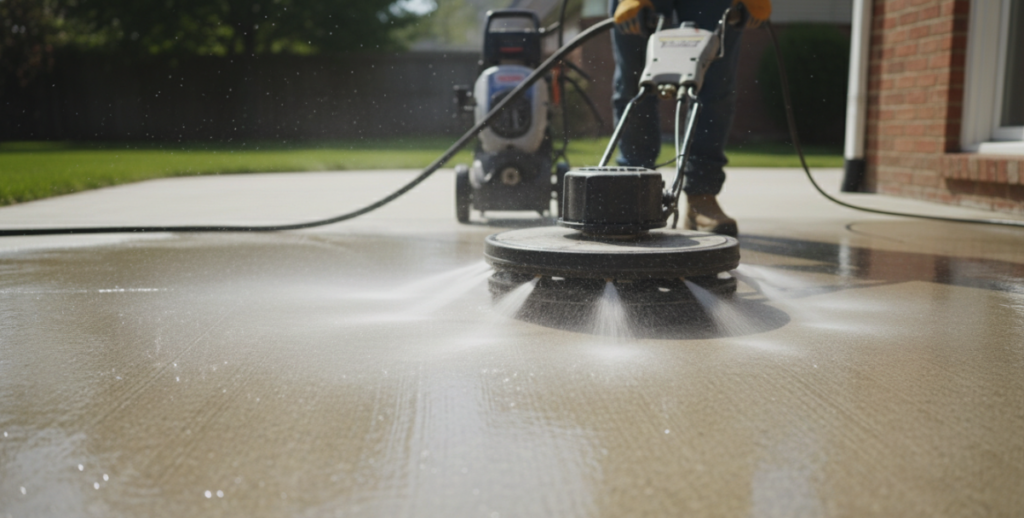
Ultimate Cleaning And Delivery Effect
The final finishing touch is to flush all the soap foam and disintegrated dirt out of the garage completely. It is recommended to start at the innermost end of the garage, facing the gate, and use a fan-shaped stream to push dirty water all the way out to a safe drainage area. This thorough rinse removes any remaining chemicals, stubborn oil, tire marks, and dirt that has seeped into the depths. When dealing with some extremely dirty surfaces, choosing high-flow, high-stability high-pressure water jet cleaning equipment can provide you with commercial-grade efficient scouring force and stable water flow, allowing you to easily deliver perfect cleaning results without damaging your property at all.