 Wingspan Tech



Can You Run Power Washer Without Water
Let me be clear, absolutely not. Never start the pressure washer without water.
In just 30 to 60 seconds, your high-pressure pump could be completely useless. This condition, known as dry running, creates extreme friction and high temperatures inside the pump chamber. Without water to carry away the heat, the ceramic piston would shatter, the one-way valve would deform, and ultimately the entire mechanical structure would be paralyzed. Repair costs for this level of damage are usually more expensive than buying a new machine. Even if you just want to “test” the engine for a few seconds, the vacuum effect created by the lack of moisture will put a huge strain on the drivetrain and instantly turn your expensive cleaning tools into a pile of scrap metal.
Why Is Water The Lifeline Of Pumps?
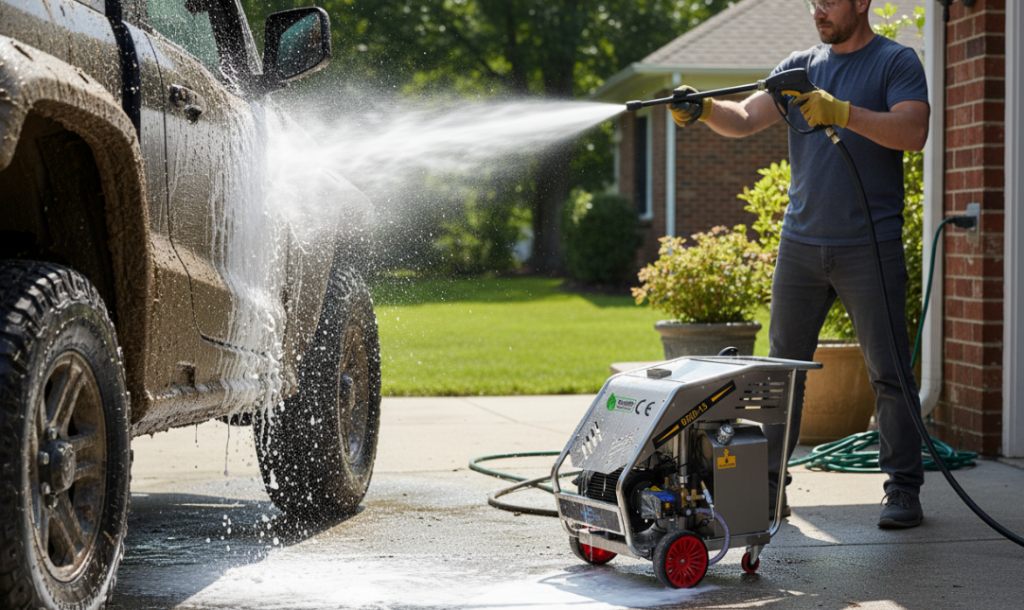
To understand why turning on without water is catastrophic, you have to first understand the dual role of water in it. In high-pressure systems, water is not just a medium used to flush dirt, it is also a coolant and lubricant.
The high-pressure cleaning pump rotates at an astonishingly high speed. A piston or plunger generates enormous kinetic energy when it reciprocates. In normal operation, the continuously flowing cold water absorbs this heat and carries it away from the nozzle. Once you cut off the water supply, there’s nowhere to go for the heat. Within seconds, the temperature inside the pump chamber can soar to a point where it exceeds the melting point of the internal parts.
What Happens When There Is A Lack Of Water?
When you pull the starter cord or flip the switch before you even connect the water, a series of mechanical failures begins:
- Seals and O-ring melting: Seals are usually made of high-grade rubber or composite plastics, which can withstand high pressures but absolutely cannot withstand extreme dry heat. Without water to lubricate between the seal and the piston, the heat from friction can instantly deform or melt the seal. Once the seal fails, the pump cannot generate pressure and water may even leak into the crankcase.
- Ceramic piston cracking: Many professional grade machines use ceramic pistons because they are hard and wear-resistant. But ceramics have an Achilles’ heel: fear “of thermal shock”. When the pump dry grinds hot and then you suddenly switch on cool water, or the dry heat is unevenly distributed, these pistons can break or develop microscopic cracks, causing the pump head to simply jam.
- One-way valve deformation: One-way valves control the direction of water flow and are usually made of plastic or light metal. The high temperatures generated by dry grinding can cause these valves to warp or even melt together. If the valve goes wrong, the machine will shake like crazy or won’t suck up any water at all.
O-Series High Pressure Washer 220V
The durable ceramic pump and powerful four-stage motor provide high-performance cleaning power, with adjustable pressure, support for customized voltage and power.
380V 1500Bar Water Blaster
1450 RPM ultra-high pressure water jet pump, high cost performance, suitable for 50Hz voltage. It’s a great tool for removing rust and deburring in factories.
Diesel Power High Pressure Cleaner
The pump unit is the core component of a cleaning machine or water treatment system. Composed of a high-pressure plunger pump and an electric motor
Foam Cannon for car washing
Foam Cannon S V3.0 (Thicker Snow Foam Technology) with 1/4 Inch Quick Connector for Pressure Washer, 34 oz Bottle (V3.0 (1/4″ Quick Connector) + SOAP Sample)
Why You Cann’t?
Many newbies have a bad habit of starting the engine before connecting the water line, thinking “to see if it can work”. This practice creates a vacuum effect.
Pumps are designed to deliver incompressible liquids (water). When you let it go “pump” the air, the internal drivetrain vibrates violently due to the unbalanced resistance. This places a significant additional burden on the bearings and connecting rods. Even if the pump head doesn’t melt off on the spot, the tiny wear you put on those delicate internal polished surfaces will significantly shorten its life.
The Right Startup Sequence
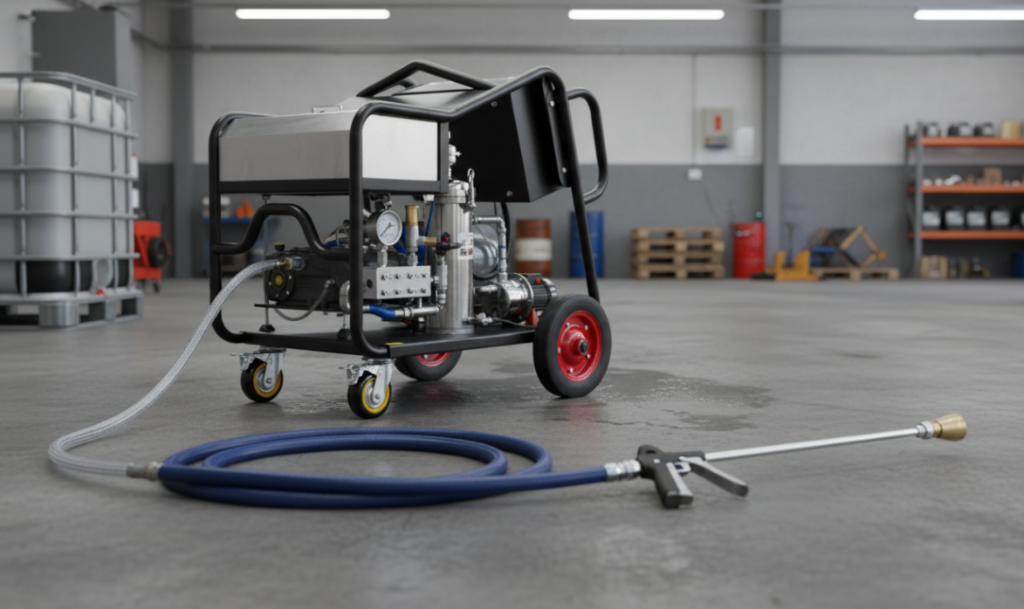
To protect your investment and get a few more years of use out of your machine, be sure to memorize this “water first, electricity later” process:
- Check the water inlet: See if the filter on your garden hose is dry and has any debris.
- To connect and turn on: Connect the water pipe and unscrew the faucet completely.
- Drain the air (critical step): Before starting the engine, pinch the airbrush wrench. Let the water flow through the machine until the “puff puff” bubbles disappear and the water comes out smoothly and smoothly.
- Start the machine: You can only pull the starting cord or turn on the power supply if the pump body is completely filled with water.
Author: Mike Reynolds
With over 11 years of experience working in a pressure washer and small engine repair shop, I’ve personally disassembled and fixed countless machines. I’ve seen firsthand the expensive tragedies that happen when people misuse their equipment—especially the devastating effects of “dry running.”