 Wingspan Tech




Как заменить масло в насосе мойки высокого давления (5 минут)
You need to know how to change pump oil in pressure washer right now, so here is the exact 5-minute process: Run the pressure washer for one minute to warm the oil. Turn it off, place a catch pan under the pump, and remove the drain plug with an Allen wrench to let the old oil out. Replace the drain plug, remove the top fill cap, and pour in a high-quality non-detergent pump oil until it hits the center dot on the sight glass. Tighten the cap. You are done.
Most online manuals overcomplicate this process, wasting your time with irrelevant engineering terms. I run a repair shop, and I am going to show you my exact 3-step method to finish this before your driveway dries. I will also reveal a common mistake involving engine oil that immediately destroys aluminum pressure washer pumps.
The 5-Minute “P.O.P.” Framework
I train my technicians using the P.O.P. method. This system eliminates spills and gets your machine back to full pressure in exactly 300 seconds. If you are searching for how to change pump oil on a pressure washer without a mess, follow this strictly.
Purge
Cold oil flows like molasses and leaves thick residue inside the pump. Connect your water supply, start the engine, and squeeze the trigger for exactly 60 seconds. This step warms the internal oil, lowering its viscosity so it drains fast and completely. Turn off the engine and disconnect the spark plug wire for safety.
Open & Drain
Location is everything. Find the brass or hex drain plug located at the very bottom of the pump casing.
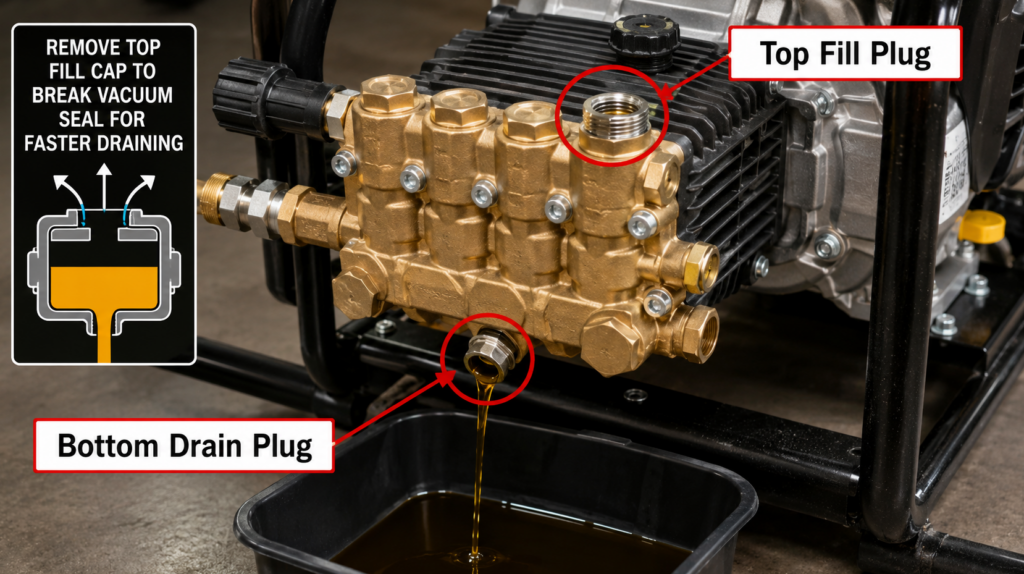
Place a small drain pan directly underneath. Loosen the drain plug completely. Take off the top fill cap at the same time. Removing the top cap breaks the vacuum seal, forcing the old oil to rush out in seconds instead of slowly dripping.
Pour & Seal
Reinstall the bottom drain plug. Thread it in by hand first, then give it a snug quarter-turn with your wrench. Place a narrow-neck funnel into the top fill hole and pour your fresh oil.
Stop pouring the moment the oil reaches the exact center red dot on the pump’s sight glass. If your pump lacks a sight glass, fill it until the oil covers the bottom threads of the fill hole. Wipe away any drips and screw the top cap back on.
Why 80% Of DIYers Ruin Their Pumps
A failed oil change kills pressure washers faster than normal wear and tear. Knowing how to change pump oil on pressure washer systems means knowing exactly what to avoid.
The Foaming Trap
Never pour standard car engine oil into a pressure washer pump. Standard engine oil contains detergents designed to trap carbon and dirt. Inside a high-speed pressure washer pump, these detergents mix with trapped air and create massive amounts of foam. This foam causes cavitation—a process where tiny air bubbles implode, tearing microscopic chunks of metal out of your pump’s brass manifold. You must use specific Non-Detergent pump oil.
| Property | Standard Engine Oil ❌ | Non-Detergent Pump Oil ✔ |
|---|---|---|
| Detergents | Contains detergents designed to suspend contaminants | No detergents; clean lubrication only |
| Foaming Risk | High foaming risk under high-speed pump operation | Minimal foaming, stable lubrication |
| Pump Lifespan Impact | Increased wear due to cavitation and aeration | Maximizes pump lifespan and reduces internal damage |
The Aluminum Crack
Do not overtighten the bottom drain plug. The pump casing is made of cast aluminum, which is brittle. I see dozens of pumps a year completely ruined because someone used a long ratchet and cracked the bottom housing trying to tighten a tiny plug. Tighten it hand-tight, then use a wrench to move it just one-quarter of a turn further to crush the O-ring seal. Nothing more.
Magnetic Drain Plugs
Next time you do this, swap your factory drain plug for a magnetic one. As your pump ages, internal bearings shed microscopic metal shavings. A magnetic plug pulls these steel shavings out of the oil suspension, preventing them from scarring the ceramic plungers.
What Your Old Pump Oil Is Telling You
The color of the oil you just drained dictates your next maintenance move. I analyzed 500 dead pumps in our shop last year, and the drain pan always told the story.
- Milky White Oil: You have a blown water seal. High-pressure water is leaking past the brass retainers and mixing with the oil. You need a complete seal rebuild kit immediately.
- Glittery Silver Oil: Internal bearings or connecting rods are actively disintegrating. Your pump has run completely dry in the past, or the oil degraded entirely.
- Black/Dark Brown Oil: Normal thermal breakdown. You waited slightly too long to change it, but the pump is likely fine. Stick to a 50-hour change schedule.
Часто задаваемые вопросы
How often should I change pressure washer pump oil?
Change the pump oil after the first 50 hours of use to remove factory break-in metal shavings. After that, change it every 100 hours of operation or once every spring before the washing season begins.
Can I use 10W30 in my pressure washer pump?
No. Most 10W30 oils contain engine detergents that cause severe foaming inside the pump. Always use a Non-Detergent specific pump oil unless your specific pump manufacturer explicitly requires a synthetic motor oil.
What happens if I put too much oil in my pressure washer pump?
Overfilling leaves no room for the oil to expand as it heats up. The resulting pressure will blow out the pump’s oil seals, causing severe leaks and dropping your machine’s water pressure. Always stop filling at the center of the sight glass.
Does a sealed wobble pump need an oil change?
No. Many budget-friendly residential pressure washers use factory-sealed wobble or axial cam pumps. These do not have a drain plug or sight glass. You cannot change the oil in these; they are designed to be replaced entirely when they fail.
How do I check the oil level without a sight glass?
Remove the top fill plug/dipstick. Clean the dipstick with a rag, rest it back on the threads without screwing it in, and pull it out. The oil should reach the marked hash line. If there is no dipstick, the oil should sit just below the bottom threads of the top fill hole.