 Wingspan Tech




Can You Pressure Wash An Engine? 5 Costly Mistakes
Yes, you can pressure wash an engine. You just need to restrict the water volume and seal the electrical connectors. Ignoring these two variables turns a routine cleaning into a $2,000 ECU replacement or a hydro-locked motor. Cautious owners often avoid cleaning the engine bay entirely, letting corrosive grime degrade rubber hoses and trap excess heat around the engine block. You do not have to choose between a filthy engine and a broken vehicle.
This guide breaks down the exact mechanical realities of how water interacts with modern vehicle electronics. You will learn the exact physical limits of your engine components and how to wash away years of grease without risking a single short circuit.
The 3-Zone Engine Defense System (A Framework for Zero Risk)
Treating the entire engine bay as a single surface guarantees electrical failure. Modern engine bays require a compartmentalized approach based on component vulnerability.
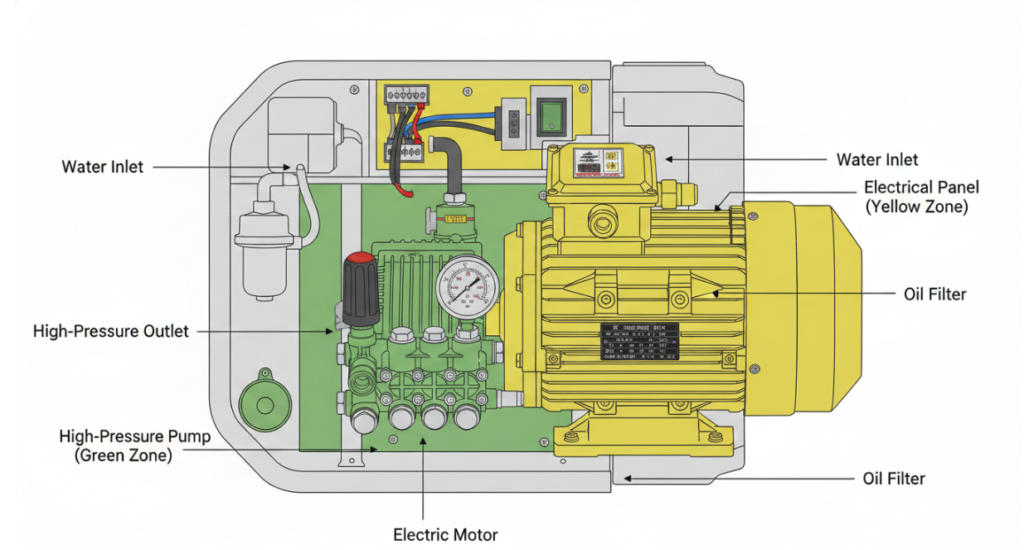
The Red Zone (Zero Direct Water): Alternator, fuse boxes, exposed air intake filters, coil packs, and the ECU. Water intrusion here causes immediate short circuits or mechanical failure. These components require manual covering and hand-wiping only.
The Yellow Zone (Deflected Mist Only): Rubber vacuum hoses, serpentine belts, plastic engine covers, and insulated wire looms. These areas can handle highly atomized water mist from a distance of at least 24 inches. Direct, sustained pressure will force water past degraded rubber seals.
The Green Zone (Safe for Direct Pressure): The firewall, metal strut towers, empty chassis voids, and the underside of the hood (excluding under-hood insulation pads). These painted or bare metal surfaces tolerate direct pressure washing to remove baked-on road grime.
5 Costly Mistakes That Will Brick Your Engine (And How to Avoid Them)
Mistake 1: Falling for the “Garden Hose is Safer” Myth (The GPM Trap)
Volume destroys electrical seals faster than pressure. Many owners ditch the pressure washer for a standard garden hose, believing the lower pressure (PSI) guarantees safety. A standard garden hose dumps 8 to 10 Gallons Per Minute (GPM) of raw, heavy water directly over the engine. This massive volume pools in crevices and overwhelms the rubber gaskets inside electrical connectors.
A standard electric pressure washer outputs around 1.2 to 1.5 GPM. Using a 40-degree wide-angle tip from three feet away atomizes that small amount of water into a fine mist. The mist breaks down degreaser effectively without generating enough standing water to flood a sensor housing.
Garden Hose vs. 1.2 GPM Pressure Washer
| Feature / Criterion | Garden Hose | 1.2 GPM Pressure Washer |
| PSI (Water Pressure) | Low (typically 40 – 80 PSI) | High (typically 1,000 – 2,000 PSI) |
| GPM (Water Flow Rate) | High (typically 5 – 10 GPM) | Low (strictly 1.2 GPM) |
| Atomization Level | Low (produces solid streams or large droplets) | High (creates fine mist and highly atomized droplets) |
| Flooding Risk | High (due to the large volume of water discharged) | Low (uses significantly less water volume over the same period) |
Mistake 2: Relying Solely on Plastic Bags for Waterproofing
Plastic bags do not stop capillary action. The standard advice of wrapping an alternator or fuse box in a grocery bag is fundamentally flawed. Moisture easily condenses inside the bag, and loose water at the bottom of the bag travels straight up aging wire looms via capillary action, pulling water directly into the connection pins.
True protection requires a two-step barrier. Unplug sensitive sensors and apply a thin layer of dielectric grease to the connector pins before reconnecting them. This silicone-based grease repels moisture at a microscopic level. Bagging the component after applying dielectric grease is the only way to guarantee a dry connection.
Mistake 3: Triggering Aluminum Thermal Shock
Spraying cold water on a hot aluminum engine block causes microscopic stress fractures. Aluminum expands rapidly under heat. A running engine routinely pushes surface temperatures above 200°F (93°C). Hitting that expanded metal with 60°F (15°C) water causes the exterior aluminum to contract instantly while the interior remains expanded.
Wait until the exhaust manifold is cool enough to touch with your bare hand. According to metallurgical stress tests from engine rebuilding shops, aluminum blocks exposed to a sudden 140-degree temperature drop show a 12% increase in surface micro-cracking around threaded bolt holes over time. Always wash a cold engine, preferably first thing in the morning before starting the vehicle.
Mistake 4: Ruining Bare Metal with High-Alkaline Degreasers
Purple and heavy-duty industrial degreasers permanently stain bare aluminum parts. These high-alkaline chemicals react violently with unpainted aluminum components like intake manifolds and alternator casings, leaving irreversible white oxidation streaks within seconds of contact.
Use a dedicated citrus-based All-Purpose Cleaner (APC) diluted 10:1 for routine engine bay detailing. If you face heavy oil sludge, apply the strong degreaser only to the localized grease spot using a detail brush. Never broadcast-spray heavy degreaser blindly across the entire engine bay.
Mistake 5: Skipping the Forced Air Drying Phase
Air-drying an engine bay guarantees stagnant water pooling in the spark plug wells. Modern engines feature deep vertical cavities for spark plugs and coil packs. Gravity pulls water down into these wells, where ambient air cannot reach it to evaporate. Starting the engine with water trapped here often triggers immediate engine misfires and destroys the ignition coils.
A dedicated leaf blower or compressed air nozzle is a non-negotiable tool for this job. You must force the standing water out of every crevice, bolt hole, and sensor housing immediately after the final rinse. Keep the blower nozzle 12 inches away from the components and push the water downward toward the ground.
Step-by-Step: How to Pressure Wash an Engine Bay Safely
Step 1: Preparation and Disconnection. Disconnect the negative terminal of the car battery. Tuck the cable away so it cannot accidentally touch the battery post.
Step 2: Component Isolation. Apply dielectric grease to accessible exposed connectors. Wrap the alternator, exposed air intakes, fuse box, and the battery in heavy-duty plastic bags. Secure the bags with zip ties or painter’s tape to prevent high-pressure air from blowing them off.
Step 3: Dry Agitation. Use a dry detailing brush to knock loose dirt, dead leaves, and pine needles from the windshield cowl and engine crevices. Vacuum this debris out completely so it does not turn into wet sludge later.
Step 4: Chemical Application. Spray your diluted citrus cleaner exclusively on the Green and Yellow zones. Let it dwell for 3 to 5 minutes to break down the hydrocarbon bonds of the grease. Do not let the chemical dry on the surface. Agitate stubborn grease spots with a soft-bristle brush.
Step 5: The Micro-Wash Rinse. Equip your pressure washer with a 40-degree tip. Stand three feet back. Sweep the wand quickly across the engine bay, spending no more than one second over any specific area. Keep the wand moving constantly to rinse away the suspended grime.
Step 6: Evacuation and Dressing. Blast the entire engine bay with compressed air until bone dry. Remove the plastic bags. Reconnect the negative battery terminal. Start the engine and let it idle for 10 minutes; the operating heat will bake off any microscopic moisture left behind.
Часто задаваемые вопросы (FAQ)
Can pressure washing an engine cause a short circuit?
Yes. Forcing water past the rubber weather-pack seals on electrical connectors will bridge the pins, causing immediate short circuits. Maintaining a distance of 36 inches and using a 40-degree wide-angle tip prevents the water pressure from breaching these seals.
What should I cover before I pressure wash my engine bay?
You must completely seal the alternator, engine fuse box, battery terminals, exposed aftermarket air filters, and the Engine Control Unit (ECU). Painter’s tape and thick plastic bags are the standard barrier materials.
Is it better to clean an engine hot or cold?
Always clean a cold engine. Spraying cold water onto a hot engine block causes rapid thermal contraction, which severely damages cast iron and warps aluminum components.
Can I use dish soap to wash my engine?
Dish soap lacks the chemical solvents required to break down baked-on petroleum grease and motor oil. You need an automotive-specific All-Purpose Cleaner (APC) or a citrus-based degreaser to emulsify heavy engine grime.
How long does an engine take to dry after washing?
An engine bay will not air-dry properly due to deep pockets and shielded cavities. You must use compressed air or a leaf blower to force water out immediately. Once blown dry, idling the car for 10 minutes finishes the drying process via radiant engine heat.
Will pressure washing fix an oil leak?
No. Pressure washing only removes the exterior evidence of the leak. Mechanics frequently pressure wash dirty engine bays solely to track the origin point of fresh oil weeping from a failing gasket.
Can water get into the spark plugs during a wash?
Yes. The spark plug wells are located at the top of the engine block and act like cups. If water pools there and bypasses the coil pack boots, it causes the engine to misfire violently when started.
Do car dealerships pressure wash engines?
Yes. Dealership detailers routinely pressure wash engine bays on used cars. They use low-GPM electric pressure washers, heavily atomized spray patterns, and high-velocity air cannons to dry the engine instantly, minimizing any risk of electrical damage.