 Wingspan Tech



Pressure Washing Injuries: DIY Dangers & First Aid
Pressure washing injuries fall into two distinct categories: minor surface lacerations you can treat at home, and high-pressure injection injuries that require immediate emergency surgery. If a high-pressure stream of water has penetrated your skin, stop reading and go to the Emergency Room right now. The entry wound might look like a tiny pinprick, but water, bacteria, and toxic debris have likely blasted deep into your muscle tissue, causing silent, rapid necrosis.
Most weekend DIYers look at a small cut on their foot from a power washer wand and assume a simple band-aid will fix it. That assumption costs people their fingers, toes, and limbs every year. Here is exactly how to assess the severity of your pressure washing injury, apply proper first aid, and know precisely when to rush to a medical professional.
The Deceptive Nature Of High-Pressure Injection Injuries
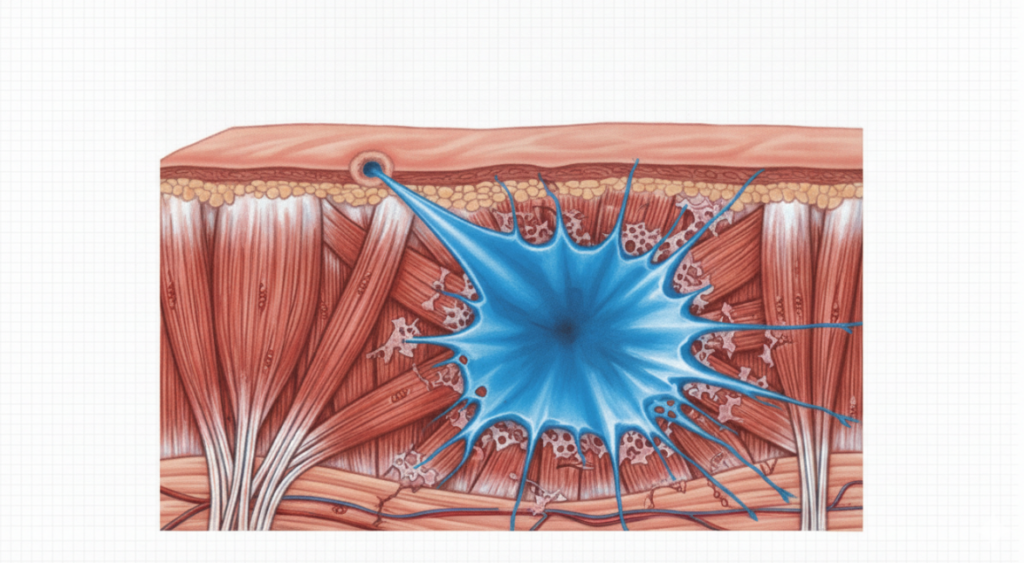
High-pressure injection injuries are surgical emergencies disguised as minor cuts. A power washer operating at 3,000 PSI shoots water at speeds exceeding 200 miles per hour. When this stream hits human skin, it acts like a hypodermic needle.
The immediate surface wound rarely bleeds heavily. The real damage happens beneath the skin. The water jet forcibly expands tissue, tearing apart fascia, muscle fibers, and blood vessels. Worse, it drags dirty driveway water, algae, engine oil, and toxic chemical detergents directly into the wound bed.
Delayed treatment is the primary cause of amputation in power washing accidents. Patients often feel fine for the first few hours, experiencing only mild throbbing. By the time severe pain and extreme swelling set in 12 hours later, compartment syndrome—where pressure builds up inside a muscle space, cutting off blood flow—has already begun.
The “3-Triage Red Flag System” For Pressure Washing Injuries
Correctly identifying your injury type dictates your next move. Use this expert-developed triage system to determine if you need a first aid kit or a trauma surgeon.
Level 1: Surface Lacerations
A glancing blow from a distance causes Level 1 injuries. The water scraped the top layer of skin but did not puncture deeply. The wound resembles a bad case of road rash or a shallow scrape. It bleeds consistently but stops with direct pressure.
Action: Proceed to the First Aid section below.
Level 2: Deep Cuts or Flap Wounds
The water stream hit close enough to slice through the epidermis and dermis, creating a gaping cut or a “flap” of skin. You might see yellow fat tissue. The pain is sharp and immediate.
Action: Wash gently with clean water, wrap tightly with sterile gauze, and drive to an Urgent Care clinic for stitches and a tetanus shot.
Level 3: The “Pinprick” Injection
The nozzle was inches from your skin. You have a very small puncture wound, often on the hand, foot, or shin. The area feels strangely numb, tight, or heavily bruised, but there is almost no external bleeding.
Action: Do not apply an ice pack. Do not compress it tightly. Go directly to a hospital ER and explicitly tell the triage nurse: “I have a high-pressure injection injury.”
| 🚥 Injury Level | 👁️ Visual Symptoms | ⚡ Pain Level | 🚑 Required Action |
| 🟢 Mild (Level 1) | Minimal to no swelling; no visible deformity; normal or slightly reduced range of motion. | Low (1-3/10)<br>Dull ache, tolerable. | Self-Care: Stop the activity, apply ice, monitor. May return to activity if pain resolves. |
| 🟡 Moderate (Level 2) | Noticeable swelling; mild to moderate bruising; limping or guarded movement. | Moderate (4-7/10)<br>Sharp pain with movement. | Medical Evaluation: Stop activity immediately. Apply RICE (Rest, Ice, Compression, Elevation). See a doctor within 24-48 hours. |
| 🔴 Severe (Level 3) | Rapid/severe swelling; obvious physical deformity; inability to bear weight; open wound. | Severe (8-10/10)<br>Intense, constant pain. | Emergency Care: Do NOT move the injured area. Immobilize it and seek immediate emergency medical attention (ER). |
Step-by-Step First Aid For Minor Pressure Wash Scrapes
Proper cleaning prevents aggressive bacterial infections. Driveways and siding are covered in bacteria, mold, and animal waste. If you have confirmed your injury is strictly a Level 1 surface scrape, follow these exact protocols.
- Flush with clean tap water immediately. Do not use the garden hose you were just working with, as the nozzle may carry soil bacteria. Run the wound under indoor tap water for a full five minutes to mechanically flush out dirt particles.
- Wash with mild antibacterial soap. Avoid harsh chemicals like hydrogen peroxide or rubbing alcohol. They destroy healthy, healing tissue and delay recovery. Gently lather with regular soap and rinse.
- Apply a thin layer of Bacitracin or Polysporin. Antibiotic ointments keep the wound bed moist, which prevents scarring and blocks external bacteria.
- Cover with a breathable, sterile bandage. Change this dressing every 24 hours, or immediately if it gets wet or dirty.
Watch the wound closely for the next 48 hours. Red streaks spreading from the scrape, throbbing heat, or yellowish discharge are definitive signs of a rapidly spreading infection. Seek medical antibiotics immediately if these occur.
Why The “Red Nozzle” Is A DIY Hazard
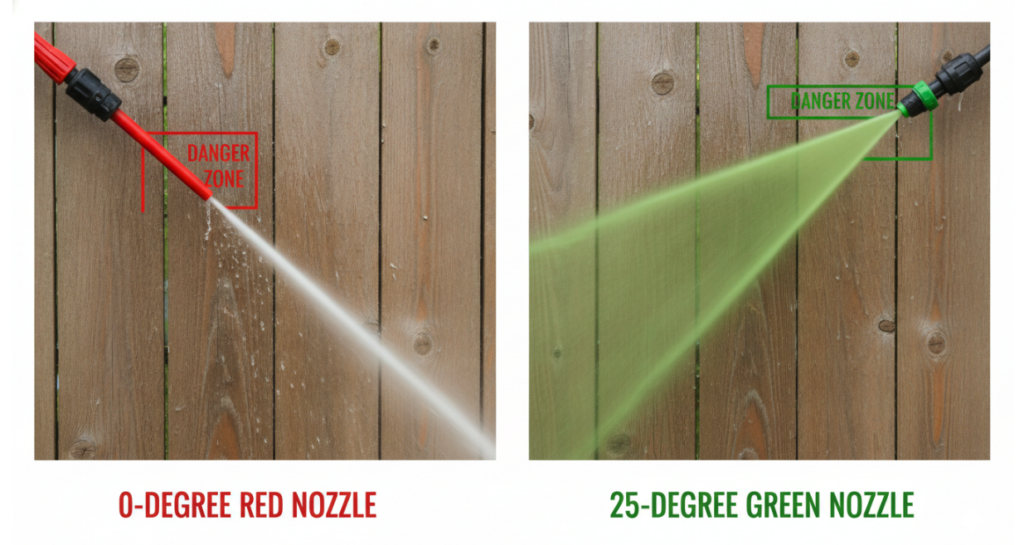
The zero-degree red nozzle is responsible for the vast majority of severe pressure washing injuries. This specific tip concentrates the entire PSI of the machine into a laser-thin focal point. Beginners mistakenly use the red tip to blast away stubborn oil stains or deep moss.
Zero-degree nozzles have virtually no practical use in residential cleaning. Professional exterior cleaners rely on chemical solutions and wider fan angles (like the 25-degree green tip or 40-degree white tip) to remove grime safely. Throw the red nozzle in the trash. Using a 25-degree green tip keeps the impact pressure dispersed, drastically reducing the risk of accidental lacerations to your feet or legs.
The “S.A.F.E.” Framework To Prevent Future Accidents
Preventing a pressure washing injury requires a systematic approach to your setup and gear. Adopt the S.A.F.E. framework before pulling the starter cord.
- S – Shoes (Steel-toed or Heavy Leather): Crocs, flip-flops, and running shoes offer zero protection against 3,000 PSI. If the wand slips, your foot is the first target. Wear heavy work boots.
- A – Angle: Never point the wand straight down at a 90-degree angle. Maintain a 45-degree angle to the surface. This pushes debris away from your body and prevents the stream from bouncing directly back into your shins.
- F – Finger Discipline: Treat the wand like a loaded firearm. Keep your finger off the trigger when moving, talking, or adjusting hoses. Accidental trigger pulls account for nearly half of all DIY injuries.
- E – Eye Protection: Flying debris is guaranteed. High-speed rocks, wood splinters, and concrete chips will rebound at face level. Wrap-around safety glasses are non-negotiable.
Soft Washing Vs. High Pressure
The exterior cleaning industry is rapidly moving away from high pressure entirely. “Soft washing” relies on applying a specific blend of sodium hypochlorite and surfactants at low pressure—similar to a garden hose—to kill algae, mold, and mildew at the root.
High pressure forces water behind your siding, strips the UV coating off vinyl, and heavily gouges wood decks. Soft washing cleans better, lasts longer, and completely eliminates the risk of high-pressure injection injuries. If you are cleaning a house facade or a wooden deck, put away the power washer and rent a soft wash system instead.
FAQs
Can a pressure washer cut off a finger?
Yes. High-powered commercial pressure washers exceeding 4,000 PSI can cleanly sever fingers or toes, especially if the zero-degree nozzle is used at close range. Even lower PSI models can cause deep lacerations requiring surgical repair.
How long does a pressure washer injury take to heal?
Minor surface scrapes take 1 to 2 weeks to heal with proper first aid. Severe injection injuries requiring surgical debridement (tissue removal) can take months of physical therapy, and permanent nerve damage is a common lasting effect.
What should I do if a pressure washer cuts my foot through my shoe?
Remove the shoe and sock immediately to inspect the wound. Because the water blasted through dirty fabric, the risk of a severe infection (like tetanus or staph) is incredibly high. Wash the area and go straight to an Urgent Care clinic for professional evaluation.
Does tetanus come from pressure washer injuries?
Yes. Tetanus bacteria thrive in soil, dirt, and rust. A pressure washer easily forces these bacteria deep into an oxygen-deprived puncture wound, creating the perfect environment for a tetanus infection. You need a tetanus booster if you haven’t had one in the last 5 years.
Why does my pressure washer wound not hurt that much?
High-pressure injection injuries often sever the local nerve endings upon impact, causing immediate numbness. This lack of initial pain is extremely dangerous, as it tricks patients into delaying crucial emergency room treatment while underlying tissue dies.
Is 2000 PSI enough to break skin?
Absolutely. Human skin can be broken by water pressure as low as 1,160 PSI. A 2,000 PSI electric or gas pressure washer is more than capable of causing deep lacerations and injection injuries if the wand is held too close to the body.