 Wingspan Tech



Pressure Washer Won’t Start? 5 Fast Fixes That Work
To put it bluntly, the culprit is often just a few: there is a “pressure lock” in the water pump, the deterioration of ethanol gasoline blocked the carburetor, or the oil level is too low to trigger the protection mechanism of the sensor. In this case, don’t pull the pull rope again! If you pull the stuck pull rope hard, the return spring inside will easily break, and the minor problem that you didn’t need to spend a penny will be able to pull out a repair order of several hundred dollars. Every spring, the old masters who repair small engines receive hundreds of these “lying nest” machines. In fact, most of them can “come back to life” without changing any parts at all “. According to the following steps recognized in the industry, don’t make any guesses and try blindly. You can turn the machine again in a few minutes.
S.N.A.P. Rapid Diagnosis
It’s a waste of time to guess and fix. Professional maintenance master in the investigation of the reasons for the strike cleaning machine, will follow a set of strict procedures. Before you go out to pick up the toolbox, you might as well go through this S.N.A.P. formula 1:
S-Pinch (Squeeze): Pinch the gun trigger. The water pressure held inside the machine will physically jam the engine.
N-Smell (New Fuel): Smell the fuel tank cap. If you smell 1 sour smell or pungent varnish, it means that the ethanol gasoline inside has long been put out.
A- Check (Angle): Take a look at the machine flat. Once the fuselage is tilted, it will accidentally touch the low oil automatic flameout switch.
P-pull (Plug): pull the high-voltage coil cap of the spark plug. As long as the coil cap is loose, the ignition system will be paralyzed immediately.
S.N.A.P. Troubleshooting Process Checklist
| S.N.A.P Step | Time Required | Tools Required |
| [S] Symptom & Safety Check(Observe the issue, gather data, and ensure the area is safe to work) | 10 – 15 mins | PPE (Personal Protective Equipment), LOTO (Lockout/Tagout) Kit, Standard Operating Procedure (SOP) Manual, Flashlight |
| [N] Narrow Down & Diagnose(Isolate the root cause using testing and elimination methods) | 20 – 45 mins | Digital Multimeter, Thermal Imaging Camera, System Schematics/Wiring Diagrams, Diagnostic Software |
| [A] Action & Address(Replace broken parts, repair circuits, or reconfigure settings) | 30 – 90+ mins | Basic Hand Tools (Screwdrivers, Wrenches, Pliers), Replacement Spare Parts, Specialized Repair Kit (e.g., Soldering Iron) |
| [P] Prevent & Prove(Test the equipment to confirm the fix and update logs to prevent recurrence) | 15 – 30 mins | Calibration Instruments, Data Loggers, 5S Cleaning Supplies, Maintenance Log Tablet / E-Work Order System |
Five Quick Repair Tips To Fix The Washing Machine Not Starting
Trick 1: Tight Spray Gun Trigger
Releasing water pressure is the most direct way to restart a stuck engine. When you connect the hose and turn on the faucet, the pump will fill up with water. At this time, if the engine is not pulled under the first 1, the internal pressure of the water pump will be extremely high. This force will work against the piston, causing the starting rope to be very difficult to pull out, even like being stuck.
How to break? Pick up the spray gun, face the safe place, and hold the trigger hard. Hold the trigger tightly with one hand and don’t let it go, and then pull the start rope with the other hand. You will find that the engine instantly loses resistance and can turn easily.
Trick 2: Drain The Deteriorated Ethanol Gasoline And Knock On The Carburetor
The current E10 ethanol gasoline is the “invisible killer” of small engines, which can make the machine go wrong in 30 days. Ethanol will absorb moisture in the air, causing oil and water to separate, and finally leave a layer of sticky white jelly in the bottom shell of the carburetor. If your washing machine eats 1 winter ash in the warehouse and does not catch fire in spring, 80% of it is caused by this old oil.
Find a cheap oil pump to pump all the old oil away. Then find the carburetor bottom shell, take the plastic handle of the screwdriver, tap the side of the bottom shell a few times, and loosen the stuck float valve. When you’re done, pour in fresh, ethanol-free, pure gasoline. Spray a small puff of carburetor cleaner into the air intake, open the choke to the maximum (Full), and then pull the rope.
Track 3: Put The Machine Flat And Fill It With Oil.
In order to prevent the engine from locking up, as long as the oil 1 is low, the low oil sensor will directly cut off the power supply of the spark plug. Many people only remember to check the gasoline before work, but forget the oil in the crankcase. If you park the machine on a potholed driveway or a sloped lawn and the oil is all sloshing aside, the sensor will be “tricked” into thinking that there is 1 drip of oil in the engine.
Quickly move the cleaning machine to an absolutely flat concrete floor. Unscrew the yellow oil dipstick, wipe it clean and insert it back to see the scale. The oil level must be below the top thread of the filler. Pour SAE 10W-30 oil in a little bit until the oil is just flush with the edge of the filler opening.
Trick 4: Look At The Engine “Face” (Temperature) To Adjust The Choke
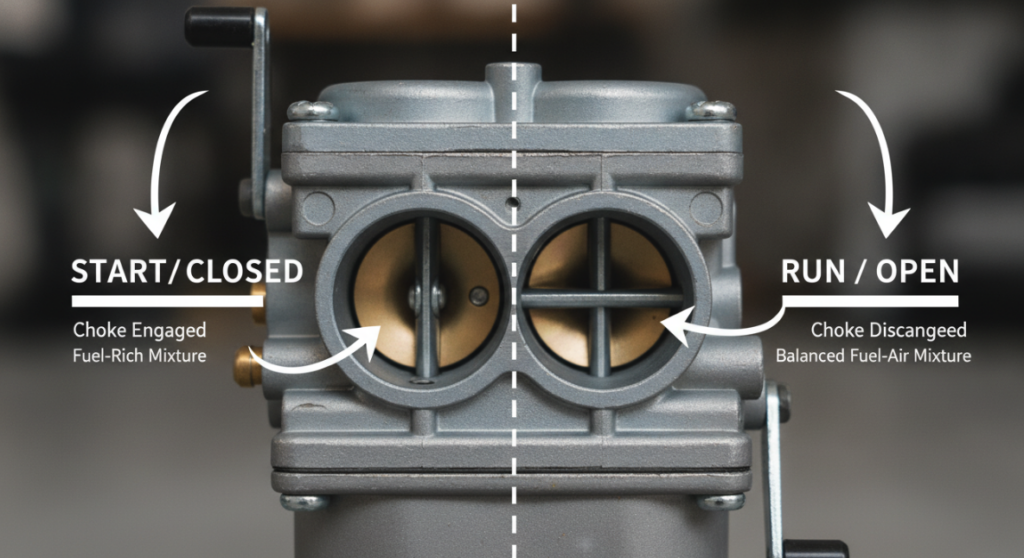
If the choke valve is not in the right position, too much gasoline will be poured into the cylinder, directly “drowning” the engine “. Remember a principle: when the engine is completely cold, you need to restrict air entry to light the fire; but if the machine itself is hot, you need to let the air in.
If the machine has been in the cold garage for a long time, set the choke door to the “Start” or “Closed” position. When the engine 1 starts to make a sudden noise, immediately push the shift lever to the “Run” or “Open” position. But if you just used it 15 minutes ago, the choke door has to be fully open. In the hot engine state, the choke door was closed to pull the rope, and the spark plug was drowned by oil every minute.
Trick 5: Reset Leakage Protection Plug (GFCI) And Micro Switch
Electric high-pressure cleaning machine does not work, the fault is mostly in the circuit, rather than mechanical failure. If the electric model strikes, either the GFCI (leakage protection) on the plug is disconnected, or the internal unloading micro switch cuts off the circuit.
Find the huge GFCI plug on the wall and press the “Reset” key firmly. Be sure to hear a crisp “click” 1. Next, check your extension cord. High-power electric cleaners must be equipped with 10 AWG (American standard) or 12 AWG thick wire. If you use the thin 16 AWG wire cheaply, it will cause a sudden drop in voltage, and the thermal overload protector in the machine will quietly turn off the motor. It is best to plug it directly into the wall socket and try it.
Why Do High-Pressure Cleaners 1 Fall Off The Chain In The Spring
Our repair shop recorded all the strike washing machines that took over in the spring of 2025. In the 142 fuel machines sent by helpless homeowners, the causes of failure are highly similar:
68%-The deteriorated old oil blocked the main measuring hole of the carburetor.
21%-pure mishandling.
8%-Low oil sensor tripped due to parking tilt or neglect of maintenance.
3%-real hard mechanical damage.
The data is here. Buying a new carburetor or ignition coil should definitely be the last thing you think about. First fix the fuel problem and drain the water pressure from the machine.
FAQs
Q: Why does my washing machine sound like it is going to start, but it just can’t turn?
Answer: The carburetor only sent a little oil in, and the main measuring hole was half blocked. The engine caught fire for half a second against the remaining gas and immediately extinguished it. Clean up the bottom shell of the carburetor and replace it with fresh gasoline.
Q: Do I have to receive water when the high-pressure washer starts?
Answer: You must answer! Never let the machine dry. Here the water acts as a key coolant for the internal water pump seals. If you let the machine run without a water pipe, even if it is only 60 seconds, the O-ring in the water pump will be completely burned and scrapped.
Q: After the start-up rope is pulled out, it cannot be retracted. What’s the matter?
Answer: This is usually because when the machine is locked by air pressure, you still drag it hard, causing the return spring in the starter shell to collapse or get stuck. You need to unscrew the starter shell, straighten the rope manually, or simply spend a hundred and eighty dollars to replace it with a new spring assembly.
Q: Where is the Reset button of the fuel high-pressure washer?
A: There is no traditional reset button for fuel models at all. They only have toggle keys, fuel shutoff valves and choke doors. Only the power cord of the electric model will have a reset button for GFCI leakage protection.
Q: After the machine has dried up the oil, why can’t it start when it is filled up?
Answer: Because when the fuel tank burns dry, the sediment at the bottom will be sucked into the carburetor nozzle, and air will be drilled into the oil circuit at the same time. At this time, you need to fill up the oil, open the fuel valve, wait patiently for 3 minutes, let gravity exhaust all the air inside, and then pull the starting rope.