 Wingspan Tech



Pressure Washer Issues? 7 Quick Fixes That Work Today
A dead pressure washer mid-driveway clean is infuriating. Repairing a pressure washer usually takes less than 15 minutes because 90% of sudden failures come down to three simple things: trapped air in the water line, a jammed unloader valve, or ethanol-clogged fuel. I will show you exactly how to fix a pressure washer right now, using tools you already have in your garage. Save the $150 repair shop fee. Grab a 10mm wrench, and let’s get your machine back to peak PSI immediately.
The 3-Minute Diagnosis: The P.A.P. Triage Method
Stop guessing and pulling the starter cord blindly. Professional mechanics isolate pressure washer issues using the P.A.P. Triage Method: Power, Air, and Pump. Test these three zones to find your exact problem in under three minutes.
- P – Power (Engine/Motor): Does it start and stay running? If the engine dies when you pull the wand trigger, your issue is fuel delivery or a choked carburetor.
- A – Air (Water Supply & Hoses): Is the water flow pulsating or spitting? You have an air leak. Air compresses; water does not. Trapped air destroys water pressure.
- P – Pump (Pressure Output): Does the engine run perfectly, but water barely trickles from the nozzle? Your pump’s unloader valve is stuck in bypass mode.
| Symptom | P.A.P Category | Immediate Action |
| Engine dies when pulling wand trigger (or fails to start/stay running) | P – Power (Engine/Motor) | Inspect fuel delivery system and clean choked carburetor (check for ethanol clogs). |
| Water flow is pulsating or spitting (lacking steady stream) | A – Air (Water Supply & Hoses) | Locate and seal air leaks, then purge trapped air from the water line. |
| Engine runs perfectly, but water barely trickles | P – Pump (Pressure Output) | Unjam the unloader valve (it is currently stuck in bypass mode). |
7 Quick Fixes for Common Pressure Washer Issues
Fix 1: Purge the Trapped Air (Eliminate Cavitation)
Trapped air in your garden hose creates cavitation, dropping your pump’s pressure to zero. Air bubbles act like shock absorbers inside the pump manifold, preventing the pistons from pressurizing the water.
The Fix: Connect your garden hose to the washer and turn the water spigot on full blast. Keep the engine or electric motor turned completely off. Squeeze the trigger on your spray wand for two full minutes. You will hear air sputtering and spitting out of the nozzle. Wait until you see a perfectly solid, uninterrupted stream of water. Only then should you start the engine.
Fix 2: Free the Stuck Unloader Valve
A sudden drop from 3000 PSI to a mere trickle means your unloader valve is jammed. This brass valve directs water flow into the bypass loop when you release the trigger. Hard water calcium buildup seizes the internal spring, locking the valve open and killing your pressure.
The Fix: Locate the unloader valve above the water inlet. Remove the black plastic cap and loosen the two lock nuts. Pull the spring mechanism out and inspect the O-rings. Coat the entire assembly heavily with white lithium grease or silicone grease. Reassemble it and tighten the nuts back to their original position.
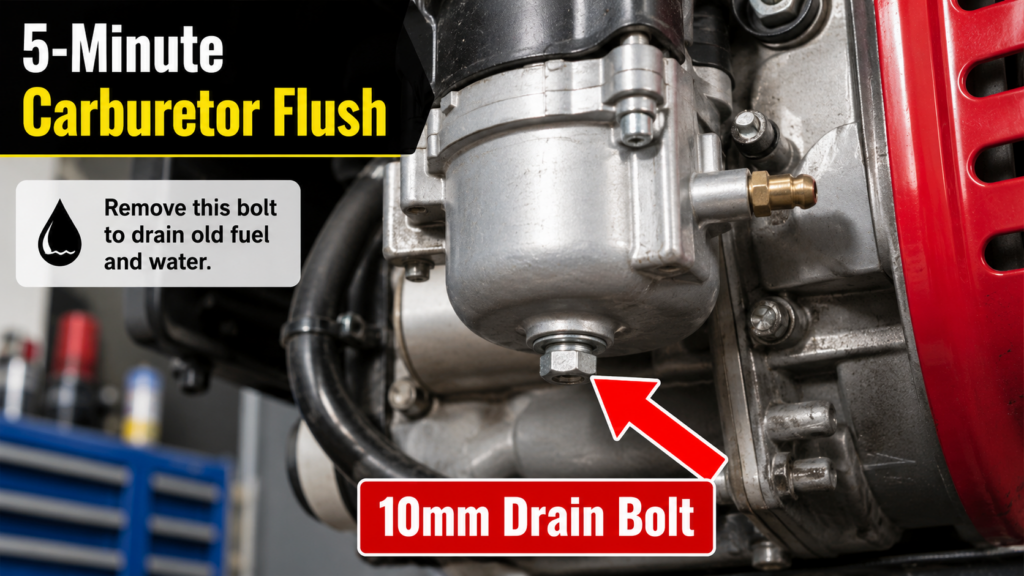
Fix 3: The 5-Minute Carburetor Flush (Fixing Ethanol Varnish)
Your engine cranks but refuses to start because ethanol-blended gas (E15) turns into a sticky varnish inside your carburetor bowl after just 30 days of sitting. This gel clogs the main jet, starving the engine of fuel.
The Fix: You do not need to rebuild the carburetor. Turn off the fuel valve. Locate the 10mm bolt at the very bottom of the carburetor bowl. Place a rag underneath and unscrew it. A mix of yellow, foul-smelling gas and water will drain out. Spray carburetor cleaner directly up into the exposed main jet hole for three seconds. Replace the bolt, add fresh ethanol-free gas, and pull the cord.
Fix 4: Replace the Blown Thermal Relief Valve
Milky oil leaking from your pump or water shooting from the bottom of the machine means you blew the thermal relief valve. Leaving a gas-powered pressure washer running for more than three minutes without pulling the trigger boils the water inside the pump. The safety valve blows out to prevent the pump block from cracking.
The Fix: Shut the machine off immediately. Buy an exact replacement thermal relief valve (usually a 1/4-inch or 3/8-inch NPT thread). Unscrew the blown valve from the bottom of the pump casing with a wrench. Wrap Teflon tape around the threads of the new valve and tighten it down. Never leave the machine running idle again.
Fix 5: Clean the Chemical Injector Spring
Your soap dispenser fails to siphon detergent because the injector spring is glued shut by dried, cheap soap residue. The siphon tube relies on a vacuum created by a tiny steel ball and spring mechanism near the high-pressure hose connection.
The Fix: Disconnect the high-pressure hose from the pump. Look inside the brass fitting to find the injector barb. Use needle-nose pliers to carefully pull out the tiny spring and ball bearing. Soak them in warm water and vinegar for ten minutes. Use a safety pin to clear any hardened soap from the tiny hole. Reinsert the ball, then the spring, and reconnect the hose. Always run clean water through the soap line for 30 seconds before storing the machine.
Fix 6: Reset the Electric Washer Microswitch
Your electric pressure washer turns on for a split second and then dies completely. The built-in microswitch (which shuts the motor off when you release the wand trigger to save power) is out of alignment or tripped by an electrical surge.
The Fix: First, press the reset button on the GFCI plug. If it still fails, disconnect the wand and hose. Turn the machine on. If the motor runs continuously without the hose attached, your wand nozzle is clogged, causing the microswitch to trigger an emergency shutdown. Clean the nozzle tip with the metal clearing tool provided by the manufacturer.
Fix 7: Fix the Pulsating Hose (Clear Intake Restrictions)
Your wand violently kicks back and forth, and the water flow pulsates heavily. The pump is starving for water (a condition known as dry-running). The pump demands 2.5 Gallons Per Minute (GPM), but your hose is only delivering 1.5 GPM.
The Fix: Check the inline water filter screen located inside the pump’s water inlet. It is likely packed with small rocks, algae, or sediment from your garden hose. Pull the mesh screen out with a flathead screwdriver and rinse it. Next, ensure your garden hose is at least 5/8-inch in diameter and no longer than 50 feet. Long, narrow hoses restrict GPM and destroy pumps.
Expert Avoidance Guide: Stop Ruining Your Pump
Mechanics see the same preventable damage every single summer. Stop doing these two things immediately to extend the life of your pressure washer by a decade.
Never Use WD-40 on Pump O-Rings. When repairing a pressure washer pump or unloader valve, people instinctively grab standard WD-40 to lubricate tight parts. Standard WD-40 is a petroleum-based solvent. It eats rubber. Within 48 hours, your pump O-rings will swell, crack, and fail completely. Use plumber’s silicone grease exclusively on water-touching seals.
Always Winterize with Pump Saver. Freezing temperatures turn leftover water inside the aluminum pump manifold into ice. Ice expands, cracking the metal block from the inside out. Before storing your machine in a cold garage, hook up a can of aerosol Pump Saver to the water inlet. Spray it until the white anti-freeze foam shoots out of the water outlet. This displaces the water and lubricates the internal ceramic pistons.
People Also Ask (FAQs)
How much does it cost to fix a pressure washer pump?
Replacing an entire pressure washer pump costs between $80 and $150, which is often cheaper than paying a mechanic $100 per hour to rebuild a severely damaged pump. Minor repairs like replacing O-rings or an unloader valve cost less than $20 in parts.
Why does my pressure washer lose pressure when I pull the trigger?
A pressure drop upon pulling the trigger indicates a restricted water supply, a clogged wand nozzle, or a failing unloader valve. Ensure your garden hose supplies at least 2.5 GPM and clean the nozzle tip with a needle.
Is it worth repairing a cheap electric pressure washer?
If the repair requires parts exceeding $60, it is rarely worth fixing an electric pressure washer that costs $150 brand new. Electric washer pumps are usually sealed and not designed for internal rebuilding. However, external issues like broken wands, bad O-rings, or clogged filters are cheap and easy to fix.
How do you test a pressure washer unloader valve?
Start the machine and attach a pressure gauge between the pump outlet and the high-pressure hose. Pull the trigger to read the working PSI. Release the trigger. The pressure should briefly spike and then drop to a safe bypass level. If the pressure spikes and stays dangerously high, the unloader valve is stuck and must be replaced.
What happens if you run a pressure washer without water?
Running a pressure washer without water destroys the pump in less than 60 seconds. Water acts as both the coolant and lubricant for the ceramic pistons and rubber seals. Without it, the intense friction melts the seals and warps the metal internals irreparably.
Why is gas leaking from my pressure washer carburetor?
A leaking carburetor means the float needle inside the bowl is stuck open. Dirt or dried ethanol residue prevents the needle from seating properly, allowing fuel to continuously flow into the bowl and leak out of the overflow tube. Dropping the bowl and cleaning the needle valve resolves this instantly.