 Wingspan Tech



Pressure Wash Concrete & Cement: Erase Tough Stains
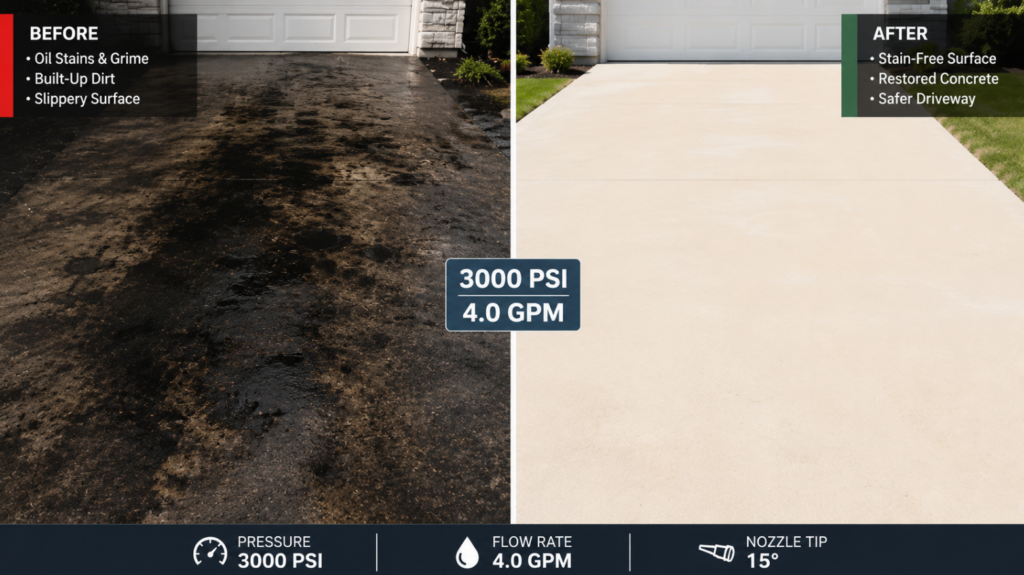
Professional concrete cleaning requires a precise combination of at least 3000 PSI, a minimum flow rate of 2.5 GPM, and targeted chemical surfactants to extract contaminants from the material’s microscopic pores. Simply blasting water will remove surface dust, but it fails to address the “root” of organic growth or the molecular bond of oil stains. If you have ever seen “tiger stripes” on a driveway or noticed stains returning a week after cleaning, you are likely missing the balance between mechanical force and chemical reaction.
In this guide, we break down the “3R Recovery Model”—a professional framework used by high-end restoration experts—to help you achieve a like-new finish without etching or damaging your cement surfaces.
Why Your Concrete Remains Stained
Concrete is not a solid block; it acts like a rigid, mineral sponge with thousands of tiny capillary pores. These pores trap oil, fertilizer rust, and mold spores deep beneath the surface where a standard garden hose cannot reach.
Consensus advice often suggests “more pressure” is the solution to deep stains, but this is a common trap. Excessive PSI on standard residential cement can strip the “cream layer”, exposing the aggregate underneath and making the surface even more prone to staining in the future. Effective cleaning is about lifting the stain out of the pores, not grinding the concrete down.
A Professional Cleaning Framework
To achieve a 10x result, we utilize a structured approach that moves beyond simple “spraying and praying.”
React
Chemical dwell time is the most overlooked step in DIY concrete pressure washing. You must apply a specific surfactant based on the stain type—alkaline degreasers for oils or sodium hypochlorite for mildew—and let it sit for 10 to 15 minutes. This chemical reaction breaks the bond between the concrete pores and the contaminant before the water even touches the surface.
| Stain Type | Recommended Chemical | Dwell Time |
|---|---|---|
| Oil | Degreaser | 10–20 mins |
| Rust | Oxalic Acid | 10–15 mins |
| Mold | Sodium Hypochlorite | 10–15 mins |
| Tire Marks | Citristrip | 15–20 mins |
Remove
Flow rate is more important than pressure when it comes to the actual removal of loosened grime. While PSI breaks the stain’s bond, GPM is what flushes the debris away. Professional-grade results usually require a machine capable of 4.0 GPM to ensure the surface is rinsed clean before the dirty water can soak back into the pores.
Reseal
Cleaning concrete opens the pores completely, leaving it vulnerable to immediate re-soiling. Within 48 hours of cleaning, once the cement is bone-dry, applying a silane-siloxane penetrating sealer will create a hydrophobic barrier. This ensures that the next oil spill or rainstorm sits on top of the surface rather than soaking in.
Beyond The Standard Nozzle
Choosing the wrong nozzle angle is the fastest way to permanently “scar” a cement driveway. Most homeowners reach for the 0-degree nozzle for tough stains, but this creates a laser-like force that can cut through concrete.
- The 25-Degree Nozzle: This is the industry standard for general concrete cleaning, providing a balance of “scrubbing” force and wide coverage.
- The Turbo Nozzle: This specialized tool uses a 0-degree jet that rotates at high speeds to create a cone of high-pressure water. It offers the tearing power of a 0-degree tip but covers the area of a 25-degree tip, making it the best choice for stubborn “black” algae.
- Surface Cleaners: For large driveways, a circular surface cleaner is mandatory. It keeps the nozzles at a fixed distance from the ground, ensuring a uniform finish without the “Z-pattern” stripes caused by a handheld wand.
| Stain Type | Recommended Chemical | Dwell Time |
|---|---|---|
| Oil | Alkaline Degreaser | 10–20 mins |
| Rust | Oxalic Acid | 10–15 mins |
| Mold & Mildew | Sodium Hypochlorite | 10–15 mins |
| Tire Marks | Citristrip | 15–20 mins |
The Anti-Failure Guide
Never pressure wash concrete that is less than 28 days old. Even after a month, “green” concrete is relatively soft; wait at least one full year before applying high pressure to allow the hydration process to reach peak density.
Perform the “Thumb Scratch Test” on older slabs. If you can scratch the surface of the cement with a metal key and it produces a deep groove or significant white powder, the concrete is “soft” or “spalling.” In these cases, switch to a “Soft Wash” method to avoid disintegrating the slab.
Downstreaming vs. X-Jetting: If your machine has a built-in soap tank, you are likely “downstreaming.” This is safer for your pump because the chemicals are injected after the water leaves the pump. Avoid running harsh bleach through the pump itself, as it will destroy the internal seals.
Solutions For “Impossible” Stains
Pressure washing cement requires a different pH strategy depending on the discoloration.
- Orange Fertilizer Stains: These are metallic. High pressure won’t budge them. You need an acid-based cleaner to neutralize the iron oxide.
- Deep Oil Saturation: For heavy oil, use a “hot water” pressure washer if possible. Heat reduces the viscosity of the oil, allowing the degreaser to emulsify the grease much faster than cold water.
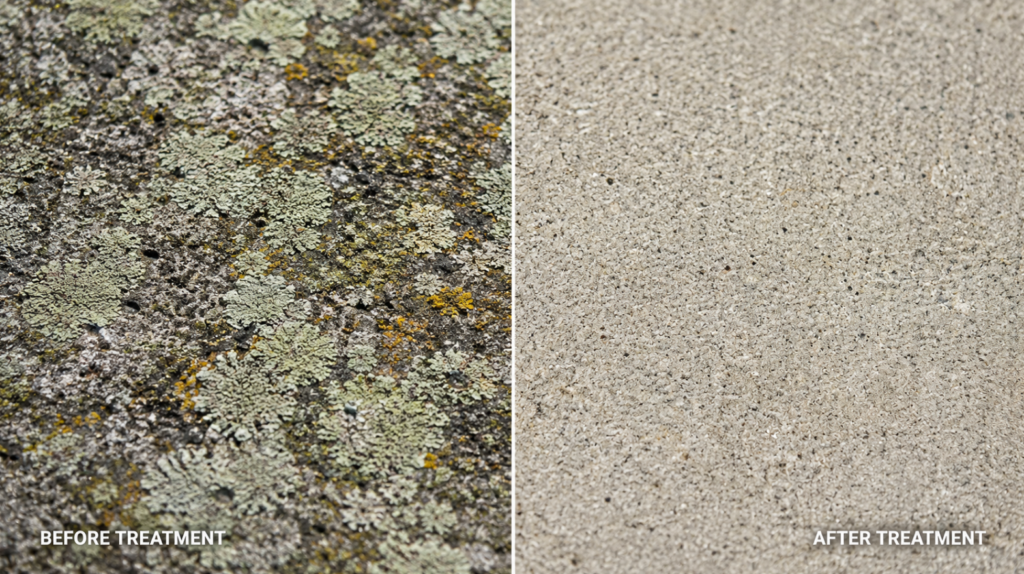
- Lichen and Moss: These organisms have “roots” that anchor into the cement. A post-wash treatment of 5% sodium hypochlorite left to dry will kill the remaining spores and prevent regrowth for up to 18 months.
FAQs
Will pressure washing concrete damage my lawn?
Chemical runoff is the main threat to grass. Always “pre-wet” surrounding plants and grass with fresh water before starting, and “post-rinse” them thoroughly afterward to dilute any detergents or bleach.
How do I get rid of the “stripes” left by my pressure washer?
Stripes occur due to uneven distance or speed. To fix them, you must re-wash the area using a Surface Cleaner or by using a wider nozzle and overlapping your passes by 50%.
Is it better to use hot or cold water for pressure washing cement?
Cold water is sufficient for 90% of residential mold and dirt. However, for commercial garages or kitchens where heavy grease is present, hot water is significantly more effective.
How often should I pressure wash my driveway?
Once every 12 to 24 months is ideal. Over-washing can eventually wear down the surface texture, while waiting too long allows organic growth to pit the concrete.
Can I use bleach on my concrete?
Yes, but only in diluted forms. Sodium hypochlorite is the gold standard for killing mold, but it must be rinsed thoroughly to prevent a white powdery residue or damage to nearby landscaping.
Why is my concrete turning white after washing?
This is often “efflorescence”—mineral salts rising to the surface. It can usually be removed with a mild acidic wash and proper sealing.
How long should I wait to drive on concrete after cleaning?
Wait until the surface is completely dry, which typically takes 4 to 12 hours depending on humidity and sunlight. If you applied a sealer, wait 24 to 48 hours.