 Wingspan Tech



How Much Water Does A Power Washer Use
Power washers are actually “water-saving artifacts” in outdoor cleaning. Typically, the flow rate of a high-pressure washer is between 1.2 and 5 gallons per minute (GPM), and most household models average around 2 to 3 GPM. One hour of continuous cleaning consumes about 120 to 240 gallons of water.
Mastering The Core Indicators Of Water Consumption
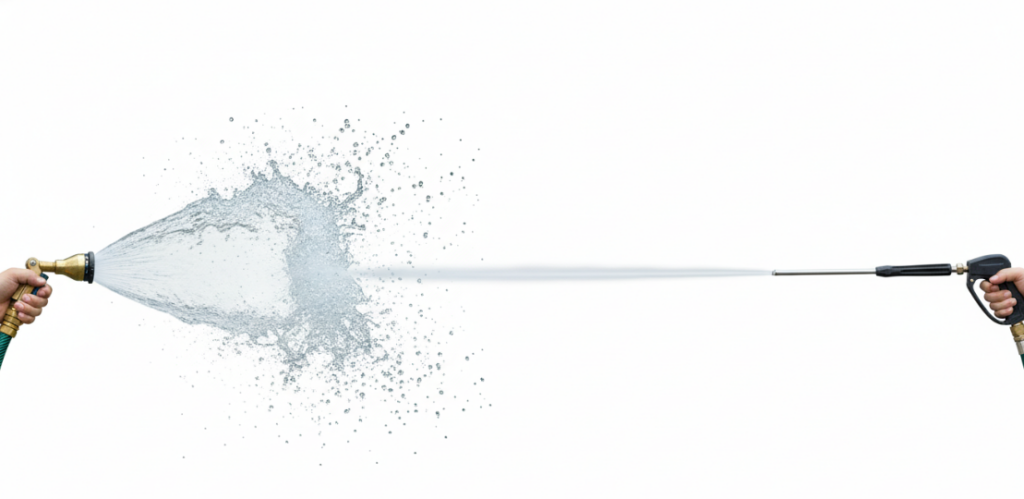
When evaluating whether a machine costs water or not, we look at GPM (Gallons Per Minute, gallons per minute). Ordinary water pipes rely on “large flow and low pressure”, while high-pressure cleaners rely on high-pressure pumps to “squeeze” a small amount of water with a huge impact. This logic of “replacing quantity with pressure” is the key to cleaning efficiency. The following is an overview of water use by machine type:
- Household electric/fuel-fired models: This is the most common, and the flow rate is usually between 1.2 and 2.5 GPM, which is equivalent to 72 to 150 gallons per hour.
- Medium/heavy fuel models: If you are cleaning a large area of terrace or driveway, this machine is usually at 2.5 to 4 GPM, about 150 to 240 gallons per hour.
- Professional/industrial grade equipment: Professional machines that do large projects will have a flow rate of more than 5 GPM.
O-Series High Pressure Washer 220V
The durable ceramic pump and powerful four-stage motor provide high-performance cleaning power, with adjustable pressure, support for customized voltage and power.
380V 1500Bar Water Blaster
1450 RPM ultra-high pressure water jet pump, high cost performance, suitable for 50Hz voltage. It’s a great tool for removing rust and deburring in factories.
Diesel Power High Pressure Cleaner
The pump unit is the core component of a cleaning machine or water treatment system. Composed of a high-pressure plunger pump and an electric motor
Foam Cannon for car washing
Foam Cannon S V3.0 (Thicker Snow Foam Technology) with 1/4 Inch Quick Connector for Pressure Washer, 34 oz Bottle (V3.0 (1/4″ Quick Connector) + SOAP Sample)
Real-World Usage Examples
Here is a breakdown of common cleaning tasks and their estimated water consumption:
| Task | Estimated Time | Total Water Used |
| 10-Minute Car Wash | 10 Minutes | ~20–30 Gallons |
| Driveway Cleaning | 1 Hour | ~120–240 Gallons |
| Full House Wash | 1.5 Hours | ~300–450+ Gallons |
As shown, even a large task like washing an entire house uses significantly less water than most people anticipate when compared to the flow rate of a standard outdoor faucet.
High Pressure Washer Vs. Garden Hose
The flow rate of a standard garden water pipe is usually around 8 to 10 GPM, and it has almost no pressure. It relies on “water heap” to wash away stubborn dirt. While the high-pressure cleaner greatly increases the pressure (PSI), the flow rate (GPM) is reduced to a minimum. This strategy makes you work several times faster. The conclusion is that the use of high-pressure cleaners can usually save 50% to 80% of water consumption than ordinary water pipes. From an environmental and wallet point of view, the pressure washer is a win.
How To Save Water Further?
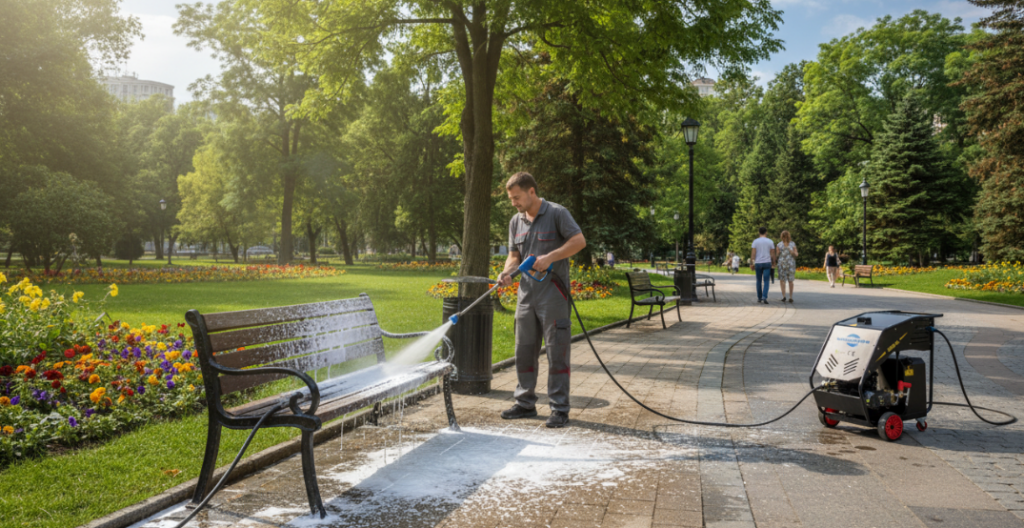
If you, like me, have almost strict requirements for efficiency, you can try these moves:
- Choose the right nozzle: Don’t always think about one step at a time. Using more focused and targeted nozzles, or lowering GPM settings to meet cleaning needs, can avoid unnecessary waste.
- Control your trigger: Today’s machines have trigger heads. Make it a good habit: pull the trigger only when it is aimed at the cleaning surface. By the way, keeping the machine running for a long time without spraying water (if it is not in bypass mode) is also a harm to the life of the pump.
- First “bubble” after “rush”: This is my most often given advice. Spray the cleaner first and give it a few minutes to react to break down the oil and dirt. This “pre-soak” stage can significantly shorten the time you need to rinse later, thus cutting off the total water consumption.
Author: Mark Thompson
With years of hands-on experience, I’ve tested nearly every high-pressure washer on the market—from compact household electric models to heavy-duty industrial machines. I’m passionate about debunking common cleaning myths and helping outdoor enthusiasts maximize efficiency.