 Wingspan Tech



Biggest Pressure Washer: How To Compare Size And Output
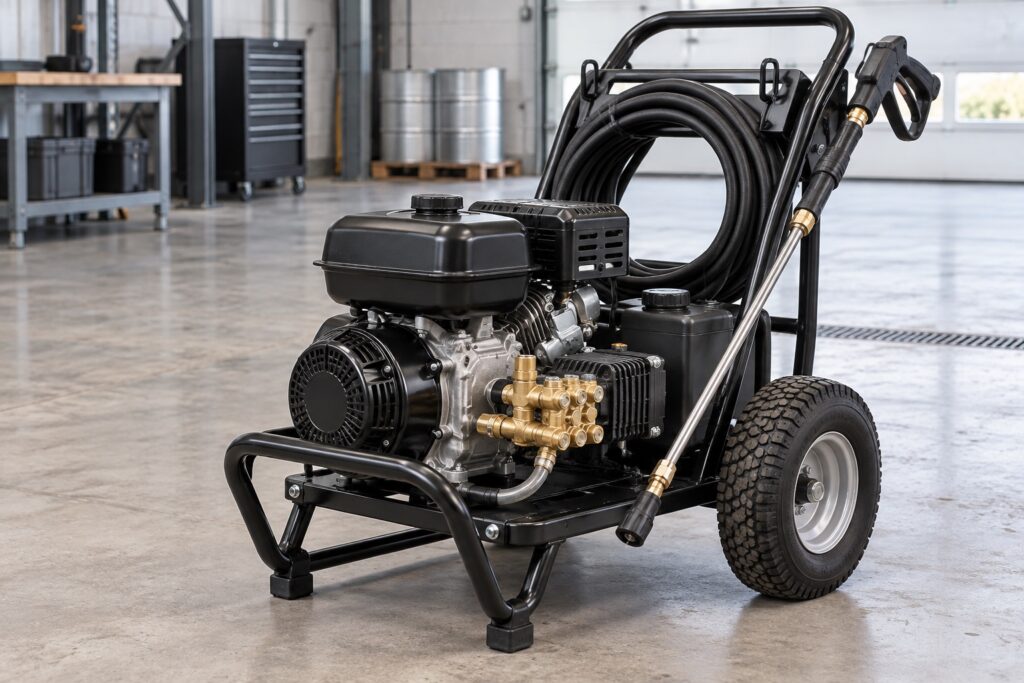
A large machine can be impressive in a photograph. A heavy frame, wide wheels and a prominent pump all suggest serious cleaning power. But the biggest pressure washer in physical size is not necessarily the one that will finish a particular job fastest. Before comparing machines, decide what “biggest” needs to mean for your work: higher working pressure, more water flow, longer daily use or a system that can serve a larger site.
There is no useful universal winner without a defined task and a consistent way to measure the candidates. A compact unit and a trailer-mounted system may both be called pressure washers, yet they solve different transport and supply problems. The practical choice begins with the surface, the soil, the area and the time available.
Define The Job Before The Machine
Start with one representative workday. What surfaces will be cleaned, how much area is involved and what is attached to the surface? Washing broad concrete floors calls for a different balance of flow and spray coverage than cleaning around vehicle seals or aging coatings. A more forceful stream can damage a vulnerable surface, so a larger pressure rating cannot be treated as an automatic upgrade.
Record how often the work repeats and how long the trigger will be open during each session. A machine used for short, occasional jobs faces a different operating pattern from one used by several operators throughout a shift. Also note whether the washer must move between locations or can remain in a fixed service area. A wheeled frame, skid, trailer and wall-mounted arrangement describe mobility and installation; none proves a particular cleaning output.
Compare Pressure And Flow Together
Pressure describes how strongly the water is delivered at a given operating point. Flow describes how much water is available to rinse and carry loosened material away. For broad-area work, adequate flow and a suitable spray width can be more useful than chasing the highest pressure number. Hard deposits may call for a different combination of nozzle, water temperature, cleaner and contact time.
Ask for rated working pressure and flow at the same stable operating point, with the test conditions identified. A page may show a maximum pressure and a maximum flow measured under different conditions. Those two peaks should not be combined into an output the machine has never demonstrated. The rated figures also need to be compared using similar nozzles, inlet conditions and measurement methods.
The nozzle must match pump flow and target pressure. Its orifice controls the resistance that helps establish system pressure, while its spray angle changes how the stream is spread over a surface. An overly large or worn orifice may leave pressure below the target. A too-small or blocked one can cause excessive pressure or sustained bypass. If the job needs a surface cleaner or another multi-nozzle attachment, check the attachment’s flow range, pressure limits and connections as part of the whole setup.
Check Whether The Site Can Feed The Washer
A higher-flow washer needs a water source that can supply it continuously, not just a faucet with a good static pressure reading. Verify the machine’s inlet requirements for flow, pressure, temperature and water quality. A restricted hose, clogged filter or poorly arranged tank feed can starve the pump, reduce output and accelerate wear.
If a tank is part of the plan, confirm whether that pump permits gravity feed or suction, or requires inlet boosting. Include the usable tank volume, refill rate, filtration and low-water protection in the operating plan. More water leaving the nozzle also means more water to drain or recover. A larger machine can be idle for much of the day if the site cannot keep its inlet supplied or handle its wastewater.
Match The Power Source And Installation
For an electric machine, check the actual supply voltage, frequency, phase, current, circuit capacity, plug and electrical protection against the model’s requirements. A matching plug shape alone does not establish compatibility. Wet-area connections and cable routing need to follow the equipment instructions and site rules.
An engine-driven unit can work away from a fixed electrical supply, but fuel, exhaust, noise, heat and maintenance become part of the decision. Never run a fuel engine indoors, in a garage or in another enclosed or partly enclosed space. Keep it away from doors, windows and air intakes; opening a door or using an ordinary fan does not remove the carbon monoxide hazard.
For a mobile or trailer setup, check total loaded weight, water load, secure mounting and the space needed for the hose and operator. For a fixed setup, plan access for maintenance as well as supply and drainage. A longer hose may improve reach, but hose length and diameter also affect pressure loss and handling.
Look Beyond The Headline Specifications
Daily use depends on more than pump output. Ask how long the exact model may run at the intended load, how its bypass system behaves when the gun is closed and what maintenance it requires. A pump circulating water in bypass for too long can build heat; the permitted pause and shutdown procedure are model-specific.
Check the rated limits of the hose, gun, lance, fittings, valves and attachments. The system is constrained by its lowest-rated pressure or temperature component. A high-output pump cannot make an underspecified accessory safe. Pump layout also affects service access: direct drive, belt drive and other arrangements have different fit and maintenance requirements. The label “triplex” or “industrial” alone does not establish a duty cycle or prove that parts are available.
Some very high-pressure water-blasting equipment belongs to a separate professional operating category with specialized controls, training and protective measures. It should not be compared with a conventional cleaning washer by PSI alone. Make sure candidates are intended for the same task before ranking them.
Make A Decision That Survives A Real Workday
Build a short comparison for each exact model: working pressure and flow measured together, power and inlet requirements, allowed run pattern, pump and drive arrangement, total weight, hose and nozzle configuration, component ratings, maintenance access and service support. Leave any unverified field blank until the supplier provides its manual or test details.
Then evaluate the shortlist against both the hardest routine cleaning task and the most delicate surface likely to be encountered. The first reveals whether the system has enough sustainable output. The second shows whether it can be used with appropriate control. The biggest pressure washer worth buying is the one that fits both the job and the site, even if another machine looks larger or displays a higher peak number.