 Wingspan Tech



Do You Power Wash Blacktop
My direct answer is: not recommended. You should try to avoid using pressure washing on your asphalt driveway.
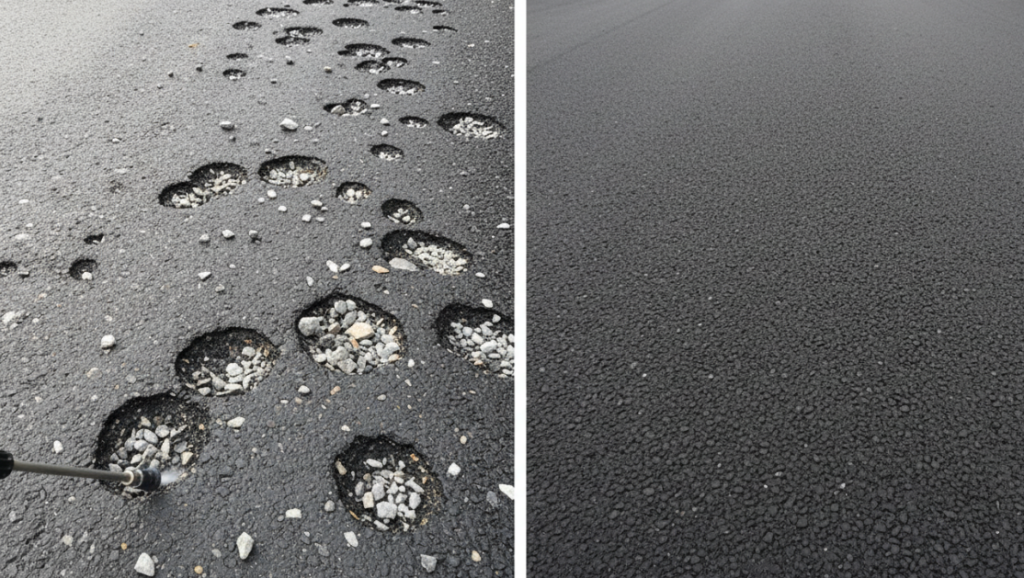
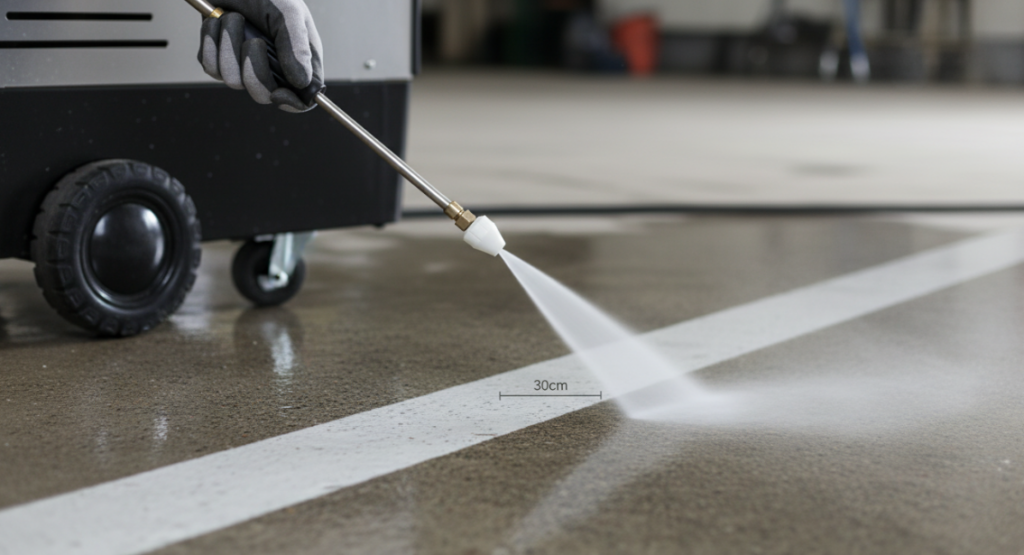
Many people think that high water power is the only way to clean it, once the water pressure exceeds 1,500 PSI, this powerful jet will directly attack the asphalt cement (that is, the “asphalt oil” that holds the surface layer together). This aggressive force can wash away grease, causing loose gravel, pockmarked pavement, and even premature cracking. If you want to clean your driveway safely, you must use the “soft washing” method instead. Lower the pressure to below 1,000 PSI, replace it with a 40-degree wide-angle nozzle, keep the gun head at least 30 cm off the ground, and then let a professional asphalt cleaner or degreaser deal with the oil and moss instead of brute force.
The Tragic Situation Of Asphalt Pavement
To figure out why you can’t rush, you have to first figure out what asphalt is. Unlike solid concrete, which is a sheet of iron, asphalt is a composite material made of aggregates (sandstone and crushed stone) bonded together by a petroleum-based cement (asphalt oil).
When the water pressure exceeds 1,500 PSI, it is no longer a cleaning tool but a destructive “chisel”.
- Stripping Core Grease: High-pressure water flows can attack asphalt cement like crazy, washing away key petroleum components that maintain asphalt’s flexibility and integrity.
- Loose gravel and hemp surface: Once the cement is damaged, the stones inside lose their support. You’ll find that as the water rushes through, the debris is scattered, leaving tiny potholes in the driveway, what we often call “hemp noodles”.
- Premature cracking: These tiny potholes and eroded surfaces become entrances for moisture to invade. Over time, standing water in these damaged areas can accelerate the complete collapse of the road surface, leading to severe premature cracking.
The Only Safety Solution
Since brute force doesn’t work, what if the driveway is dirty? The answer is “soft wash”. The core logic of this method is chemical cleaning as the main method, supplemented by mechanical force. While protecting the surface tension of asphalt, it can still remove stubborn dirt.
To operate safely, you must strictly adhere to the following device settings:
O-Series High Pressure Washer 220V
The durable ceramic pump and powerful four-stage motor provide high-performance cleaning power, with adjustable pressure, support for customized voltage and power.
380V 1500Bar Water Blaster
1450 RPM ultra-high pressure water jet pump, high cost performance, suitable for 50Hz voltage. It’s a great tool for removing rust and deburring in factories.
Diesel Power High Pressure Cleaner
The pump unit is the core component of a cleaning machine or water treatment system. Composed of a high-pressure plunger pump and an electric motor
Foam Cannon for car washing
Foam Cannon S V3.0 (Thicker Snow Foam Technology) with 1/4 Inch Quick Connector for Pressure Washer, 34 oz Bottle (V3.0 (1/4″ Quick Connector) + SOAP Sample)
1. Low pressure (below 1,000 PSI)
You have to adjust the pressure washer to below 1,000 PSI. This is a critical tipping point. At this pressure, the water flow acts as a gentle rinse, carrying away loose impurities rather than picking at the cement like a cutting tool.
2. Equipped with 40-degree wide-angle nozzle
Never use a 0 degree (red) or 15 degree (yellow) needle tip nozzle on asphalt. A wide angle nozzle (usually white) of 40 degrees must be used. Fan-shaped water mist can disperse the impact force of water to a wider area, greatly reducing the instantaneous pressure acting on every inch of road surface.
3. Adhere to the 30 cm principle (12-Inch Rule)
Even with wide-angle nozzles and low pressure, distance still matters. Always keep the gun head at least 30 cm (12 in) off the ground. When flushing, keep making smooth strafing movements with your hands, and never hit a point hard to prevent the water flow from causing local erosion.
Do The Work With Cleaner
The secret to perfect soft washing lies not in water at all, but in chemical cleaners. Because we gave up brute force, we had to rely on the right chemical reactions to dissolve the dirt.
- To deal with oil stains and grease: Find a specialized degreaser that won’t damage the asphalt. Apply directly to the oil stain and let it sit as directed in the instructions (let it soak and react). These chemicals break down the hydrocarbons in the oil scale, allowing you to easily wash off the oil without damaging the surrounding asphalt.
- Remove moss and algae: The roots of moss and organic organisms can burrow into the pores of the asphalt. If you force them out, the road surface will also be covered with a layer of skin. My advice is to spray it with an asphalt-safe organic cleaner to kill the roots. Once the moss is dead and falling off, a gentle sweep of less than 1,000 PSI of water will clean it up.
By shifting your mindset from “violent scouring” to “low-pressure soft washing + targeted agents”, you can make your driveway look brand new without sacrificing its lifespan.
Autho: Mark Thompson
With over 11 years of hands-on experience on the front lines of asphalt paving and maintenance, I’ve seen firsthand how improper cleaning can turn a perfectly good driveway into an expensive repair project. When I’m not on a job site, I’m here sharing the “trade secrets” that contractors don’t always tell you, so you can keep your driveway looking pristine for years to come.
Autho: Mark Thompson
With over 11 years of hands-on experience on the front lines of asphalt paving and maintenance, I’ve seen firsthand how improper cleaning can turn a perfectly good driveway into an expensive repair project. When I’m not on a job site, I’m here sharing the “trade secrets” that contractors don’t always tell you, so you can keep your driveway looking pristine for years to come.