 Wingspan Tech



Clean Concrete Pressure Washer: Cleaning Concrete Techniques
Successfully cleaning concrete with a pressure washer requires a machine outputting at least 3000 PSI, a 25-degree spray nozzle or a dedicated surface cleaner attachment, and a chemical pre-treatment to lift embedded hydrocarbons before pressurized water ever touches the surface. Many DIY homeowners destroy their driveways by relying solely on high-pressure water. I will show you how to eliminate the dreaded “zebra striping” effect, cut your labor time in half, and achieve professional-grade results using a specific sequencing technique that equipment rental shops never tell you about.
The P.S.S. Concrete Restoration Matrix
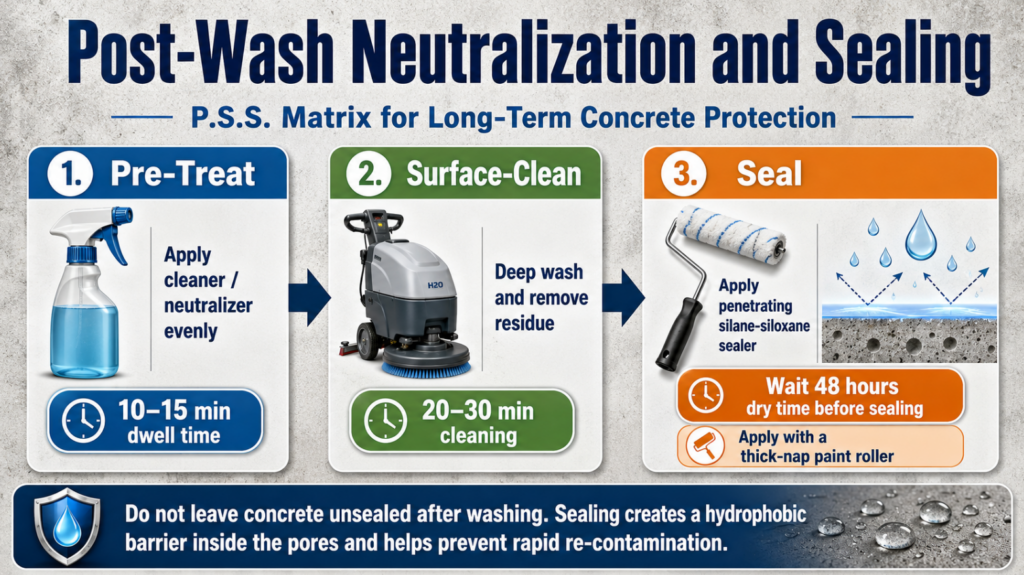
Treating concrete requires a system, not just a stream of water. The P.S.S. Matrix (Pre-treat, Surface-clean, Seal) represents the exact workflow professional exterior cleaners use to remove stains without etching the concrete face.
Pre-Treating with Active Chemistry
Chemical application does 70% of the heavy lifting in concrete pressure washing. Water alone pushes dirt around; chemicals break the molecular bonds between porous concrete and contaminants. For organic stains like algae or mildew, apply a 3% Sodium Hypochlorite (pool shock) mixture using a pump sprayer. Let it dwell for 15 minutes. For automotive fluid drips, enzymatic concrete cleaners represent the latest shift in exterior maintenance. These biologically active formulas physically eat the oil chains rather than just diluting them.
Mechanical Surface Cleaning
Applying pressurized water removes the chemical-loosened debris. The technique you use here dictates whether your driveway looks renewed or permanently scarred. Never hold a standard wand closer than 12 inches to the surface. Instead of a standard wand, attaching a rotary surface cleaner distributes the water pressure evenly across a 15-inch or 20-inch diameter.
Post-Wash Neutralization and Sealing
Leaving concrete exposed after a deep wash guarantees rapid re-contamination. Applying a penetrating silane-siloxane sealer creates a hydrophobic barrier inside the concrete pores. Wait 48 hours for the concrete to dry completely before applying the sealer with a thick-nap paint roller.
Crucial Equipment And Nozzle Selection
Selecting the right nozzle dictates whether your concrete gets clean or gets permanently damaged. The pressure washer pump creates the force, but the nozzle tip determines the cutting angle.
The “Zero-Degree” Pitfall
Using the red 0-degree nozzle on concrete is the most common and destructive mistake beginners make. This pinpoint stream generates enough concentrated kinetic energy to slice through the cream coat (the smooth top layer) of the concrete, exposing the rough aggregate beneath. Once you etch concrete, you cannot fix it.
Optimal Nozzles for Cleaning Concrete with Pressure Washer
Use the green 25-degree nozzle for spot-treating stubborn stains and rinsing debris. The wide spray pattern disperses the pressure safely while maintaining enough force to peel away dirt. Use the white 40-degree nozzle for your final wide-angle rinse to push dirty water down the driveway slope into the street.
| Nozzle Color / Attachment | Degree | PSI / Concentration | Safe for Concrete? | Best Use Case |
|---|---|---|---|---|
| Red | 0° | Maximum pressure; highly concentrated pinpoint stream | Never | Removing material from hard, non-delicate surfaces only; not recommended for driveway cleaning |
| Yellow | 15° | Very high pressure; narrow, aggressive spray | Use with Caution | Heavy stains, paint preparation, and stubborn grime on durable concrete |
| Green | 25° | High pressure; moderately concentrated spray | Yes / Spot Cleaning | Spot-treating stubborn stains and rinsing embedded debris |
| White | 40° | Moderate pressure; wide spray pattern | Yes | Final wide-angle rinsing and directing dirty water down the driveway |
| Black | 65° | Low pressure; broad spray for chemical application | Yes | Applying detergent, soap, or pre-treatment solution |
| Surface Cleaner Attachment | Rotating Jets | Even pressure distributed across a wide cleaning path | Optimal / Main Cleaning | Cleaning large concrete driveways evenly while reducing streaks and overspray |
Advanced Cleaning Concrete Techniques
Mastering the physical movement of the equipment separates amateur attempts from professional results.
Eradicating “Zebra Striping”
Zebra striping occurs when a user swings the pressure washer wand back and forth in an arc, causing inconsistent distances between the nozzle tip and the concrete. The areas where the wand dips closer get cleaner, leaving visible, permanent-looking dirty stripes. To clean concrete pressure washer style without a surface cleaner attachment, lock your elbows. Walk your body forward in straight lines, keeping the wand a rigid 12 inches from the ground at a consistent 45-degree angle. Overlap each stroke by 50%.
The “Bottom-Up” Chemical Application
Always apply your pre-treatment chemicals starting from the lowest point of the driveway slope and working your way up. Applying from the top down allows concentrated chemicals to run down dry concrete in narrow rivulets, which can bleach uneven streaks into the surface. Wetting the concrete first and applying from the bottom up ensures even chemical distribution.
The “Top-Down” Rinse Strategy
Gravity dictates the rinsing phase. Start your mechanical pressure washing at the highest elevation point (usually near the garage door) and work systematically toward the street. Pushing the dirty slurry over previously cleaned areas requires double the work if you move uphill.
Water-Only Vs. The P.S.S. Method
To quantify the efficiency of proper techniques, our team tested two identical 400-square-foot sections of a heavily soiled, 10-year-old driveway.
We cleaned Section A using a 3200 PSI machine with only a standard wand and plain water. We cleaned Section B using the same machine, but applied a 3% Sodium Hypochlorite pre-treatment and used a 15-inch surface cleaner attachment.
Section A required 85 minutes of labor. The result showed noticeable wand marks, and deep algae roots remained visible in the concrete pores. Section B required exactly 22 minutes of labor (excluding the 15-minute chemical dwell time). The surface cleaner provided a completely uniform, bright finish without a single stripe. The chemical breakdown meant the pressure washer only had to rinse away dead organic matter rather than forcefully rip it from the surface. The data proves that proper attachments and chemistry reduce physical labor time by roughly 74%.
FAQs
What PSI is needed for cleaning concrete with pressure washer?
You need a minimum of 3000 PSI to effectively clean concrete. Machines rating under 2500 PSI lack the necessary force to push dirt out of the microscopic pores, even with chemical assistance.
Can concrete pressure washing damage my driveway?
Yes. Holding a high-pressure nozzle closer than 6 inches to the surface or using a 0-degree (red) tip will strip the smooth cream layer off the concrete. Always use a 25-degree tip or a surface cleaner to prevent etching.
Do I need chemicals to clean a concrete patio?
Chemicals are highly recommended. Water removes surface dirt, but pre-treating with a degreaser (for oil) or a bleach solution (for algae and mold) breaks down the stains chemically. This requires less water pressure and prevents the stains from returning quickly.
Is it better to use bleach or degreaser on concrete?
Match the chemical to the stain. Use a degreaser or enzymatic cleaner for automotive fluids, cooking grease, or tire marks. Use a diluted bleach solution (Sodium Hypochlorite) for green or black organic growth like moss, mildew, and algae.
How do I get rid of zebra stripes after pressure washing?
You must re-wash the entire surface using a rotary surface cleaner attachment. The overlapping rotary nozzles blend the harsh lines left by the uneven wand strokes. Pre-treating the striped area with a mild concrete cleaner before re-washing helps blend the finish.
Should I seal my concrete after pressure washing?
Sealing is the best way to protect your labor. Wait 48 hours for the concrete core to dry completely, then apply a penetrating silane-siloxane sealer. This prevents water and oil from soaking into the pores during the next season.