 Wingspan Tech



Best Small Pressure Washer: How to Choose
A quick search online reveals products claiming to be “best small pressure washers”, but don’t let that fool you into thinking the smaller the machine, the better. Whether it works or not really depends on the individual, but on the pressure, flow rate, water supply and accessory configuration of the machine, and whether you can get the job at hand. What the merchant says about “small”, “compact”, “handheld”, and “portable” actually only explains what this thing looks like and whether it is easy to move. It is completely different from how durable it is.
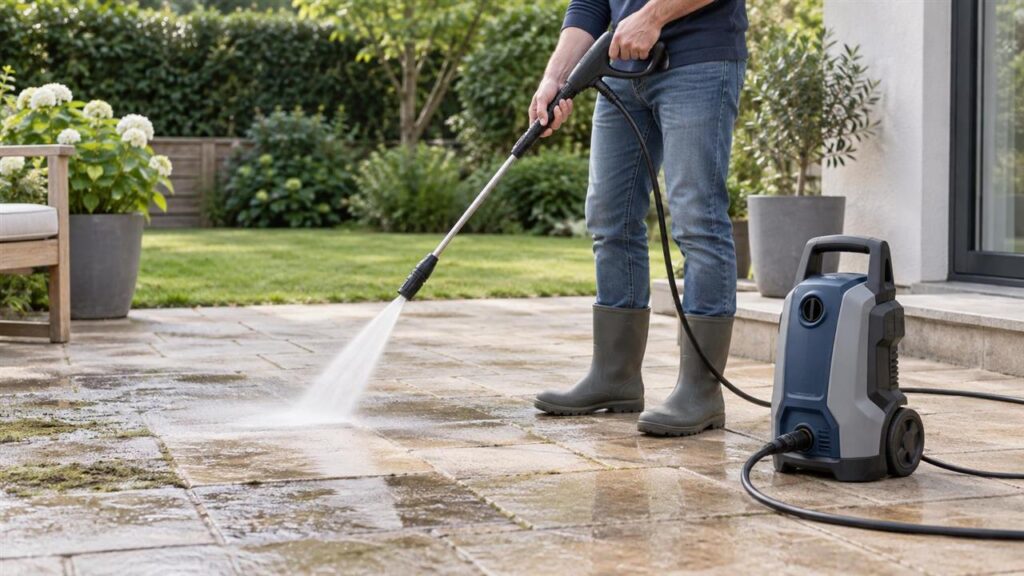
Before buying a machine, think about what you want to do
Before you pay, it’s best to have a number in mind: What are you going to wash? How stubborn is the dirt? What is the area? How long does it take to get through this? How long do I have to wash it each time I turn it on? In addition, we must be optimistic in advance about whether the water and electricity in the work area can keep up, whether there will be noise, and where the water will flow.
For example, car paint, wood boards, coatings or glass, sealing strips, these surfaces are delicate and are particularly afraid of water jets staring at a single point; but if there is a large area of cement in front of you, then you have to keep an eye on the machine’s flushing efficiency and whether it can rotate continuously. By the way, if the instruction manual for the item being washed clearly states “high-pressure water gun is prohibited”, don’t be lucky and think that if you turn down the pressure and stand away to spray it, it will be fine, and it will still break.
Don’t mistake a pressure washer for an upgraded watering hose. It relies on a water pump to pressurize the water desperately, and then hardens the water out along the high-pressure pipe, spray gun, and nozzle. The water pump determines the amount of water (flow rate), while the size of the nozzle orifice and the resistance of the pipe ultimately determine the amount of water that is rushed out. Therefore, if you want to clean things, the size of the fan surface of the water column, how far away, how long to flush, whether to add cleaning agent or not, and even the water temperature, will all be reduced.
Don’t just look at pressure, flow is just as important
The PSI we often see is water pressure, and GPM is water volume. Pressure is like a descaling tool “chisel”, specifically designed to deal with stubborn stains that have been picked at to death; while flow is like a broom “broom”, responsible for quickly washing away the dirt that has been washed down and covering a larger area.
If you are only washing a blind spot the size of your palm, you can just have enough water pressure and control the force; but if you are washing a whole large area, the large water flow and the wide spray surface will directly determine how many hours you will need to spend on it. Not only that, but the high flow rate means you’ll need thicker pipes, a smoother sewer, and the recoil from firing will hurt your arms.
When looking at product detail pages, you need to be careful: many merchants like to mark “maximum pressure” and “maximum traffic” separately and very high. Don’t naively think that they can reach the peak at the same time. When looking at parameters, be sure to check their “rated PSI” and “rated GPM” under normal working conditions, and pay attention to the laboratory conditions under which they are measured. Just looking at the numbers from 1000 to 3200 PSI is not very useful, and it is impossible to determine whether it is a household toy or a commercial job. The water pump inside the machine is much more critical than cold numbers, such as whether it is durable, whether it can be dried in one go, and whether it can be repaired if it breaks down in the future.
What does the so-called “small and portable” mean?
Let’s talk about the plugged-in one first. As long as there are enough on-site sockets and you don’t want to smell the pungent smell of gasoline, buying a plug-in model is the most worry-free. But before you start, remember to see the voltage and power clearly, and look at whether the electrical wiring in your home is moving. Leakage protection must be reliable.
The battery models that are popular nowadays are indeed fragrant, and you can run around with them all without dragging your long tail. But this thing is very deep in water. You have to check the actual reviews of specific models to see if the water pressure will shrink when it is working, how long the battery can last, and how long it will last when fully charged. Also, the extra money for a spare battery might be enough to buy you half a machine. As for those ultra-micro machines that are mainly handheld or can be stuffed into the trunk, the picture shows that it is easy to store. If you really want to use it to wash the yard, it will probably make the machine smoke.
Let’s talk about oil-burning (gasoline/diesel). This thing is indeed immune to the snagging of wire lengths and is quite powerful, but it also has many troubles: oil leaks, exhaust fumes, it’s extremely noisy, the machine burns your hands, and there’s a risk of carbon monoxide poisoning if it’s not done properly. Therefore, it is absolutely not usable in the garage or house.
Also, if you buy the portable model with two wheels, weigh the weight and center of gravity more. Is it stable to push? Are the handles sturdy? If you want to carry these tens of kilograms of iron lumps up the steps or stuff them into a pickup truck, will it be difficult for your waist to flash? If you plan to buy a wall mount model to nail to the wall, you not only have to see if the wall knot is not strong, but also have to calculate whether the pipe can be pulled to the place you want to wash and whether there is any open space next to it for future machine repairs.
Don’t misplace the water supply, pipes, and nozzles
Even if the machine is pocket-sized, you have to make it “well-fed”. If the water inlet pipe is thin, long and twisted, or the filter is stuck to death by mud, the joint is dripping and leaking, or the water in the bucket is about to be drained, the machine will suffer: the water pressure will fluctuate, the water output will be intermittent, the motor will make strange noises, and it is not possible to just dry out the water pump. If you want to use a bucket to supply water, you must first figure out whether this machine has a “self-priming” function. Without self-priming, it cannot be pumped by simply plugging a bucket into the water inlet pipe.
The entire set of components, including the high-pressure pipe, spray gun, and connector, is actually a grasshopper on a rope. As long as one part pulls the crotch, the entire system must be downgraded. Don’t buy pipes just because you want to choose the color and length. You need to see how much pressure it can withstand, how high the temperature it can withstand, and whether the interface is right and not easily broken. Accessories that are advertised as “universal” online may not fit together perfectly after purchase.
There are also nozzles. The small hole on the nozzle must be aligned with the machine’s flow rate and pressure “door-to-door pair”. The hole is too small, so water cannot be held in it and can easily break the machine; the hole is too big or becomes wider due to wear and tear over time, and the water pressure becomes soft immediately. For example, when washing a car, you don’t actually need a scary water pressure. What you need is a good nozzle that can spray a stable, wide fan-shaped water surface. So, when searching online “the best portable cleaning machine”, don’t be fooled by all kinds of fancy marketing terms. It is the real deal to use multiple pairs of these hard indicators.
Test the water and turn it on, don’t be reckless
Before plugging in or igniting, press to get excited and feel the water inlet network, pipes, nozzles and various joints thoroughly. If you find that there is a tear, it is not tightened, or the accessories do not look compatible, do not hard turn it on.
The standard action is: first connect the water, and when there is no power (it is not started), press and hold the trigger of the spray gun to let the tap water push all the air out of the pipe and the pump. Once you see that the water flowing from the gun head is free of bubbles, go and turn on the machine. Remember this: water pumps must never, ever dry-run without water.
When you first wash your hands, the movements converge. First, change to the nozzle with the largest angle, stand a little further away, and find an inconspicuous corner to give the water a try. If it seems fine on the surface, then slowly approach or increase the pressure. A straight zero-degree nozzle, a rotating nozzle that spins water in a circle, or a wet sandblasting accessory for washing old rust is extremely deadly. Don’t joke about them on people, pets, glass, tires, or fragile brick cracks. The high-pressure water column is so severe that it can even cut through a person’s skin, so no matter when, the muzzle of the gun can only be pointed in a safe direction.
If you release the trigger mid-job and the water won’t come out, it will spin wildly inside the machine’s belly (bypass state). The water gets hotter and hotter, and if it takes too long, it will burn the seal. Therefore, the instructions state that it can be left on standby for a few minutes at most and then followed them honestly. Don’t expect the thermal protection switch in the machine to be 100% lifesaving. If you don’t want to wash it or change the nozzle, the first thing to do is to completely turn off the water and electricity, then pull the trigger in the open space to release the pressure held in the tube, and finally go to screw the connector.
Ultimately, how can you buy without losing money?
The cleaning machine that is truly worth the money is not necessarily the first one on the list, but the one that can stand firm in your local area and within the safe range of your work.
Don’t be bothered when picking out machines. Find a piece of paper and compare the pressure, flow rate, power and water consumption, pipe configuration, how long it can be connected for washing, how heavy it is, how noisy it is, and whether it is expensive to replace accessories in the future. If that webpage is hesitant about the rated parameters and even hides the pressure resistance value of the core components, then you’d better hold on to your wallet and not be fooled by its sky-high “highest PSI” or cabbage price.
To put it simply: if you’re just looking for something fresh, occasionally washing window screens or small patios, then the machine should ideally be small and lightweight, tucked away in a corner without taking up much space. This is more practical than pursuing high horsepower. However, if you have a large yard at home, or have to do a lot of work every now and then, you’ll have to keep an eye on the pump structure, flow rate, and heat dissipation Spending a little more money on a durable one is definitely better than buying a cheap one that overheats and stops working at every turn.
In short: Let the work be done by the machines, and don’t let the machines restrict your work. This is the only truth about avoiding pitfalls.