 Wingspan Tech


How To Pressure Wash A Driveway Without A Surface Cleaner
23Stop Buying Expensive Attachments! Learn How To Safely Pressure Wash Your Driveway Using Standard Nozzles And Professional Techniques.
View details
Search the whole station
High-pressure washing before painting is absolutely essential and should never be skipped. Surface preparation accounts for 90% of the overall project quality. Without this step, the new paint simply cannot adhere firmly to the substrate.
Over time, the exterior wall surface accumulates an invisible chalking layer, mold stains, and environmental dirt. These deposits act as a barrier, effectively preventing the new paint from adhering to the substrate. If you slack off and skip the rinse before painting, I can guarantee that this coat of paint will definitely peel, blister, or flake within 12 to 24 months. For homeowners who prefer to do the job themselves, keeping the pressure between 1,500 and 2,500 PSI, depending on whether your siding is vinyl or wood. It’s also a good idea to add a cleaning agent like TSP to effectively kill deep-seated mold. The most critical point: Before painting, the surface must be allowed to dry for at least 24 to 48 hours. Do not start work if the weather is not clear, and never let moisture become trapped beneath the fresh paint film.
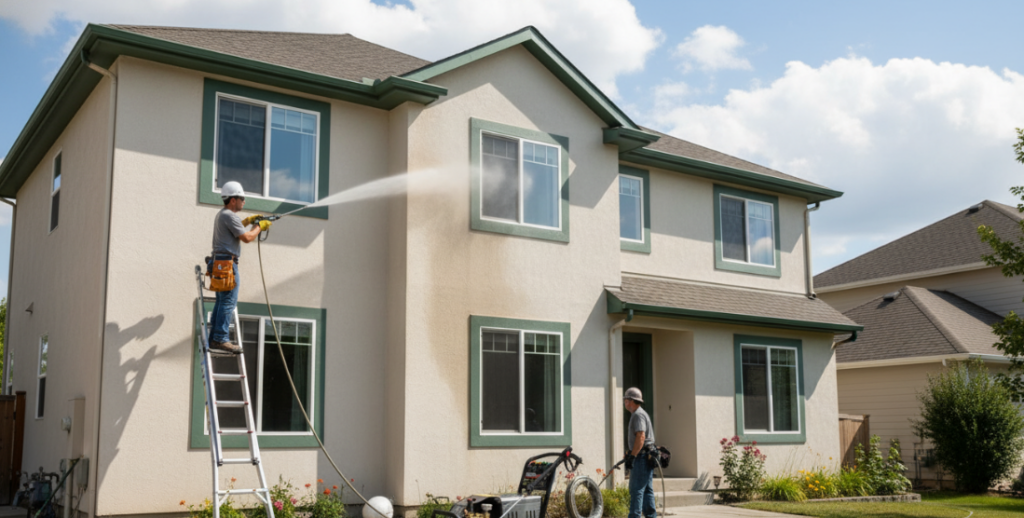
Even if the house looks pretty clean, if you run your finger along the wall, you’ll usually see a fine layer of white dust. This is the product of oxidation of the paint film. Just brushing it on top is like painting over dust—it’s a complete waste of effort. My team always prioritizes cleaning up these impurities. Only when the surface is thoroughly cleaned can the paint firmly adhere to the wall. Even under intense UV exposure and extreme temperature fluctuations, the paint film will not crack due to loss of adhesion.
Choosing the wrong method can easily damage the exterior wall. I’ve seen many DIY enthusiasts damage expensive cedar wall panels, or apply too much force and spray water directly behind the vinyl siding.
O-Series High Pressure Washer 220V
The durable ceramic pump and powerful four-stage motor provide high-performance cleaning power, with adjustable pressure, support for customized voltage and power.
380V 1500Bar Water Blaster
1450 RPM ultra-high pressure water jet pump, high cost performance, suitable for 50Hz voltage. It’s a great tool for removing rust and deburring in factories.
Diesel Power High Pressure Cleaner
The pump unit is the core component of a cleaning machine or water treatment system. Composed of a high-pressure plunger pump and an electric motor
Foam Cannon for car washing
Foam Cannon S V3.0 (Thicker Snow Foam Technology) with 1/4 Inch Quick Connector for Pressure Washer, 34 oz Bottle (V3.0 (1/4″ Quick Connector) + SOAP Sample)
If you’re in a damp or shady area, rinsing with water alone isn’t sufficient. I strongly recommend adding some TSP or a commercial mildew-prevention solution during the pre-treatment stage.
These pharmaceutical agents have two irreplaceable functions:
The most common rookie mistake I’ve seen is someone washing their house in the morning and then grabbing a brush to start painting it again that same afternoon. This is just asking for trouble. Wood pores or gaps at board joints often still contain a significant amount of moisture.
If you apply paint at this point, the solvent won’t be able to evaporate, resulting in what we call “solvent-trap” bubbles. When the moisture vaporizes and expands upon heating, it directly pushes up the paint film, forming individual blisters. So, we’ll have to wait at least two days for clear, sunny weather. Use a moisture meter to check the wood’s moisture content. It’s best to proceed only when the moisture content is below 12–15%.
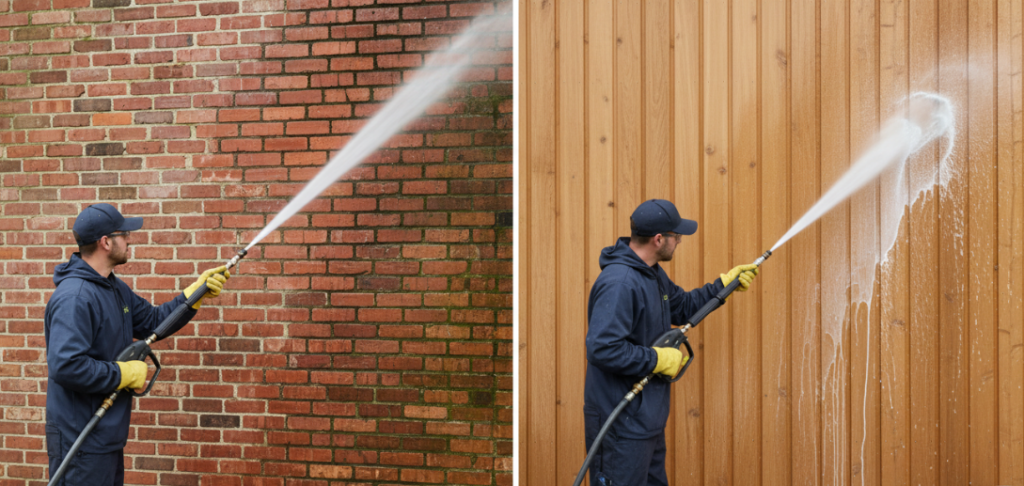
Author: Mark Henderson
I’ve learned firsthand that a lasting finish depends 90% on what happens before the brush even touches the wall. My goal is to share the ‘contractor secrets’—from proper PSI settings to moisture management—to help DIY homeowners achieve a professional-grade result that protects their investment for a decade or more.
Stop Buying Expensive Attachments! Learn How To Safely Pressure Wash Your Driveway Using Standard Nozzles And Professional Techniques.
View details
Is It Safe To Power Wash In The Rain? Discover The Pros And Essential Safety Tips From A Cleaning Professional.
View details
Learn To Pressure Wash Synthetic Carpets Safely Using The Right PSI, Nozzles, And Essential Drying Techniques.
View details
Asking What PSI To Power Wash Deck? Use 1,200–2,500 Psi. Discover The Best Settings For Wood And Composite Here.
View details
HelloPlease log in