
 Wingspan Tech


How To Start A Power Washer
If you want to start a power washer safely and cleanly, first, connect the water inlet pipe and the high-pressure pipe, and then screw the faucet to the maximum. Then pull the gun trigger and hold it for 30 to 60 seconds until the water flow becomes very smooth. This step is to evacuate the air in the pipeline. Next, turn the engine switch to “ON”, the fuel valve is pushed to “OPEN”, and the damper (Choke) is set to the “START” (or Closed) position. Finally, the pulls the trigger with one hand to relieve the pressure of the pump, and the other 1 pulls the starting rope with force with the other hand. Once you hear the engine roar and catch fire, push the damper back to the “RUN” (Open) position.
Here are the specific steps to disassemble:
Step 1: Get The Pipeline Connection And Water Supply
You have to pave the waterway before your hand touches the engine. The water inlet pipe in the garden is connected to the water inlet of the machine, and the high-pressure pipe is connected to the outlet of the pump. There is a sentence here. The interface must be tightened. If there is a slight leak, the pressure will not go up.
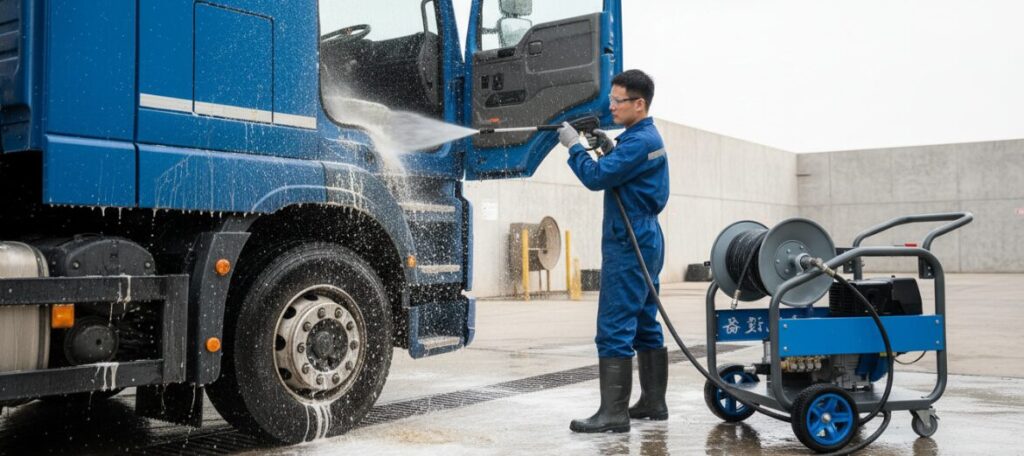
Once connected, turn the faucet fully on. Attention, is open to the maximum. Before attempting to start, you must ensure that the maximum flow of water enters the machine. Too many machines idling because of a lack of water in the pump, resulting in permanent damage to the internal components within seconds. Don’t save that water, the pump is much more expensive than water.
Step 2: Empty Accumulated Gas
Many novices pull the rope when they come up, but they are too tired to catch fire. The reason is all here-they skip the exhaust step.
Before touching the starting rope, pick up the spray gun, pull the trigger and don’t let go. You need to maintain this state for about 30 to 60 seconds. At this time, you will hear the sound of “pumping” in the nozzle, which is the movement of air being forced out. Keep buckling until the water flow from the nozzle becomes a continuous, steady low-pressure column of water. This process can clean all the bubbles in the pump, otherwise the engine will compete with cavitation when starting, which is not only difficult to start, but also harmful to the machine.
Step 3: Adjust The Engine Switch
Seeing that the water is stable, let’s fiddle with the engine control panel. You need to align these 3 switches in preparation for ignition:
- Engine Switch: Turn the main switch to “ON” to turn on the ignition system.
- Fuel Valve: Slide the shift lever to OPEN “. This allows gasoline from the tank to flow into the carburetor.
- Choke: Set the door to the “START” position (some machines are marked as Closed). This will limit the amount of air intake and create a “rich” mixture, which will be good when the cold engine is started.
O-Series High Pressure Washer 220V
The durable ceramic pump and powerful four-stage motor provide high-performance cleaning power, with adjustable pressure, support for customized voltage and power.
380V 1500Bar Water Blaster
1450 RPM ultra-high pressure water jet pump, high cost performance, suitable for 50Hz voltage. It’s a great tool for removing rust and deburring in factories.
Diesel Power High Pressure Cleaner
The pump unit is the core component of a cleaning machine or water treatment system. Composed of a high-pressure plunger pump and an electric motor
Foam Cannon for car washing
Foam Cannon S V3.0 (Thicker Snow Foam Technology) with 1/4 Inch Quick Connector for Pressure Washer, 34 oz Bottle (V3.0 (1/4″ Quick Connector) + SOAP Sample)
Step 4: Release Pressure And Pull The Starting Rope
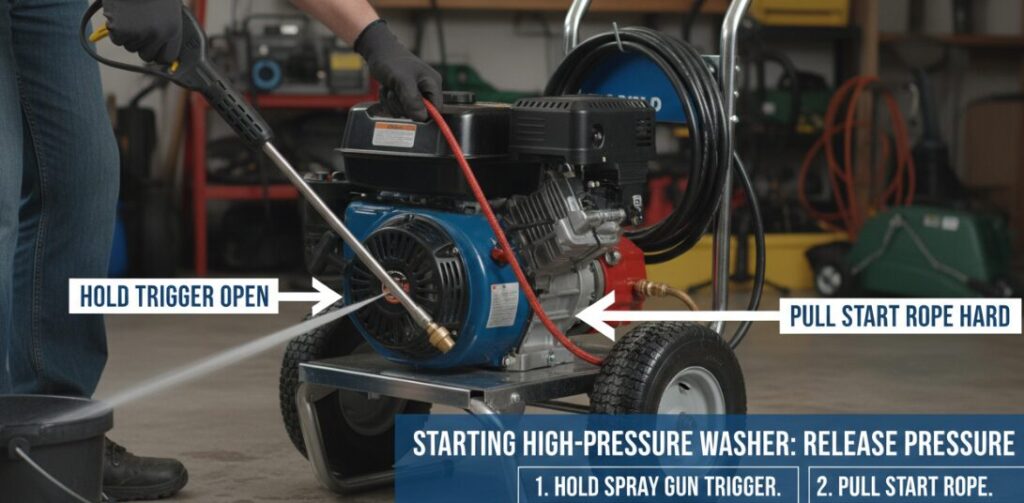
When learning to use a high-pressure cleaner, the most irritating thing is to pull the starting rope-it feels like the rope is stuck, or it can’t be pulled. This is usually because the pump is holding high pressure water.
To solve this problem, you have to practice a “left and right fight”: 1 hand holds the trigger of the spray gun to keep it open, and the other 1 pulls the starting rope. Pulling the trigger keeps the system open and releases the back pressure so that the engine spins with little resistance. Keep the trigger on and give the start rope a steady and hard pull.
Step 5: Turn The Air Door Back To “RUN”
As soon as the engine catches fire and starts running, you have to adjust the air intake immediately. Find the damper lever just now and slide it to the “RUN” (or Open) position.
Opening the damper allows the engine to breathe the air it needs for normal operation. According to my experience, if you keep the damper in the “START” position for a long time after the engine is started, the engine will soon start to “cough and gasp” because the oil is too thick, even flood the cylinder (flooding), and finally turn off the engine directly. Once the damper opens and the engine is idling smoothly, your washing machine is ready to dry.
Author:Mark Peterson
” With over 14 years of experience in landscaping and small engine maintenance, I know that starting a gas engine isn’t just about pulling a cord. I wrote this guide to help you master the correct airflow and water pressure sequence, ensuring your power washer starts smoothly every time without damaging the pump.”