
 Wingspan Tech


How Do You Winterize A Power Washer
To allow the high-pressure washer to overwinter, you must: drain all stagnant water and add antifreeze to the pump to prevent freezing. This consists of draining the lines, injecting pump protectant/antifreeze into the system and stabilizing the fuel of the gasoline model; then store it in a dry place. Disconnect all connections, drain hoses, inject pump protectant or RV antifreeze into the pump until it flows out of the nozzle, and treat the gasoline with a stabilizer before storing in a warm place.
Why Is Wintering Maintenance Essential For High-Pressure Cleaners?
In a low temperature environment, the water left inside the machine is the biggest killer of the pump body. The vast majority of high-pressure pump scrap, the killer is ice. When the water freezes, the volume expands, and this force is sufficient to break the pump manifold, damage the seals, and even break the internal precision components. According to the following steps, your equipment can work as usual in the spring of next year, instead of sending it directly into the scrap iron pile.
Step 1: Disassemble And Drain All Components
You can watch this video to see how to drain the hoses:
The first thing for overwintering maintenance is to clean up the water in the internal and external pipelines of the machine as dry as possible.
Stop and relieve pressure: Before starting, confirm that the machine has been completely shut down and the water source has been disconnected. The most important point is to pull the trigger of the spray gun, release all the residual pressure inside, and let the accumulated water flow out of the pump and hose.
Drain hoses and accessories: Remove the high-pressure pipe, boom and spray gun. To ensure drainage, I recommend laying them flat on the ground or loosely, using gravity to control the residual water. This can effectively prevent cracks in the pipe lining due to ice expansion.
Step2: Protect The Pump Body
This video demonstrates the pump protection process:
The pump is the heart of the high-pressure washer and the most expensive part to replace. Protecting internal seals and valves is a top priority.
- Use pump protectant or RV antifreeze: Buy 1 bottles of professional “pump protectant” (usually lubricated antifreeze in aerosol cans) or non-toxic RV antifreeze. Connect the nozzle of the protective agent or the antifreeze bottle to the low-pressure water inlet of the machine (that is, the place where the garden pipe is usually connected).
- Cycle through the system: While holding down the spray can or antifreeze bottle, manually pull the engine start rope several times (for fuel engines), or briefly turn on the ignition (for motor models). If it is electric, turn it on for a few seconds. Until you see pink or green antifreeze flowing out of the high-pressure outlet. This means that the moisture has been completely drained and the internal seals have been coated with a protective film.
O-Series High Pressure Washer 220V
The durable ceramic pump and powerful four-stage motor provide high-performance cleaning power, with adjustable pressure, support for customized voltage and power.
380V 1500Bar Water Blaster
1450 RPM ultra-high pressure water jet pump, high cost performance, suitable for 50Hz voltage. It’s a great tool for removing rust and deburring in factories.
Diesel Power High Pressure Cleaner
The pump unit is the core component of a cleaning machine or water treatment system. Composed of a high-pressure plunger pump and an electric motor
Foam Cannon for car washing
Foam Cannon S V3.0 (Thicker Snow Foam Technology) with 1/4 Inch Quick Connector for Pressure Washer, 34 oz Bottle (V3.0 (1/4″ Quick Connector) + SOAP Sample)
Step 3: Handle The Engine (Fuel Models Only)
If gasoline is stored for several months without treatment, it will deteriorate and produce gum and paint film, which will block the carburetor to death.
- Add fuel stabilizer: Fill the fuel tank with fresh gasoline and add high-quality fuel stabilizer. The engine runs for 2 to 3 minutes to ensure that the processed fuel has entered the entire fuel system and carburetor.
- Drain the fuel (optional but recommended): If you plan to store it for a long time, my personal habit is to completely drain the fuel tank and carburetor after adding the stabilizer. This is the safest way.
- Change the oil: If you use the machine frequently this season, the best time to change the oil is before winter. This removes the corrosive combustion by-products and prevents them from corroding the interior of the engine during idle periods.
Step 4: Clean And Safe Storage
The last step is to find a good shelter for the machine and resist the severe cold.
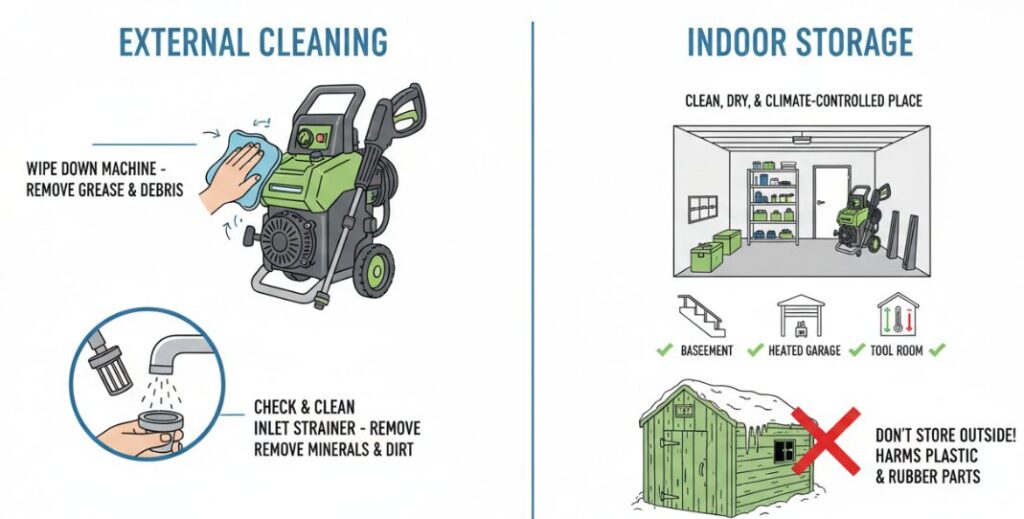
- External cleaning: Wipe the entire machine 1 times to remove grease and debris. Check the inlet strainer to remove mineral deposits or dirt inside.
- Indoor storage: In order to be safe, be sure to store the pressure washer in a clean, dry and environmentally controlled place. Basement, heated garage or tool room are ideal. Don’t throw it in an outdoor shed, where extreme temperature changes are very harmful to plastic and rubber parts.
Wintering Maintenance Checklist:
- Pressure relief: Pull the trigger after turning off the water.
- Emptying: Empty all hoses and boom of water.
- Pump protection: Inject antifreeze until it sprays from the high-pressure port.
- Fuel maintenance: Add stabilizers and run the engine for a short time.
- Environment: Store in a warm and dry place.
It takes more than ten minutes to do maintenance, and what you have saved is your investment of hundreds or even thousands of dollars. As long as you follow these steps, your machine will 1 pull when the weather warms up next year.
Author: Mark Thompson
“As a home maintenance enthusiast with over a decade of experience working with outdoor power equipment, I’ve seen firsthand how one freezing night can ruin an expensive machine. I wrote this guide to help you protect your investment using the same professional winterization techniques I use for my own gear, ensuring your power washer is ready to perform every spring.”