
 Wingspan Tech


How Do You Winterize A Power Washer
To winterize your power washer properly, you must follow three critical steps: First, flush out any remaining detergent by running clean water through the system; second, disconnect all hoses and the spray gun, then trigger the gun to drain every drop of water; and third—most importantly—inject a pressurized “Pump Saver” or antifreeze lubricant into the water inlet until it exits the discharge port. For gas models, you must also add a fuel stabilizer to a fresh tank of gas and run the engine for two minutes to protect the carburetor from gumming up. By replacing internal water with a specialized lubricant, you prevent the pump’s seals from drying out and ensure that any residual moisture won’t freeze, expand, and crack your pump’s manifold during the winter.
This video provides a quick overview of the process:
High pressure cleaning machine winterization detailed steps
The following are the specific operating rules of this 3 footwork:
Step 1: Flush The Detergent System
Before storage, it is important to clean up the chemical residue. If left in the machine, the detergent will dry out and crystallize, eventually blocking the internal valves to death.
- Method of operation: put the detergent pipette into a bucket of water.
- Objective: Run the machine in low pressure mode for 1 to two minutes. This ensures that every trace of soap is replaced by clean water, preventing internal corrosion of the machine during idle periods.
Step 2: Drain The Residual Water In The Hose And Spray Gun
In a sub-zero environment, water is the number one natural enemy of high-pressure cleaners. Even a little water, the force of ice expansion is enough to crack plastic or metal parts.
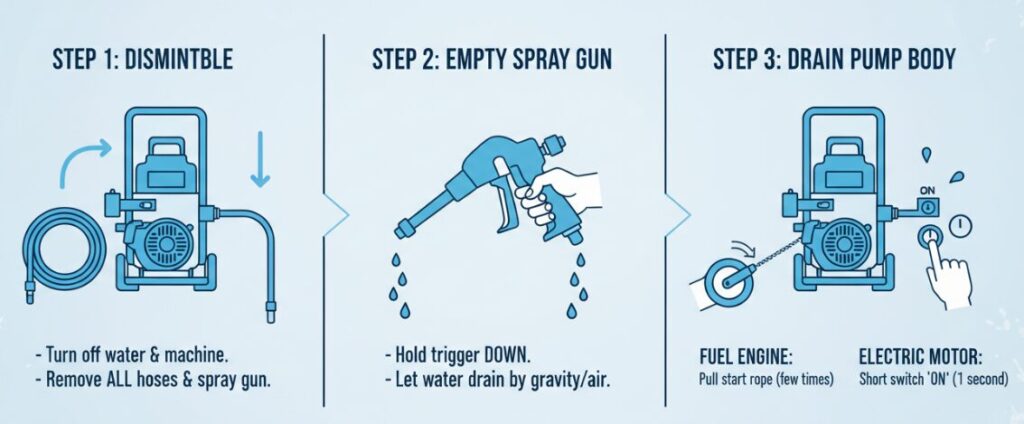
- Dismantling: Turn off water and machines. Remove the high pressure pipe, garden pipe and boom.
- Empty the spray gun: keep the trigger on the spray gun and use gravity and air to dry the residual water in the nozzle and handle.
- Drainage of pump body: after the hose is removed, if it is a fuel engine, manually pull the starting rope a few times; If it is a motor, turn on the switch briefly (for one second) to force out the accumulated water in the pump cavity.
Step 3: Use Pump Body Protection Agent Or Antifreeze Lubricant
This is the most important step in the whole process of winterization. Simple water evaporation will make the sealing ring brittle, and icing will directly freeze the pump head.
Why use a protective agent? This special protective agent with pressure has two functions: it can squeeze out the tiny water droplets that are invisible to the naked eye, and at the same time apply a layer of protective lubricating film on the internal seal.
- Specific application: connect the bottle mouth of pump body protector to the water inlet of garden pipe. Press the spray can button until you see liquid (usually white foam or transparent lubricating liquid) flow out of the high-pressure water outlet. Once the protective agent is sprayed out, it means that your pump has completely destroyed the risk of freezing and oxidation.
Special Requirements For Fuel Models
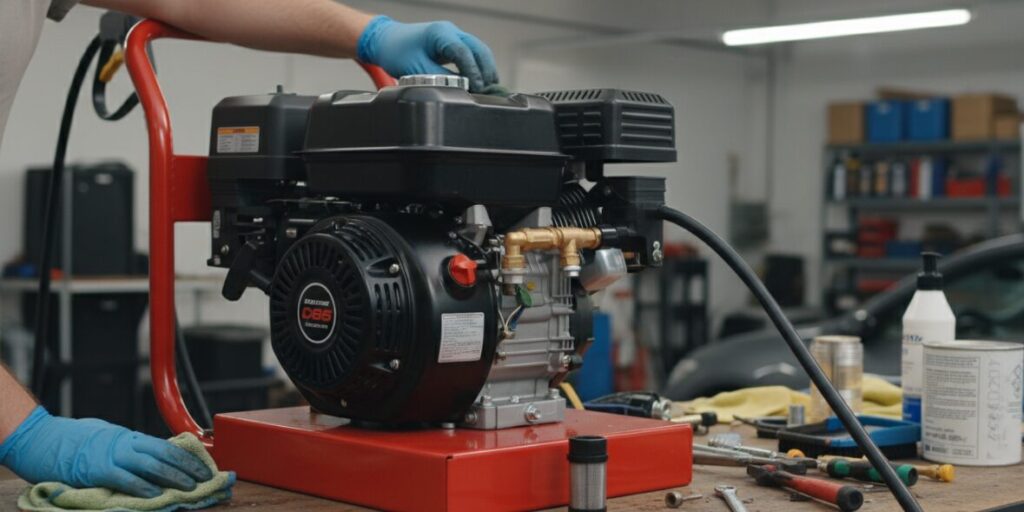
If you are using a fuel-driven high-pressure washer, the engine and the pump body need special care. Most of the current gasoline contains ethanol, which will begin to degrade after 30 days, forming a sticky “gum” in the carburetor.
- Fuel Stabilization: Add high quality fuel stabilizer to the fresh fuel tank.
- Cycle operation: Let the engine run for approximately two minutes. This ensures that the treated fuel enters the carburetor and the entire oil circuit, preventing blockage and ensuring a good start in the spring of next year.
Author: Mark Henderson
Hi, I’m a home maintenance specialist with over a decade of experience in power equipment care. I’ve seen firsthand how a single freezing winter can ruin an unprotected machine, which is why I’m passionate about sharing the ‘flush, drain, and lubricate’ method.