 Wingspan Tech


Can A Power Washer Remove Weeds
22Want To Remove Weeds With A Power Washer? Discover Why Water Alone Isn’t Enough And Follow My 3-Step Professional Guide To Clean Without Damage.
View details
Search the whole station
The answer is: you can use bleach, but unless your machine is specially marked with corrosion resistance, don’t pour it directly into the pump or your own soap tank. Ordinary bleach is extremely corrosive. Once it flows through the inside of the machine, it will quickly dry and crack the rubber O-rings and water pump seals, resulting in a complete loss of pressure. To operate safely and effectively, you have to use a “downstream injector”, which pumps bleach in after the water leaves the pump. This professional approach allows you to easily deal with mold on exterior walls or concrete without letting the “guts” of the pump touch even drops of chemicals. It must be diluted proportionally, wet the surrounding vegetation in advance, and rinse the hose and spray gun thoroughly with clean water after work.
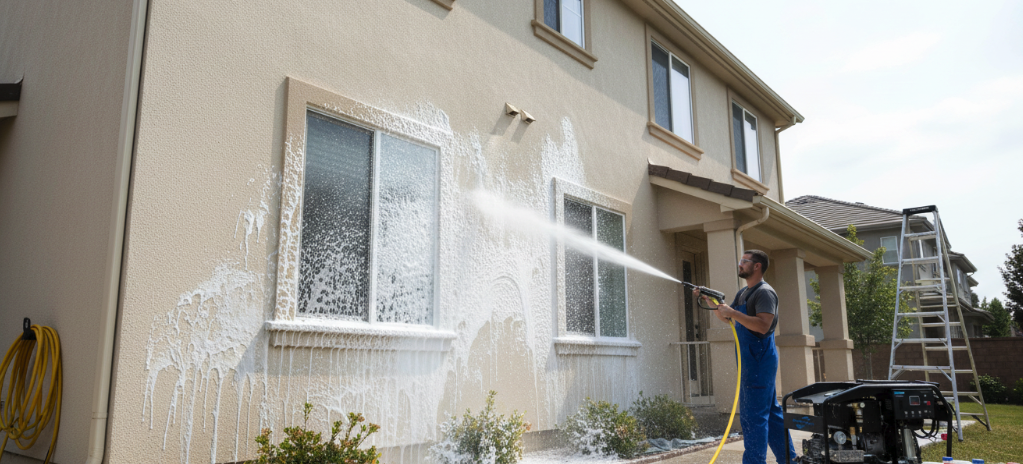
The reason to avoid the “straight water pump” method is ultimately determined by the chemical properties of sodium hypochlorite. Most domestic pressure washer pumps use brass manifolds and rubber seals, designed only for water and neutral detergents. When bleach gets into these core components, it becomes a powerful oxidant. It’s not just cleaning the surface, it’s destroying the elasticity of the O-rings and corroding the seals. Once these small parts go wrong, the machine can’t maintain the pressure. The man-hours and parts costs of repairing a pump are often more expensive than buying a new machine. Even the soap tanks that come with many entry-level machines are “upstream liquid supply”, that is, they have to go through the water pump. These places are definitely forbidden areas for bleach.
O-Series High Pressure Washer 220V
The durable ceramic pump and powerful four-stage motor provide high-performance cleaning power, with adjustable pressure, support for customized voltage and power.
380V 1500Bar Water Blaster
1450 RPM ultra-high pressure water jet pump, high cost performance, suitable for 50Hz voltage. It’s a great tool for removing rust and deburring in factories.
Diesel Power High Pressure Cleaner
The pump unit is the core component of a cleaning machine or water treatment system. Composed of a high-pressure plunger pump and an electric motor
Foam Cannon for car washing
Foam Cannon S V3.0 (Thicker Snow Foam Technology) with 1/4 Inch Quick Connector for Pressure Washer, 34 oz Bottle (V3.0 (1/4″ Quick Connector) + SOAP Sample)
In order to use bleach safely, our professional cleaners use a method called “downstream spraying. This “downstream injector” is actually an inexpensive brass connector installed in the water pump outlet. When the water flow passes at high speed, it will produce Venturi effect, and the mixed bleach will be sucked in from the external bucket. Because this action occurs after the water leaves the pump, the corrosive chemicals are completely out of contact with the fragile internal valves or seals. This method can not only allows you to spray the medicine to the exterior wall or roof height, but also ensures that your equipment is in perfect condition.
Ordinary household bleach usually contains 5% to 6% sodium hypochlorite, while the so-called “outdoor bleach” may be as high as 10%. For most residential cleaning tasks, such as washing off green moss on exterior walls or mildew on driveways, it is best to maintain the concentration of your final spray on the walls at about 1 to 1.5 percent. Dilute in the barrel before the ejector sucks in. The ratio commonly used in our circles is one part bleach with 3 parts water. In addition, add a special surfactant or a little bleach-resistant detergent to the bucket to “hang” the liquid on the vertical surface, leaving enough time for the chemical composition to kill the stubborn mold.
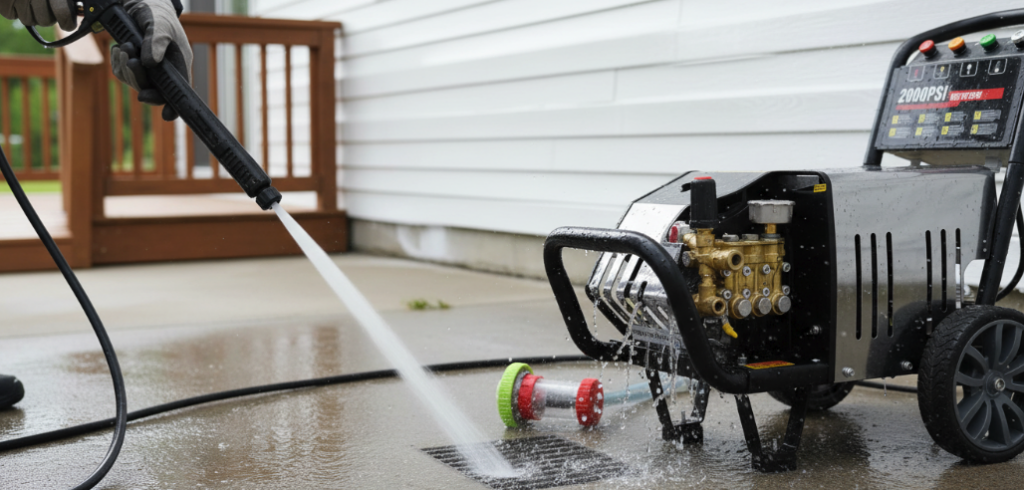
The power of bleach can kill mold as well as your beloved roses. Before you pull the trigger, be sure to thoroughly drench the surrounding lawns, shrubs and flowers with clean water. Plants that are full of water are less likely to absorb runoff with the agent. In the process of work, remember to sprinkle some water on green plants from time to time. The last step must not be lazy: Flushing the system. Run through the downstream ejectors and hoses with clean water for several minutes. If the residual bleach crystals are not washed away, they can make high-pressure pipes brittle overnight or make metal parts rust from the inside.
Author: Mike Henderson
I am dedicated to sharing industry-standard techniques that balance deep-cleaning power with equipment longevity. My goal is to provide you with the ‘insider secrets’ needed to achieve professional-grade results while keeping your power washer in peak condition for years to come.”
Want To Remove Weeds With A Power Washer? Discover Why Water Alone Isn’t Enough And Follow My 3-Step Professional Guide To Clean Without Damage.
View details
Is There A Difference? Yes! Learn How The Heating Element Affects Cleaning Grease Vs. Dirt And Pick The Right Tool.
View details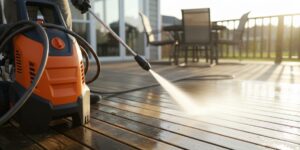
Can You Power Wash Wood? Yes, But Only At 500-1200 Psi With A 40-Degree Tip. Learn Safe Methods To Prevent Damage.
View details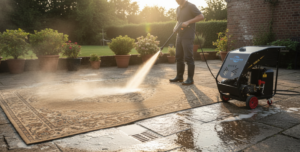
Learn To Pressure Wash Synthetic Carpets Safely Using The Right PSI, Nozzles, And Essential Drying Techniques.
View details
HelloPlease log in