 Wingspan Tech


Why Can’t You Use Bleach In A Power Washer
146Bleach Ruins Power Washer Pumps And Seals. Learn Why It’S Dangerous And Find Safe Cleaning Alternatives Here.
View details
Search the whole station
My answer is yes: you can rush, but you have to strictly abide by that set of safe operation procedures, otherwise you will personally destroy the ground you have made with heavy money.
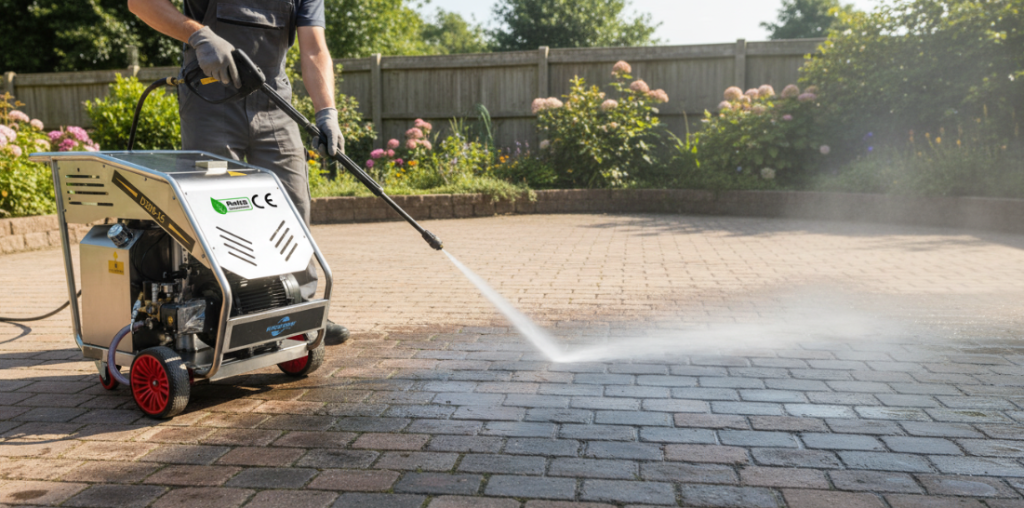
To safely remove those stubborn tire marks, road salt or old dirt, and not to delaminate or peel the floor, you must adjust the pressure of the pressure washer to between 1,200 and 1,500 PSI (never exceed 2,000 PSI). The nozzle must hit a 40-degree white nozzle or a 25-degree green nozzle, so that the spray is the kind of gentle, uniform fan-shaped mist. Another detail is crucial: the head of the gun must remain at least 12 to 18 inches from the ground, and the work at hand must not be stopped and must be shaken all the time. If you use the 0-degree red nozzle, or at a point of death, the water flow is like a high-energy laser knife, minutes to collapse your resin coating, make bright surface, or even directly destroy the adhesion between epoxy coating and concrete substrate. If you want to pursue perfect results, don’t just rely on brute force. First, use neutral degreasing agent to pretreat heavy oil stains, brush with soft bristles, and finally flush 1 times at low pressure.
From a professional point of view, epoxy floor is essentially a layer of functional coating on the concrete substrate, although it is famous for its resistance, but it is not invincible.
Controling the pressure at about 1,500 PSI, this strength is enough to take away the dirt and road salt on the surface without generating osmotic pressure that can get under the coating. Once the pressure passes 2,000 PSI, the water flow will produce a similar “wedge” effect. If your floor in the construction of even a little invisible to the naked eye adhesive defects, high-pressure water will be along these gaps to open it, resulting in local peeling.
What nozzle you choose directly determines how the pressure is distributed. I only allow my workers to use these two heads on epoxy ground:
40 degree white nozzle: this is the most secure choice. It has the widest fan surface and can spread the pressure evenly, which is very suitable for daily flushing of large areas.
25-degree green nozzle: you can use it when you encounter a little stubborn dirt, but you have to handle the accuracy and distance on your hands.
Do not touch the 0 degree red nozzle under any circumstances. In the hands of a raw hand, this thing is a demolition tool. It puts all the power together in one point, it will definitely collapse your resin surface, and even let your top floor directly scrapped, this damage is usually irreversible.
O-Series High Pressure Washer 220V
The durable ceramic pump and powerful four-stage motor provide high-performance cleaning power, with adjustable pressure, support for customized voltage and power.
380V 1500Bar Water Blaster
1450 RPM ultra-high pressure water jet pump, high cost performance, suitable for 50Hz voltage. It’s a great tool for removing rust and deburring in factories.
Diesel Power High Pressure Cleaner
The pump unit is the core component of a cleaning machine or water treatment system. Composed of a high-pressure plunger pump and an electric motor
Foam Cannon for car washing
Foam Cannon S V3.0 (Thicker Snow Foam Technology) with 1/4 Inch Quick Connector for Pressure Washer, 34 oz Bottle (V3.0 (1/4″ Quick Connector) + SOAP Sample)
Even if the pressure and nozzle are chosen correctly, the wrong method can still wash the ground. There were two rules that were not negotiable:
Keep the distance between 12 and 18 inches: the closer the gun head is to the ground, the actual impact force increases exponentially. Keep this safe distance is in order to clean at the same time, does not hurt the structural integrity of the epoxy floor.
The head of the gun must move: it must not stay at one point. Once you stop there, you are in the “hard” coating of the binding force, it is easy to the epoxy layer and concrete junction of the collapse. With that kind of long-distance, snow-sweeping overlapping scribing action, this is what the insider does.
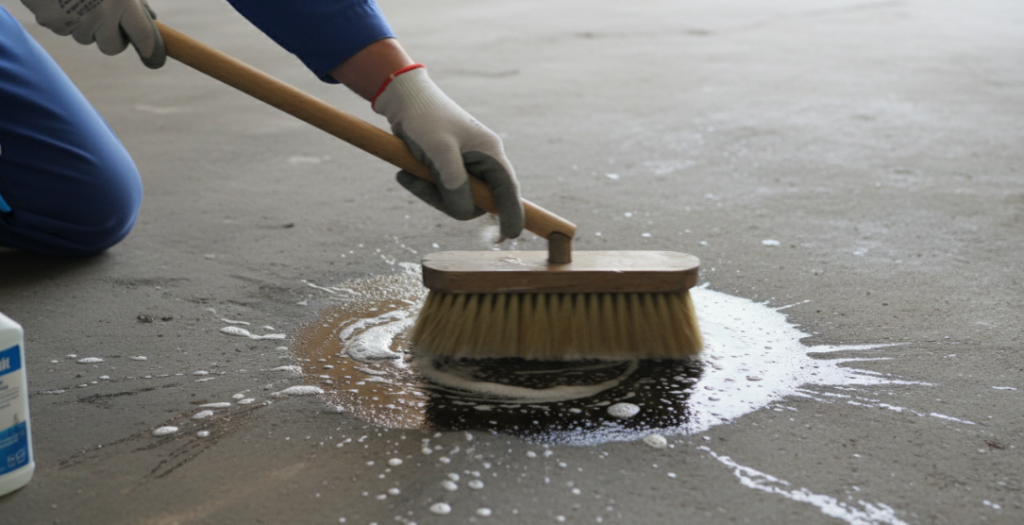
Many people want to rely on high pressure to hard flush oil stains or tire marks. Instead of brute force, I suggest going through this “chemistry first” professional process:
Pretreatment: Spray neutral degreaser directly on the stain. This can decompose grease from the chemical level, and will not react with epoxy resin.
Brush: take a soft brush gently brush, the dirt in the floor texture shake out.
Flushing: finally, sweep with low pressure of white nozzle.
This method both guards your floor coating and is much cleaner than if you were to die with a high-pressure water gun. According to the rules I said, your epoxy garage floor can still be the same as the new one even if it is used for more than ten years.
Author: Jason Miller
I’ve seen firsthand what works and what destroys a high-quality finish. My goal is to bridge the gap between professional-grade results and DIY maintenance. I share my field-tested insights to help homeowners protect their flooring investments, ensuring their garage surfaces remain as durable and pristine as the day they were installed.”
Bleach Ruins Power Washer Pumps And Seals. Learn Why It’S Dangerous And Find Safe Cleaning Alternatives Here.
View details
Learn How To Use A High Pressure Cleaner Safely. From Purging Air To Nozzle Selection, Follow Our 5-Step Expert Guide.
View details
Discover Why Power Washing A House Is Vital For Curb Appeal, Health, And Preventing Costly Structural Damage.
View details
Step-By-Step Guide On How To Change Power Washer Nozzle. Avoid Injury By Depressurizing And Locking The Tip Correctly.
View details
HelloPlease log in