 Wingspan Tech


How Long After Power Washing Can You Paint
123Wait 24-48 Hours After Power Washing Before Painting. Ensure Moisture Is Below 15% To Prevent Blistering And Peeling.
View details
Search the whole station
The answer is yes, if it is not done properly, it will definitely destroy it.
Although the cement floor looks indestructible, its most superficial layer (what we often call “cream layer”, cream layer) is actually quite porous and fragile. If you take a high-pressure water gun and rush, the surface will be permanently peeled off, leading directly to irreversible etching, potholes, and even severe peeling-all the rough aggregate underneath is exposed.
If you want to clean the floor without destroying it, you have to manage the pressure of the machine and keep it between 2,500 and 3,000 PSI. Never touch the red zero degree nozzle. Change to a wide fan-shaped nozzle, or listen to my advice, directly connect to a site cleaner (surface cleaner), the water flow distribution will be much more even. Keep the head of the gun at least 12 inches from the ground, keep your hands steady when moving, and don’t make “tiger lines” one by one. The new concrete floor that has been paved for less than a year must never touch high pressure. By following these dead rules, you’ll be able to safely knock out the old dirt while keeping the structure of the cement floor intact.
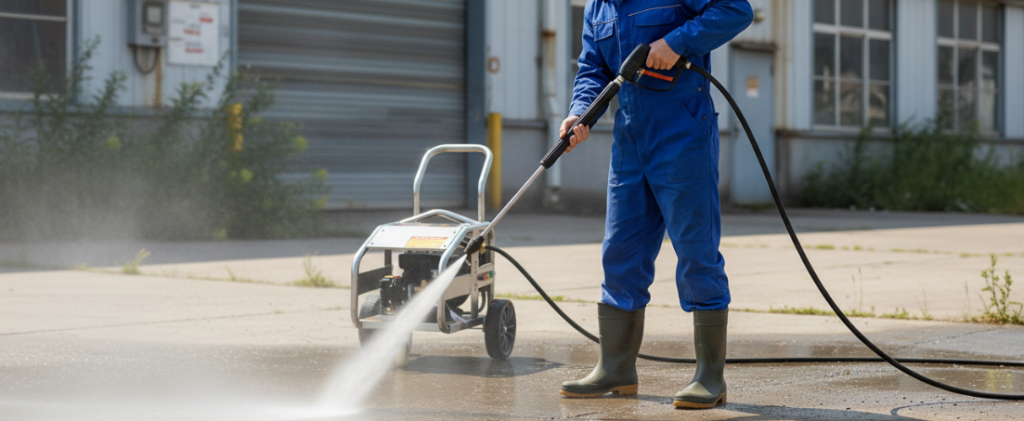
When many owners ask me “will the high-pressure water gun damage the concrete floor”, they often think that this thing can carry several tons of cars. Stepping on a hard one does give the illusion that it is not bad at all. But according to the rollover cases I ‘ve seen on the scene over the years, its real weakness is on the top floor.
During pouring and curing, the finest sand and cement particles will float to the surface. This forms what is known in the art as a “cream layer”. This smooth surface is actually covered with micropores. It is not an indestructible solid big stone, but a delicate protective film that protects the underlying structural core. If you hit this porous cream layer with a high pressure and unadjusted water gun, it will definitely collapse, and this damage cannot be saved.
O-Series High Pressure Washer 220V
The durable ceramic pump and powerful four-stage motor provide high-performance cleaning power, with adjustable pressure, support for customized voltage and power.
380V 1500Bar Water Blaster
1450 RPM ultra-high pressure water jet pump, high cost performance, suitable for 50Hz voltage. It’s a great tool for removing rust and deburring in factories.
Diesel Power High Pressure Cleaner
The pump unit is the core component of a cleaning machine or water treatment system. Composed of a high-pressure plunger pump and an electric motor
Foam Cannon for car washing
Foam Cannon S V3.0 (Thicker Snow Foam Technology) with 1/4 Inch Quick Connector for Pressure Washer, 34 oz Bottle (V3.0 (1/4″ Quick Connector) + SOAP Sample)
What happens when too much water hits that fragile cream layer? Once the damage is permanent, there are usually three situations:
Etching: The high-pressure water flow is simply a water knife, directly engraving a line on the cream layer. The image looked like someone was daubing your driveway with a permanent marker.
Potholes: Excessive pressure can blow away the already fragile dots on the porous surface, leaving your terrace or driveway full of tiny craters.
Severe flaking/aggregate exposure: This is the last bad situation I want to see. When the cream layer is completely removed by the high-pressure water gun, all the rough stone aggregates underneath are exposed. This is not only ugly, but also directly weakens the structural strength of the cement. In winter, water and ice seep in, and later weathering and decay will only get faster and faster.
If you want to safely wash away the accumulated dirt for many years and keep the structural integrity of the cement floor, you must abide by the following strict parameters.
Many owners who work at home often make a fatal mistake: the more pressure they feel, the cleaner they wash. To be on the safe side, you have to control the output pressure of the machine. There is a “dessert area” for cleaning cement floors, which must be strictly stuck between 2,500 and 3,000 PSI. This force is just enough to uproot the deep dirt embedded in the porous surface, but not so large as to overturn the fragile cream layer. Once it exceeds 3,000 PSI, the risk of etching and peeling will increase exponentially.
Which nozzle to choose directly determines how the high-pressure water flow hits the concrete floor:
Never use the red zero nozzle: it’s the most dangerous thing you can use on concrete. It concentrates all the PSI into a needle-like column of water.
With a wide fan nozzle: the wide fan can spread the pressure to a larger area, which is much safer for the ground.
The most ideal solution-pick up a site washer (Surface Cleaner): to be safe and effective, pick up a site washer directly on the gun head. This thing is a disk with a rotating spray bar inside to ensure that the water flow is absolutely evenly distributed. In this way, no point on the concrete floor will be subjected to excessive local pressure.
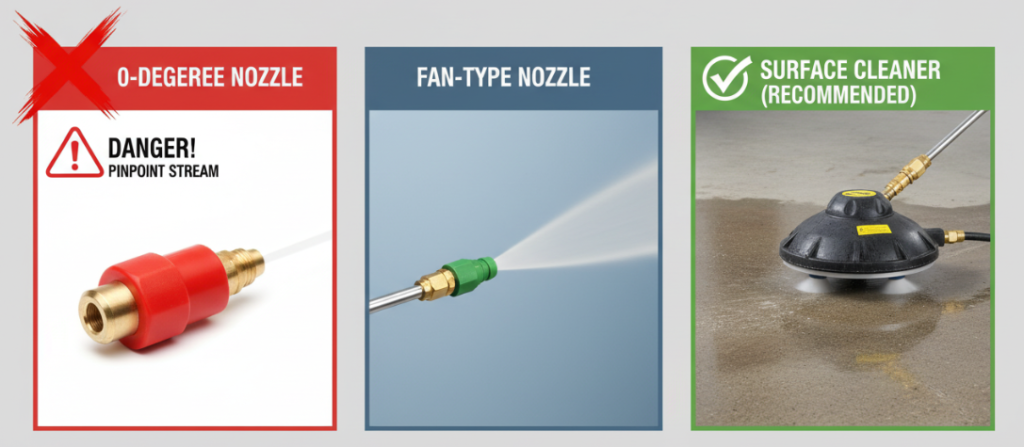
If you don’t use a disc, but wash it with an ordinary pike head, then your technique is as important as the equipment.
12-inch rule: Keep the tip of the gun at least 12 inches from the ground. Get too close, the impact will double, and your cream layer will suffer immediately.
Avoid the “tiger pattern”: when moving hands must be steady. If you pull the trigger and stop in one place, or sweep around in different shades, the ground will be left with so-called “tiger stripes”-those ugly, permanent overlapping lines caused by uneven cleaning and micro-etching.
Finally, the “age” of the concrete determines what you should do with it. Absolutely, never take a high-pressure water gun to flush a new concrete floor that has been paved for less than a year. Although it feels hard to step on it a few days after the paving, it takes several months to fully cure to reach the maximum structural strength. The cream layer on the young concrete floor is particularly soft and delicate. If a high-pressure water gun is used before it is one year old, it will almost certainly produce serious potholes and aggregate exposure.
Author: Mark Stevens
Hi, After professionally washing thousands of driveways and terraces over the years, I’ve seen firsthand what a high-pressure water gun can do to a beautiful concrete floor if used incorrectly. I’ve witnessed too many DIY disasters and irreversible damage to the fragile “cream layer.” That’s why I wrote this guide—to share my industry secrets with homeowners.
Wait 24-48 Hours After Power Washing Before Painting. Ensure Moisture Is Below 15% To Prevent Blistering And Peeling.
View details
Find The Exact PSI For Cars, Decks, And Concrete. Learn How To Balance PSI And Gpm For The Best Cleaning Results.
View details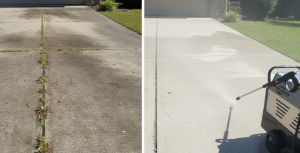
Stop Buying Expensive Attachments! Learn How To Safely Pressure Wash Your Driveway Using Standard Nozzles And Professional Techniques.
View details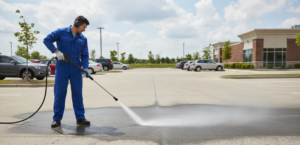
Understand How High-Pressure Pumps Work. Learn The Mechanics Of Pistons, Valves, And Nozzles That Power Your Cleaning Equipment.
View details
HelloPlease log in