
 Wingspan Tech


Can A Power Washer Get Wet
The short answer is partial: while the spray wand, hose, and nozzle are designed to be fully submerged, the main power washer unit (the motor or engine) should generally stay dry. Specifically, electric power washers are water-resistant (usually IPX5 rated) but not waterproof; exposing the main unit to heavy rain, puddles, or direct spray creates a serious risk of electrical shock and permanent circuit board failure. Gas-powered washers are more mechanically robust against water splashes, but if water enters the air intake or fuel system, the engine will stall and may require a full carburetor rebuild. Therefore, if you are currently pressure washing, you must keep the machine body away from the spray zone and cover it if it begins to rain; never allow the plug or extension cord to sit in standing water.
Understanding The Core Difference: Water-Resistant Vs. Waterproof
To understand why you cannot fully expose your machine to water, you must distinguish between these two terms. Most electric units are marked with an IPX5 rating. So, are electric pressure washers waterproof? The short answer is no.
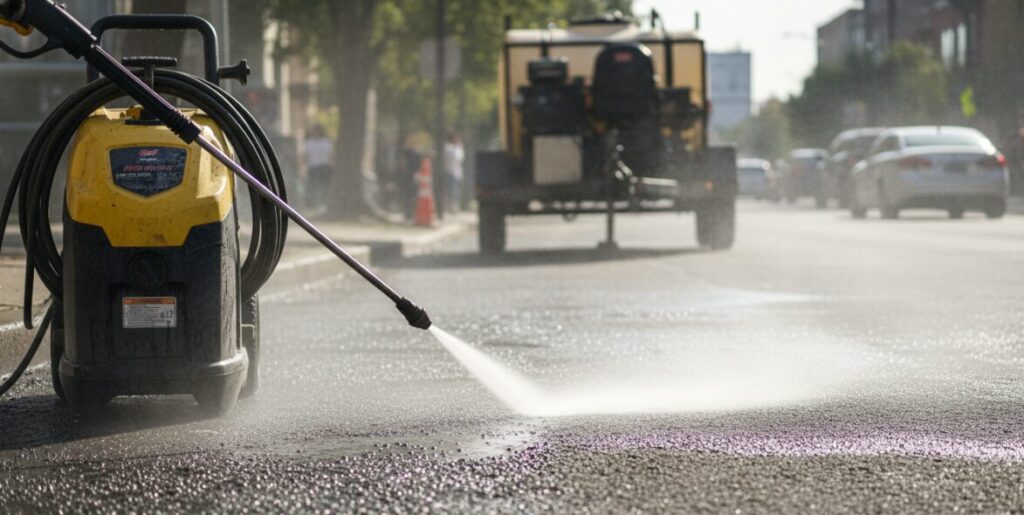
An IPX5 rating means the machine can withstand low-pressure water jets from any direction (like an occasional splash), but it is not “waterproof.” These devices rely on sensitive electronic components. If you leave an electric machine in a downpour or accidentally spray the motor directly, water will eventually breach the shell. This usually results in a permanently failed circuit board—turning your machine into a “brick”—and creates a massive risk of electric shock for the operator.
Risks At The Mechanical Level
Fuel engines don’t have the delicate circuit boards of electric versions, but they have a fatal weakness: the air intake and fuel system. Because engines need to “breathe,” they are vulnerable to moisture.
If water is sucked into the air intake, it enters the combustion chamber. Since water cannot be compressed or ignited like gasoline, the engine will stall immediately. Furthermore, water in the fuel system leads to corrosion.
Critical Operating Rules In Wet Environments
Because cleaning involves water, you must be proactive about keeping the host unit dry. I recommend following these “iron rules”:
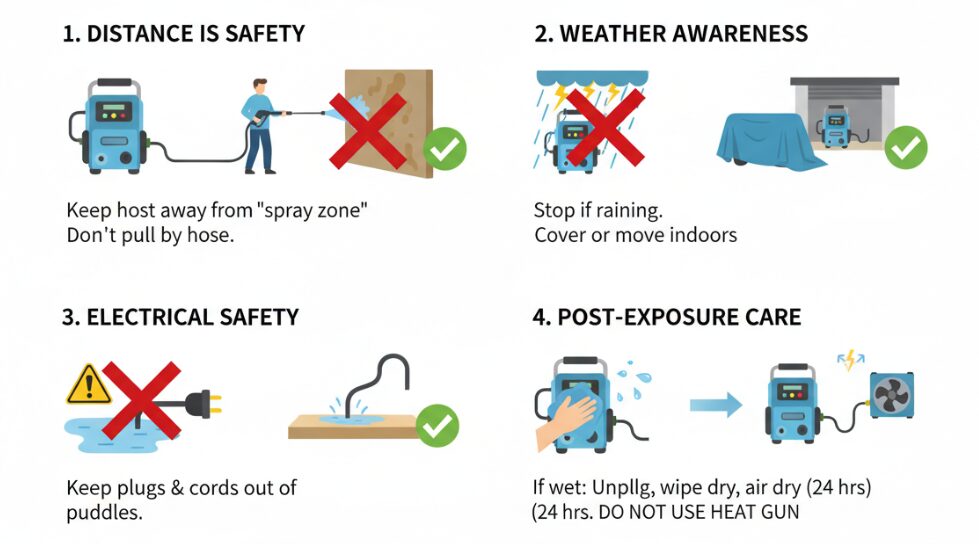
- Distance is Safety: Keep the host as far from the “spray zone” as possible. Never pull the machine closer by the hose while spraying; stop working and manually move the host to a dry spot.
- Weather Awareness: Using pressure washer in rain is never a good idea. If the weather turns while you are working, stop immediately. Move the machine to a garage or shed, or cover it with a waterproof tarp.
- Electrical Safety: Never let a plug or extension cord sit in a puddle. Even if the machine is dry, a soaked connection can create a dangerous ground fault path.
- Post-Exposure Care: If your unit does get caught in a splash, you need to know how to dry out a pressure washer properly. Unplug the unit immediately, wipe down the exterior with a dry cloth, and leave it in a well-ventilated, dry area for at least 24 hours before attempting to start it again. Do not use a heat gun, as this can melt plastic components.
Which Parts Can Be Wet?
You don’t need to treat every single part of the machine with extreme caution. The “business end” of the tool is built for water:
- Spray Wand/Gun: Completely waterproof.
- High-Pressure Hose: Designed to be dragged through wet grass and puddles.
- Nozzles: No problem even if completely submerged.
You can safely let these components get soaked. However, always respect the limitations of the main unit. Keeping the motor or engine dry is the best way to protect your investment and, more importantly, your personal safety.
Author: Mark Henderson
I’m a certified power equipment technician with over 14 years of experience repairing outdoor machinery. I have seen firsthand how easily a “water-resistant” electric washer can suffer from permanent circuit board failure and how quickly water in a gas intake can ruin a carburetor.